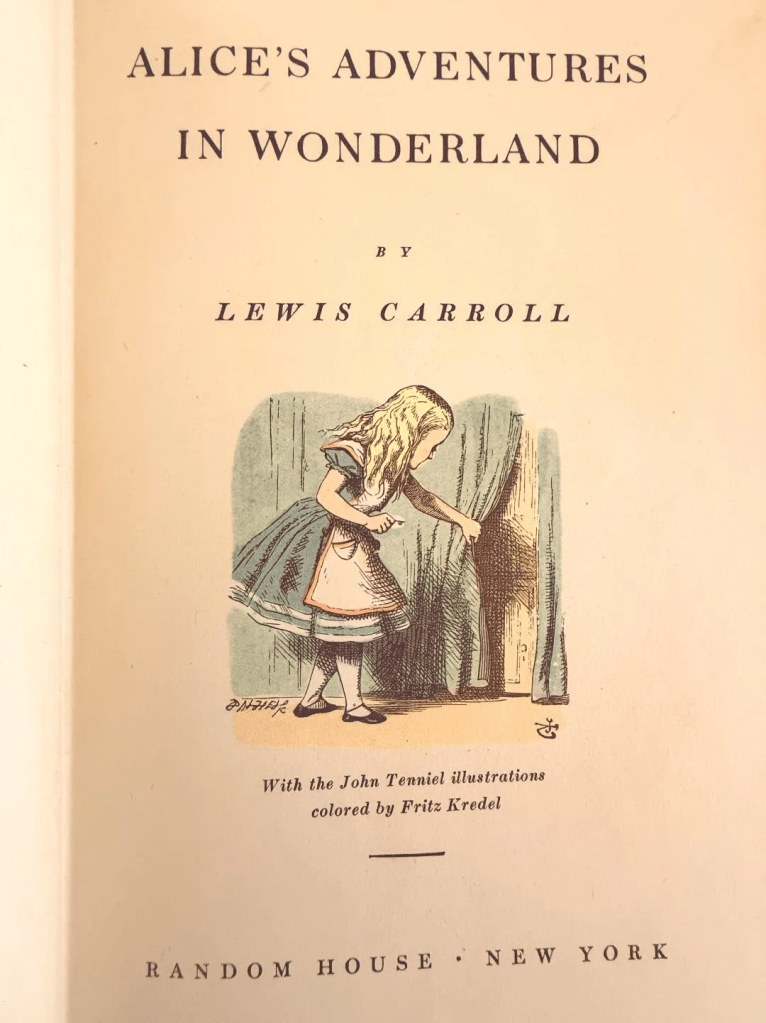
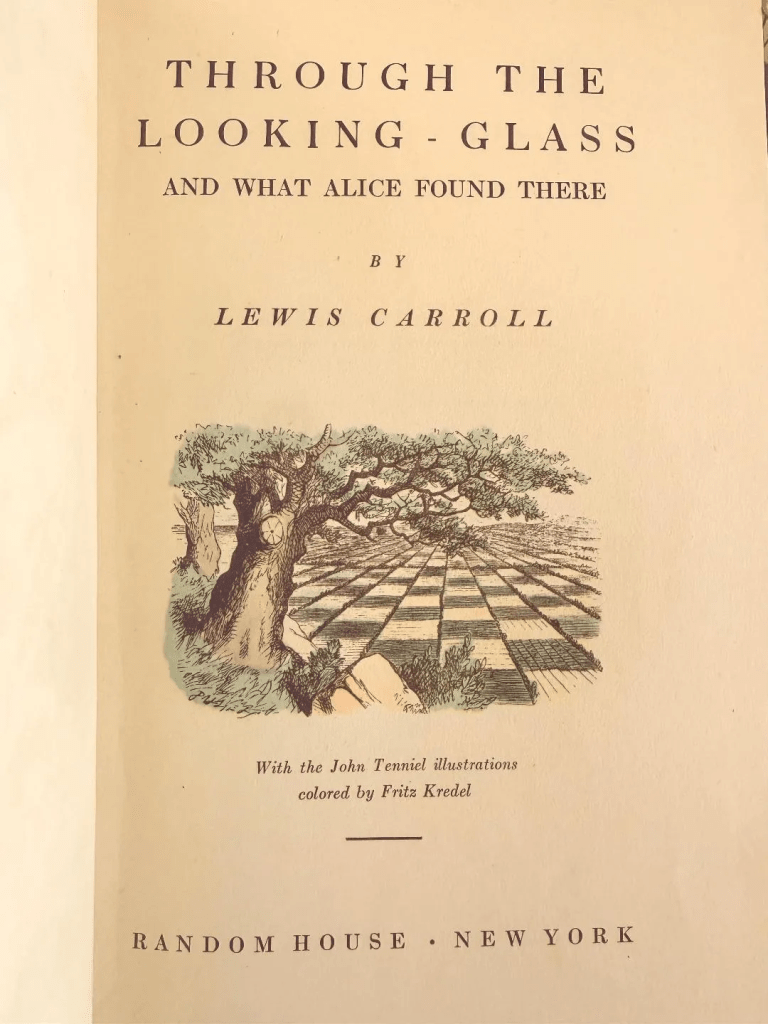
One of the things I enjoy most is uncovering subtle connections that link different literary worlds, and today, I invite you to explore the connections between the Mary Poppins stories and the adventures of Alice as imagined by Lewis Carroll.
The creation of Alice’s world precedes that of Mary Poppins, and it is therefore no surprise that P.L. Travers, consciously or unconsciously, drew on elements from the Alice stories. Not in the sense of direct borrowing, but rather that certain moments in Mary Poppins seem clearly inspired by Alice’s Adventures in Wonderland and Through the Looking-Glass, and What Alice Found There.
Alice’s Adventures in Wonderland and Through the Looking-Glass were among P. L. Travers’s favourite childhood books. She later remarked that while she revered Alice, she harbored a “lurking, sneakish lack of liking” for Lewis Carroll. She did not elaborate further on her dislike, but it may have been related to his unusual attraction to young children. I must admit that I, too, felt deeply uncomfortable reading the sections of Carroll’s biography by Morton N. Cohen that address his relationships with children, even though Cohen clearly admired Carroll’s mind and imagination and attempted to approach this aspect of his personality with empathy for the suffering it caused him.
P. L. Travers repeatedly told interviewers that she did not write Mary Poppins with children in mind. To illustrate her point that books are not necessarily written for children, she referred to the creation of Alice’s Adventures in Wonderland. In her interview with Edwina Burness and Jerry Griswold for The Paris Review (The Art of Fiction No. 63), she said:
“If you look at other so-called children’s authors, you’ll see they never wrote directly for children. Though Lewis Carroll dedicated his book to Alice, I feel it was an afterthought, once the whole was already committed to paper.”
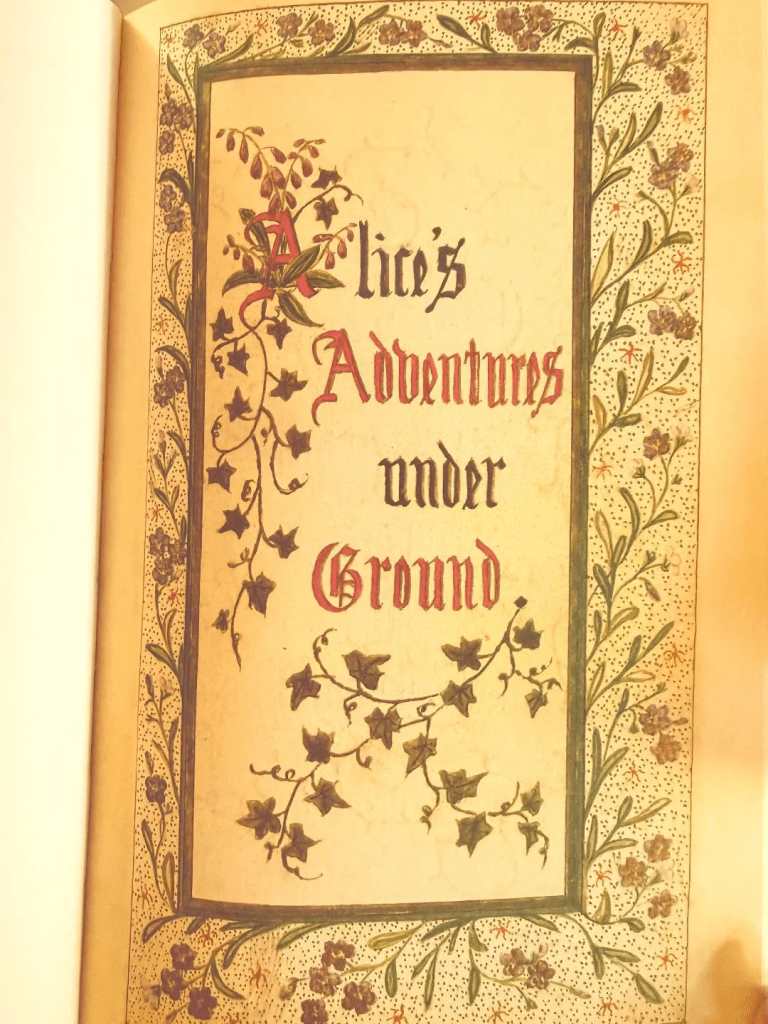
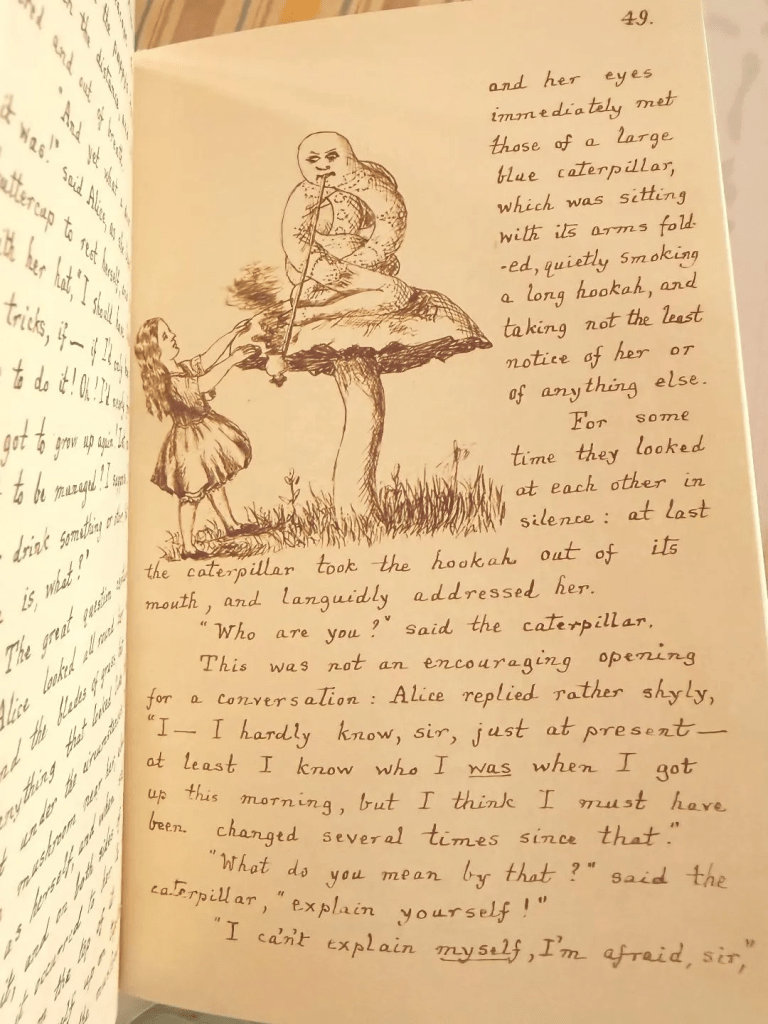
This, however, is not entirely accurate. Carroll did write the first version of the story, Alice’s Adventures Underground, at the request of Alice Liddell, and it was later revised and expanded. This is Carroll’s own account of the creation of Alice in Wonderland:
“The germ of Alice was an extempore story, told in a boat to the three children of Dean Liddell: it was afterwards, at the request of Miss Alice Liddell, written out for her… without the least idea, at the time, that it would ever be published. But friends urged me to print it, so it was re-written, enlarged, and published.”
This is how Alice’s Adventures in Wonderland came to be. And even though it began as a story told for the amusement of children, it is undoubtedly much more than that. As with Mary Poppins and many other enduring works of children’s literature, these stories contain deeper layers of meaning that are accessible only to adult readers who bring the necessary depth of experience.
But for now, let us consider how the imagination of one writer may have quietly nourished the imagination of another. For no human creation, however original it may appear, emerges in isolation. It grows from what has come before.
Scholar Julia Kunts, in Intertextuality and Psychology in P. L. Travers’s Mary Poppins Books, draws a number of perceptive connections between Alice and the Mary Poppins stories. She identifies the first echo in the opening chapter, “East Wind,” when Mary Poppins arrives at 17 Cherry Tree Lane.
As Mary Poppins unpacks her carpet bag in the nursery, Jane and Michael watch with great curiosity. Among the items she produces is a bottle labelled “One Tea-Spoon to be taken at Bed-Time,” recalling the bottle marked “Drink Me” that Alice finds on the glass table in the long hall she finds herself in once down the rabbit hole. And just as Alice discovers a liquid with a curious “mixture of flavours, cherry-tart, custard, pineapple, roast turkey, toffee, and hot buttered toast’, the contents of Mary Poppins’s bottle transform according to each child’s taste: strawberry ice for Michael, lime-juice cordial for Jane, milk for the twins John and Barbara, and rum punch for Mary Poppins herself.
Kunts also observes that, much like the characters in Alice who subvert and mock the logic of the ordinary world, Mary Poppins repeatedly unsettles the expected order of things, much to the distress of the Park Keeper, who is determined to keep everything properly arranged.
Another obvious parallel between the two fictional worlds is the use of characters from nursery rhymes. Just as Lewis Carroll incorporates nursery rhyme figures in Through the Looking-Glass, P. L. Travers introduces similar characters in the story “Happy Ever After” from Mary Poppins Opens the Door. Among them are Humpty Dumpty and the Lion and the Unicorn, who appear in both worlds.
When Alice meets Humpty Dumpty, he is perched on a high wall so narrow that she wonders how he manages to keep his balance. He, however, is entirely unconcerned. Having secured the King’s promise that all his men will put him back together again should he fall, he speaks with great confidence. Yet, in the end, there is a great crash that echoes through the forest.
When Michael Banks encounters Humpty Dumpty in “Happy Ever After,” he is surprised to find him in one piece. Humpty Dumpty replies: “Pooh — horses! What do they know about it? And as for the King’s men — stupid creatures! — they only know about horses! And because they couldn’t put me together, it doesn’t say no one else could, does it?”
In Through the Looking-Glass, Alice witnesses the battle for the crown between the Lion and the Unicorn, interrupted by a pause for refreshments of white and brown bread. In Mary Poppins’s story, however, the Unicorn and the Lion dance instead of fighting, as they find themselves in the Crack, the moment between the first and last stroke of midnight on New Year’s Eve, a brief interval in which all opposites are harmonised and held in balance.
But beyond the parallels noted by Julia Kunts, one detail struck me in particular. I believe the origin of Mary Poppins’s bottomless carpet bag to lie in Haigha’s bag in the chapter “The Lion and the Unicorn” in Through the Looking-Glass:
“Haigha took a large cake out of the bag and gave it to Alice to hold, while he got out a dish and carving knife. How they all came out of it Alice couldn’t guess. It was just like a conjuring trick, she thought.”
The resemblance is difficult to dismiss. What appears in Carroll as a conjuring trick re-emerges in Travers as a defining attribute of Mary Poppins: a magic bag that appears empty but contains a surprising number of items.
Building on these parallels, I would argue that P.L. Travers’s imagination does not merely echo Carroll’s but transforms it in a distinctly original way and what matters is that, despite these subtle echoes of another enchanted world, her imagination remains entirely her own. She does not imitate. She transforms.
Thank you for reading. If you enjoyed this article, I invite you to subscribe to The Mary Poppins Effect, where I explore the work of P.L. Travers, the world of Mary Poppins, its connections to other literary worlds, and the symbolic imagination at the heart of classic children’s literature.
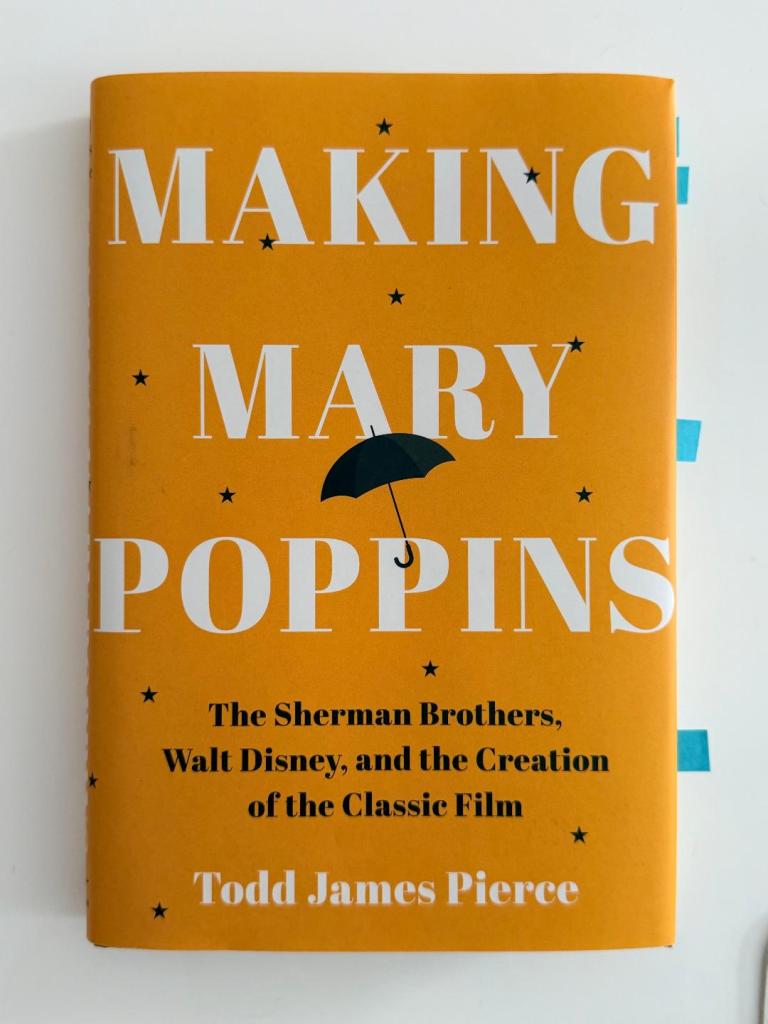
Did you know that a new book about Mary Poppins was released last October, titled Making Mary Poppins: The Sherman Brothers, Walt Disney, and the Creation of the Classic Film by Todd James Pierce? The book explores the making of the 1964 film starring Julie Andrews as Mary Poppins. While documentaries and other accounts of the making of the film already exist, this book shifts the focus to the personal and professional lives of the Sherman brothers. Rather than centring solely on the movie, the first part of the book traces their family background, beginning with their father and early childhoods, and follows their long struggle to succeed in the musical industry, culminating in their breakthrough as the songwriters behind Mary Poppins.
I am a fan of the Mary Poppins books by P. L. Travers, as they are where I first encountered Mary Poppins as a child. I only discovered the existence of the film in 2015, after reading Mary Poppins She Wrote by Valerie Lawson, the first written biography of P. L. Travers. This may sound strange, but the fact is that I spent my early childhood in Bulgaria during the Cold War. Disney films were viewed as products of American capitalist culture and, as such, did not make it behind the Iron Curtain.
The political regime of that period viewed Disney as promoting bourgeois values and glorifying individualism and consumerism. Because the state conceived of itself as the guardian of children’s impressionable minds, it sought not only to shield them from harmful bourgeois influence but also to guide them toward socialist values, shaping them into future workers and citizens bound by a moral duty to serve society.
How, then, you may ask, was it possible for the Mary Poppins books to be translated into Bulgarian and made available to children? One plausible explanation is that reading was regarded primarily as an educational practice rather than a form of mass entertainment. Furthermore, the books may also have appeared less overtly Western or glamorous in tone.
In the literary version, Mary Poppins is markedly stricter, colder, and more ambiguous than the character portrayed by Julie Andrews. The original Mary Poppins is authoritarian, ironic, and emotionally distant. In addition, the stories can readily be interpreted as conveying lessons in discipline, hierarchy, and moral correction, all qualities that stand in sharp contrast to the film’s lavish spectacle.
Luckily for my childhood self, and for other young readers of that time, Western children’s literature appears to have been tolerated so long as the stories lacked explicit political content and were not oriented toward consumption. Other children’s classics, such as Alice’s Adventures in Wonderland, Peter Pan, Peter Rabbit, and Winnie-the-Pooh, similarly slipped past communist censorship and quietly beguiled our imaginations. At the time, I was, of course, entirely oblivious to the broader social and political context in which I encountered these books.
I liked the Mary Poppins film. I admit that it is difficult not to like it. It is a visual and auditory delight, a feast for the senses. Still, it is not the Mary Poppins of my childhood, nor the one I rediscovered as an adult. It is an entirely different artistic creation. The screen version, entertaining as it may be, lacks the depth and mystery of the Mary Poppins found in the books. I am always struck by the comments of adult readers who, as children, first encountered the character through the film. They often express the opposite reaction, largely because they are surprised by the stark difference in the personality of the literary Mary Poppins.
In the books, Mary Poppins is harsh, cold, and not given to explanation. This never troubled me as a child. From the very first chapter, I was convinced that her severity was a kind of pretence, that she only appeared strict. The contrast between her outward demeanour and the inner self I sensed made her all the more compelling and rendered the magical adventures she led the Banks children on even more wondrous. I suspect that other children reading the books felt much the same.
Her contrariness does not trouble me now either. Instead, it makes her more human, precisely because of her ambiguity. She may possess magic, she may be the Great Oddity or the Great Exception, she may even have reached a higher level of consciousness, for all we know, yet she remains unmistakably human. Are we not all a little more ambiguous than we care to admit?
Despite my allegiance to the original Mary Poppins, I felt compelled to read Making Mary Poppins, if only to see whether the incident involving P. L. Travers, Walt Disney, and the Sherman Brothers might be portrayed with greater nuance. The title of the chapter devoted to this encounter, “The Trouble with Travers,” quickly dispelled that hope. A look at the Notes section at the end of the book suggests that Pierce relies heavily on Valerie Lawson’s biography of P. L. Travers and on the Sherman brothers’ own testimonies, while demonstrating limited engagement with P. L. Travers as a writer and spiritual thinker.
I would have welcomed a discussion of the cultural differences between P. L. Travers and Disney, or an exploration of the inner conflict she most likely experienced in the process of relinquishing control over her creative vision of Mary Poppins. Instead, the reader is once again invited to pick sides in a simplified clash of two creative visions. Worse still, the narrative encourages us to commiserate with the hardworking Sherman brothers, finally given their chance, while casting P. L. Travers as the obstructive and unreasonable figure standing in the way of their great success.
But why pick sides in this artistic conflict? Why not simply observe it in all its complexity? Yes, P. L. Travers did not follow the same logic as the Sherman brothers or Disney, but there was still logic behind her actions and her words. She was not as irrational or contrary as the cultural establishment has long been inclined to portray her.
Let us turn the tables here. The prevailing story has long favoured Disney’s version as generous, creative, and life affirming, while casting P. L. Travers as obstructive, eccentric, or emotionally difficult. When someone’s behaviour is labelled this way, it becomes easy to dismiss. It suggests that there is nothing to engage with intellectually, only a difficult personality to endure. More disheartening still is that women are often, even today, dismissed as overly emotional and difficult in situations where they are simply affirming their opinions and values.
How about we question those assumptions? We must recognise how power, gender, and cultural authority shape which voices are celebrated and which are marginalised. The loudest voice is not always the truest. We need to restore intellectual and moral complexity to a figure whose resistance was grounded not in whim, but in a coherent artistic vision and a deep sense of responsibility toward her work.
P. L. Travers was shaped by a cultural background that valued myth, folklore, and symbolic meaning. Her imagination was steeped in fairy tales, Celtic myth, and archetypal storytelling, where ambiguity is not a flaw but a feature. She wrote, “Fairy tale is at once the pattern of man and the chart for his journey.”
Through her engagement with esoteric traditions and thinkers such as George W. Russell, W. B. Yeats, and Gurdjieff, she believed stories could transmit moral and spiritual truths indirectly. For her, meaning was not something that needed to be explained but something to be experienced, because real wisdom is achieved through lived experience.
The Sherman Brothers, on the other hand, emerged from an American popular entertainment background. Their songs express feelings directly. Joy is declared, not hinted at. There is little mystery, because the goal is inclusion rather than initiation. Their background aligned naturally with Disney’s vision of family friendly, emotionally transparent storytelling.
The artistic conflict, then, was not merely about temperamental differences. It was a clash of cultural assumptions. P. L. Travers believed stories should challenge and unsettle. The Sherman brothers and Disney believed stories should reassure and delight.
Because of these differing assumptions, interpretations of the character of Mary Poppins diverged. P. L. Travers openly articulated her belief that the true magic in her books lay in the ability to engage successfully with ordinary life. To grasp her position, one must approach the stories as allegories. The Sherman Brothers, by contrast, understood Mary Poppins as a figure who brings magic into ordinary life, which implicitly assumes that ordinary life itself lacks magic. For P. L. Travers, the opposite was true. Ordinary life already contained magic. It was the springboard from which magic emerged.
Even before she met Disney, she disagreed with the way he altered beloved fairy tales, which helps explain why she refused to sell the rights to Mary Poppins for nearly twenty years. Interestingly, her views on Disney’s work were also shared by two other British writers. J. R. R. Tolkien and C. S. Lewis likewise believed that fairy tales and fantastical stories carry meaning and convey truths about life. Both disliked Disney’s animated film Snow White, and so did P. L. Travers. It becomes easier, then, to understand why it was extremely difficult for her to see her own creation as merely a vessel for entertainment, no matter how enticing and successful that vessel might be.
Beyond cultural differences and divergent views on the purpose of storytelling, another important distinction separated the Disney team from P. L. Travers. The Disney team operated comfortably within the world of entertainment and the logic of commercial success. Creating for money was not only acceptable; it was the point. The more successful the production, the better.
P. L. Travers approached money differently. She was not indifferent to it, but she did not see it as the primary measure of value. For her, money always carried a spiritual dimension. When she was young, her literary mentor George William Russell, known as AE, introduced her to the idea of the poet’s vow of poverty. This did not mean literal destitution. As she later explained to Brian Sibley, “It didn’t mean that if you were offered $100,000 you would refuse it. But it meant that you would not be attached to it. You didn’t even need to give it away but you wouldn’t live by it.” The principle was inner detachment. Money must not become the master of the work.
Years later, her spiritual teacher George Gurdjieff articulated a related but more demanding position. The material question was not whether one should have money, but whether one could earn, manage, and use it without guilt, vanity, or self deception, and without allowing it to define one’s inner work. Money, in this view, was a force that revealed character.
By the early 1960s, P. L. Travers was facing practical pressures. Sales of the Mary Poppins books had slowed. She was ageing. Her adoptive son, Camillus, had discovered that she was not his biological mother, a revelation that strained their relationship. It is not unreasonable to assume that financial security, and what she might eventually leave behind, weighed on her mind.
At the same time, she felt the adaptation threatened her artistic vision. In a conversation with Janet Graham shortly after the film’s release, she explained: “You must remember that an author’s idea is very precious to him, it’s like a child to a mother. So that if somebody comes along and turns it into a fair haired child when it is dark, or gives it four legs instead of two, he can’t be utterly pleased, even though the effect is something very gorgeous and splendid.”
This statement clarifies much of her resistance. From the outside, her behaviour appeared obstinate, even irrational. According to accounts reported by Pierce in Making Mary Poppins, many people working at the studio found it strange that she would stand in the way of a lavish film adaptation. Yet from her perspective, taking the money while her creation was altered beyond recognition carried a far greater cost, the quiet betrayal of her own artistic vision.
In the end, practical considerations prevailed. But her ambivalence never disappeared. When asked about Logan Pearsall Smith’s assertion that “There are few sorrows, however poignant, in which a good income is of no avail,” she replied with her usual wit, “I should think that that was true, at any rate externally; at least you could go to the movies and forget it for a time.” Her remark acknowledges money’s utility while quietly denying its power to resolve deeper conflicts.
The encounter between the Disney team and P. L. Travers is compelling precisely because neither position is illegitimate. They were operating from fundamentally different premises. One measured success in entertainment, originality, and revenue. The other measured it in loyalty to an inner vision.
We are often tempted to reduce complex conflicts to a clash between heroes and villains because it simplifies uncertainty and soothes our anxiety. Yet adult life, and especially artistic life, rarely conforms to such black and white thinking. Two positions can be internally coherent and still irreconcilable, as in the making of Mary Poppins.
Thank you for reading. If this story resonated with you, I invite you to subscribe to The Mary Poppins Effect, where I share reflections on Mary Poppins, her connections to other literary worlds, and my musings on books and the quiet magic of childhood.
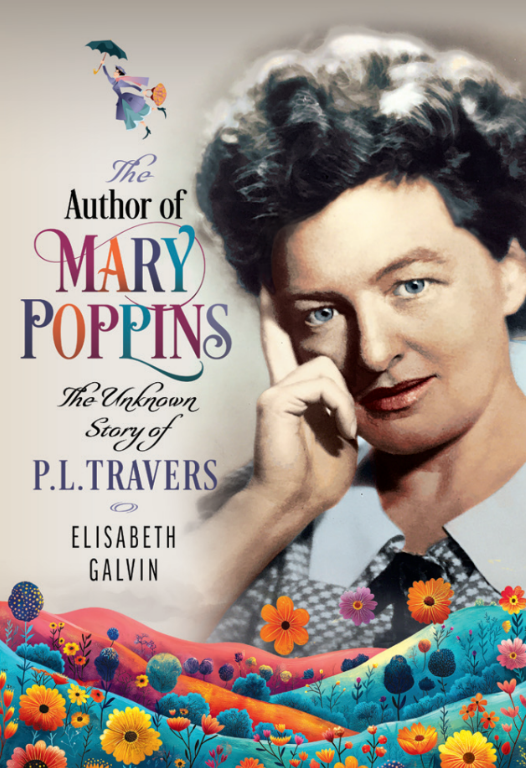
I am very excited to share my conversation with Elisabeth Galvin about her upcoming biography of P. L. Travers, the creator of Mary Poppins. This time, our conversation takes place in video form, a medium I avoided for a long time but have now come to accept as one I need to embrace.
In this interview, which I am sharing below, Elisabeth and I explore what first drew her to Travers, her research process, and the unexpected material she uncovered while tracing the life of a writer who has fascinated readers for generations.
We also talk about the people she met along the way who knew Travers personally, and how their memories and stories brought new texture and meaning to this biography. Travers’s complexity is portrayed in a gentle and respectful way, as Elisabeth is keenly aware of the responsibility that comes with writing a biography and of the difficulty of portraying with care and honesty a person one has never met. Elisabeth’s writing is also deeply atmospheric, carrying the reader through an almost visual experience of time and place. It is a delightful read, and I sincerely hope this book finds its way into the hands of many readers.
There is an additional reason for my excitement. I had the honor of writing the introduction to this biography, as well as an entire chapter on Travers’s spiritual beliefs, a subject very dear to my heart. I have been immersed in the world of Travers and Mary Poppins for over ten years, and I am convinced there is still much left to uncover. Travers lived a long and productive creative life, yet today she is often remembered only for Mary Poppins. I believe she is an author worth rediscovering. I also believe she was truthful when she said she did not write Mary Poppins with children in mind, and that these stories continue to hold important lessons for adult readers.
I hope you enjoy my conversation with Elisabeth Galvin, and that you will consider subscribing to The Mary Poppins Effect for more reflections and stories exploring the world of Mary Poppins and its connections to other literary worlds.
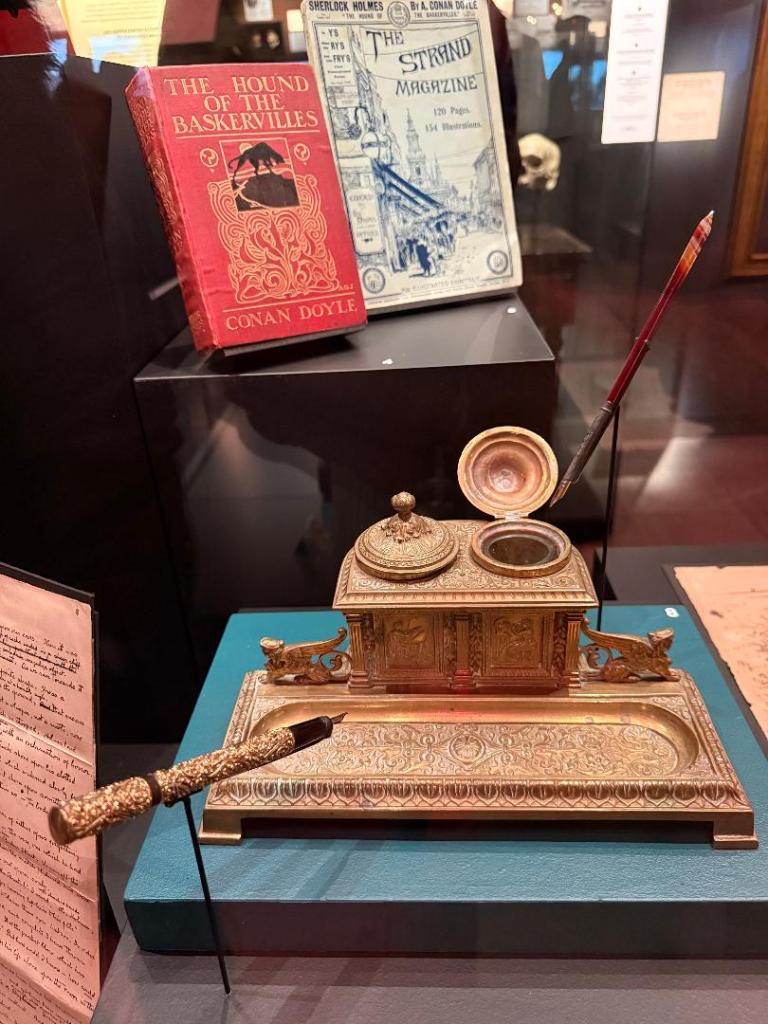
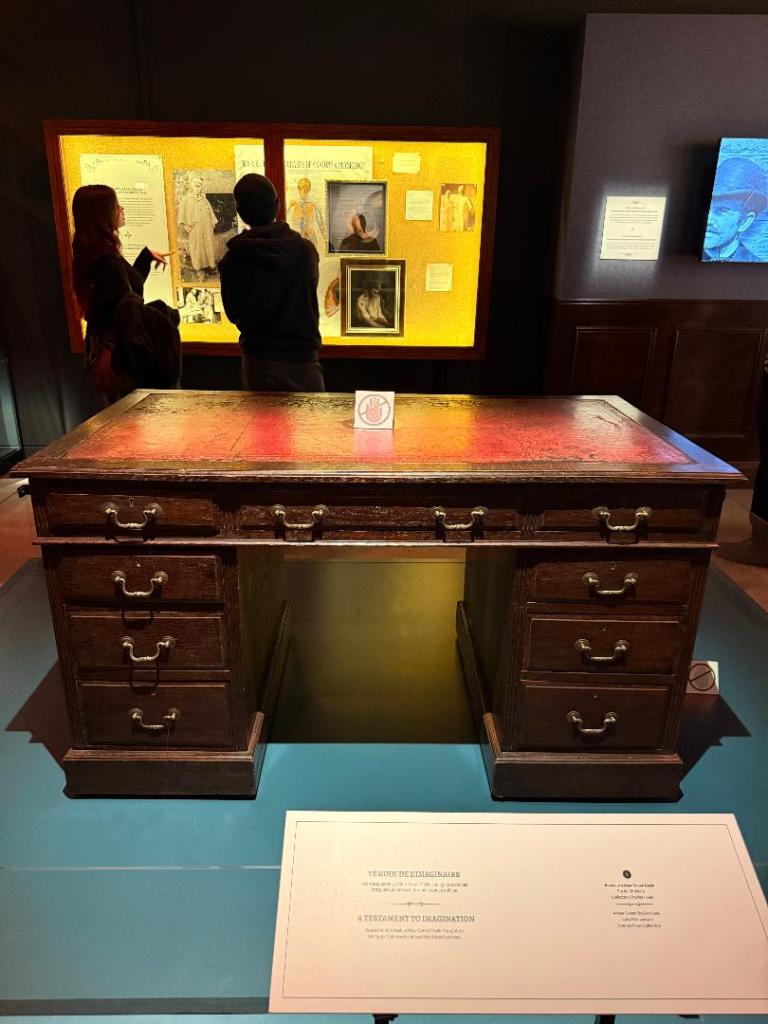
This weekend I visited an immersive exhibition in Montreal devoted to the world of Sherlock Holmes, the legendary detective created by Sir Arthur Conan Doyle. It was both fun and educational, but as any bookworm would probably agree, there is something almost transcendental about seeing in real life the desk at which Conan Doyle wrote the Sherlock Holmes stories. I only wish I could have touched it. There was also his richly ornate inkwell set, along with many other interesting objects.
Beyond the objects themselves, the exhibition led me to reflect on an unexpected connection between Sherlock Holmes and Mary Poppins. One section included a video recording of Conan Doyle speaking about his creation and about the correspondence he received from readers. He explained that he was surprised by the number of people who were convinced that Sherlock Holmes was a real, living human being. He received letters addressed directly to Holmes, letters requesting his autograph, letters written to his friend Dr. Watson, and even letters from women offering to become his housekeepers.
This immediately reminded me of an interview with P. L. Travers in which she said that people wrote to her asking whether Mary Poppins could be sent to their home to help with the raising of their young children. When I first read this, I assumed that people were simply being whimsical and indulging in wishful thinking, but were still aware that Mary Poppins is a fictional character. Surely they could not truly believe that Mary Poppins was a living, breathing being in our world, even though I was convinced of it myself as a child.
Now, hearing that readers reacted in the same way to another fictional character, I have come to a different conclusion. This longing to meet such characters in person may be the strongest proof of a truly successful literary creation, one that feels original and extraordinary. It makes me wonder whether P. L. Travers was aware of this striking similarity between her experience as an author and that of Conan Doyle.
There are other curious parallels as well. Both writers were interested in the occult, though in different forms, and both shared a belief in an invisible dimension beyond ordinary perception. Both authors refused to treat imagination as mere fantasy. They seemed to believe that imagined figures could carry truth, presence, and meaning that felt real to readers. That kind of openness allows characters to feel alive rather than invented, which may explain why readers wrote letters as if Sherlock Holmes and Mary Poppins actually existed.
And lastly, Sherlock Holmes’s creator wanted recognition for his historical novels and did not want to write as many Sherlock stories as he did. Similarly, P. L. Travers wrote other books and essays on myth and fairy tales and complained that people only wanted Mary Poppins stories from her. Both fictional characters became larger than their creators, and the relationship between creator and creation was riddled with ambiguous feelings. Isn’t it funny how what brings outer success does not always equate to inner fulfilment?
I hope you enjoyed reading this post and will consider subscribing to The Mary Poppins Effect for more stories exploring the world of Mary Poppins and its connections to other literary worlds.
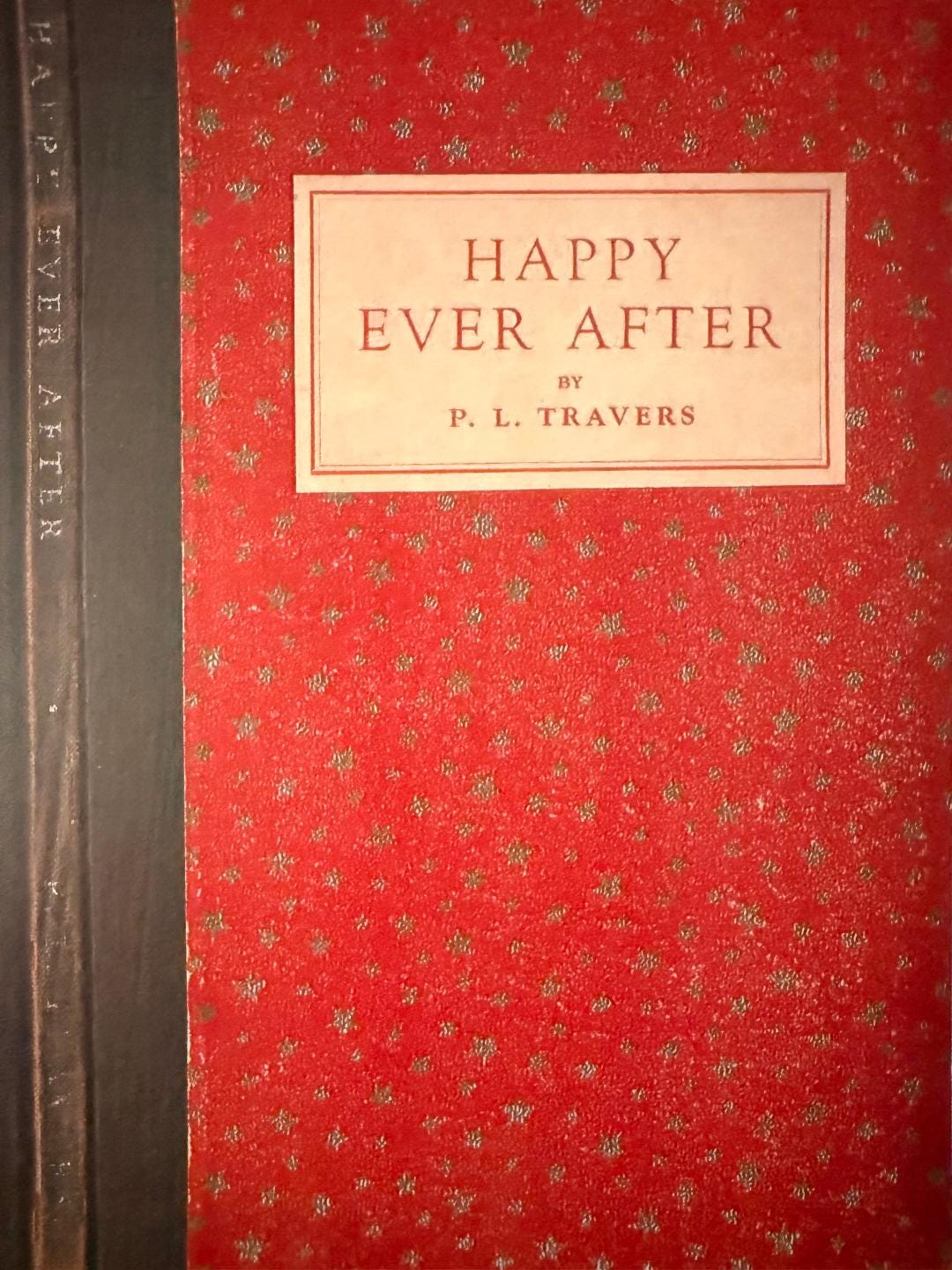
I wish I were as talented a storyteller as P. L. Travers, able to gift you a magical story this holiday season, but my brain is analytical and reflective. So instead of enchantment, what I am offering is a comparative analysis of the first version of “Happy Ever After,” a Mary Poppins story by P. L. Travers first published privately for friends in 1940 and later included in Mary Poppins Opens the Door, the third book in the series, published in 1943.
The first edition of “Happy Ever After” was limited to one thousand copies privately published by the author for her friends and her publishers as a New Year’s greeting. What a lovely idea, and how lucky were those who received it!
When I first sat down to read the original version, I did not know what to expect, though I suspected there would be some differences from the story I had read in Mary Poppins Opens the Door. Naturally, I was curious to see what had changed and perhaps even to investigate the differences and what they might reveal.
It turned out that the original story is very similar, with most of the differences being largely stylistic. That will likely come as no surprise to any writer. Editing, polishing, and improving a text can be a never-ending process, especially when one struggles with perfectionism or insecurity, which may simply be two sides of the same coin. However, I noticed two significant discrepancies between the two versions of the story and these are the ones that I want to tell you about.
Nowhere in the Mary Poppins books is the exact age of the Banks children stated. The reader understands that Jane and Michael are preschoolers, since they spend most of their time with Mary Poppins in the nursery or in the park. John and Barbara grow from babies to toddlers, and the youngest Banks child, Annabel, appears in the second book, Mary Poppins Comes Back (1935).
But in the 1940 edition of “Happy Ever After,” P. L. Travers reveals how she imagines the ages of the children, and interestingly she seems to forget about Annabel. Or perhaps she intended the story to take place between Mary Poppins’s first visit to the Banks family in Mary Poppins (1934) and her second visit in Mary Poppins Comes Back (1935).
“It was the latest day of the Old Year. Upstairs in the nursery of Number Seventeen Cherry Tree Lane, Jane Banks who was seven, Michael Banks who was five and John and Barabra Banks who were twins and two-and-a-half, were being undressed.”
This is certainly the kind of detail only a Mary Poppins enthusiast like me would notice, but I take enormous pleasure in diving deeply into these stories and sharing my findings with you. I hope you enjoy reading about them as much as I enjoy discovering them.
Another interesting difference between the two versions is that in the 1940 edition, P. L. Travers describes at length how the children perceive Mary Poppins. In the later version, which I find more successful, she conveys the same idea more succinctly and in a way that feels more revealing. Here are the two passages in order.
“She moved about the nursery, folding up the scattered clothes and tidying away the toys. To look at her – with her coal-black hair, her china-blue eyes, her bright pink cheeks and her turned-up nose that was like the nose for a Dutch Doll – you would never imagine that she was anything but a perfectly ordinary person. But Jane and Michael and John and Barbara knew better. For had she not, when she first arrived at Number Seventeen, mounted the stairs by sliding up the banisters? And was it not certain that on her second visit she had appeared from Nowhere on the end of a string, looking more like a kite than a human being? How could a perfectly normal ordinary person be capable of such extraordinary behaviour? Impossible. Jane and Michael and John and Barbara knew very well how extraordinary she was but they did not speak of it for there were things about Mary Poppins that could never be explained. And it was no use talking to her about it for Mary Poppins, as everybody knows, never told anybody anything.”
The passage comes across as clunky and overly explained, and P. L. Travers may have added extra detail for friends unfamiliar with Mary Poppins, but she later trimmed it from 182 words to 94 in the second version of the story.
“She moved about the Nursery, folding up the scattered clothes and tidying the toys. The children lay cosily in their beds, watching the crackling wing of her apron as it whisked about the room. Her eyes were blue and her cheeks were pink and her nose turned up with a perky air like the nose of a Dutch Doll. To look at her, they thought to themselves, you would never imagine she was anything but a person. But, as you know and I know, they had every reason to believe that Appearances are Deceptive.”
What a valuable lesson for children and one that resonates deeply, yet is often forgotten as we grow older. The importance of looking beyond outward appearances and not relying solely on what meets the eye is especially relevant in today’s world, where social media shapes so much of our perception. We are constantly exposed to carefully curated images and stories that can distort what is real and influence how we view ourselves and others.
It’s all too easy to fall into the trap of comparing and judging based on these surface impressions. Many of us have likely experienced firsthand how the tendency to compare ourselves with others can disrupt our relationships and undermine genuine connections. Although it is natural to observe and compare, I find that the rise of social media has intensified these impulses, often resulting in feelings of envy, dissatisfaction, and a sense of inadequacy. Ultimately, the gentle reminder from Mary Poppins to look deeper and not be deceived by appearances is a lesson we would all do well to remember, especially in our modern, image-driven world.
I often wonder what would P.L. Travers think of the world we now live in.
Now I would like to share some examples of the stylistic changes made in the story, even though I cannot fully explain the reasons behind these edits:
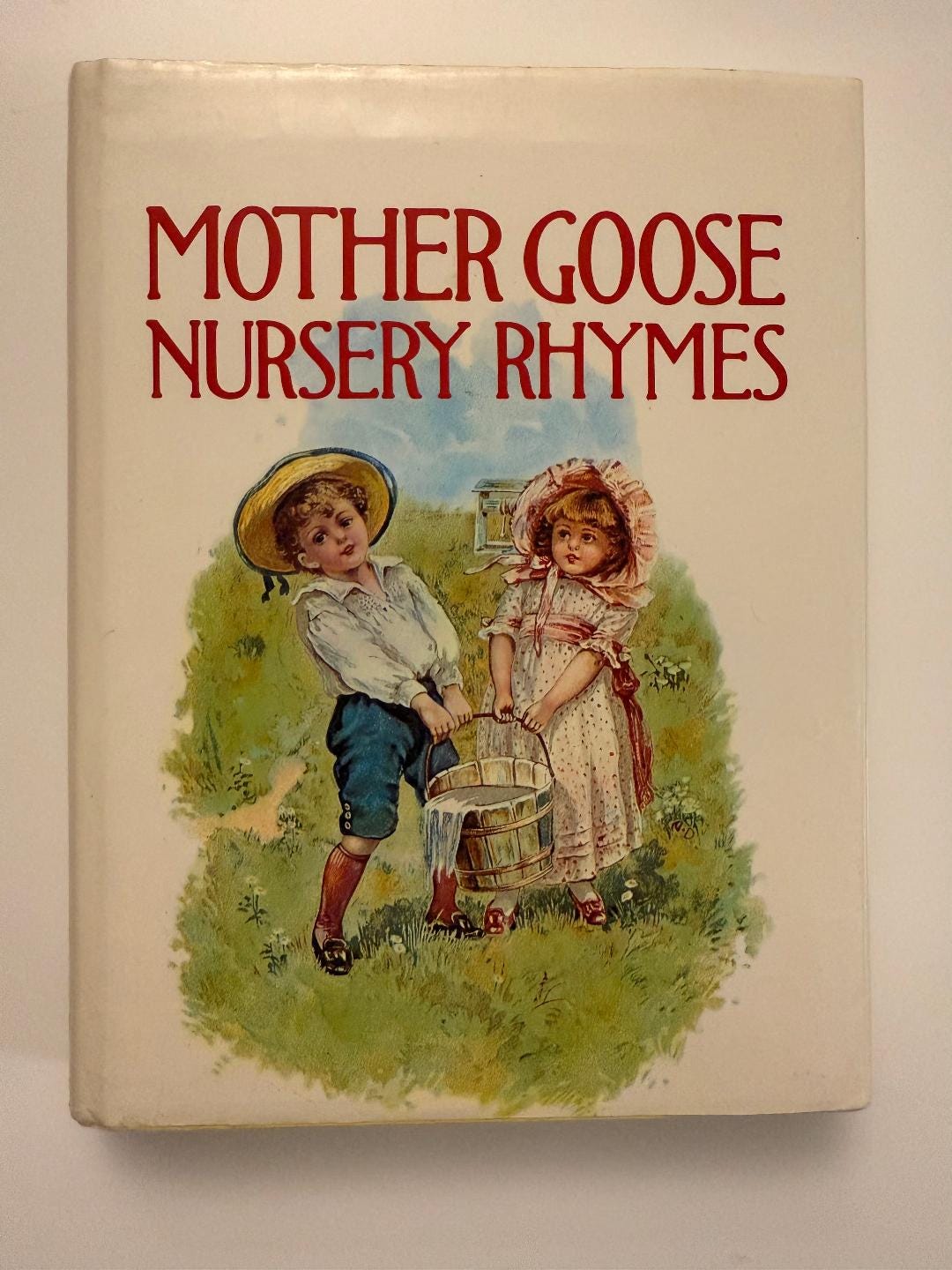
In the 1940 version, the nursery characters that come to life on New Year’s Eve are drawn from Nursery Rhymes Old and New, a Victorian era edition of classic English nursery rhymes. In the 1943 version, however, the characters come from Mother Goose Nursery Rhymes, which refers not to a single book but a long-standing tradition of collections featuring familiar English rhymes and characters.
In the 1940 version Admiral Boom blows a trumpet in the frosty air while in the 1943 story he clangs a ship bell.
In the 1940 version, Barbara’s monkey toy is called Sissie, while in the later version the toy is renamed Pinnie.
In the first version, when the children follow their toys to the park where characters from fairy tales and nursery rhymes have gathered to celebrate a magical moment of happy ever after, the brief crack between the first and last stroke of midnight on New Year’s Eve, they are greeted by the Frog Who Would a-Wooing Go. In the second version, however, they are welcomed instead by the Three Blind Mice and the Farmer’s Wife.
There are several similar small changes in the second version of the story, although the reasons for them are not entirely clear. Even so, the heart of the narrative remains unchanged, reminding us that we each must work to reconcile the opposing forces within our inner and outer lives.
Wishing you all a happy ending of the old year and an even happier start of the new year.
I feel like “Lucky Thursday,” one of the stories in Mary Poppins in the Park (the fourth book in the series) published in 1952, is the perfect story to revisit during this misty time of year. Hopefully you will find my musings entertaining enough to forget the grey hues of November at least for a little while.
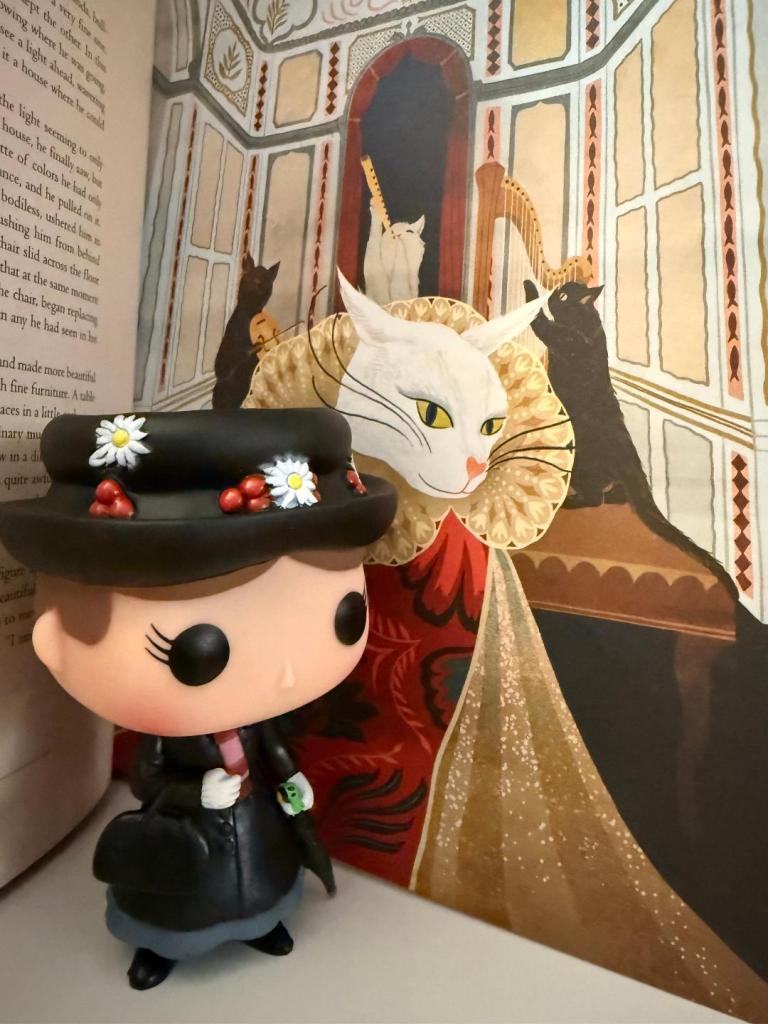
“Lucky Thursday,” is one of four stories in the Mary Poppins books in which P.L. Travers explores the tricky nature of wishes and the unsettling truth that they sometimes come true in ways we never intended. However, as much as this theme deserves a deeper dive and one that I will certainly take on another occasion, in this post I want to show you something a bit different. I want to tell you about a curious connection between the eerie elements in this Mary Poppins story and a French fairy tale written by Madame d’Aulnoy in the late seventeenth century.
In “Lucky Thursday,” Michael Banks, who has been stuck alone all day with a cold in the nursery, makes three wishes on the first star in the night sky. The next day, strange events begin to unfold, but he does not realize the connection between them and the wishes he made the night before in a moment of frustration until it is almost too late. One of his three wishes is to be far away from his siblings. That wish is granted, and he soon finds himself in a very strange place, as you will see.
I did not have the chance to read Mary Poppins in the Park as a child. My copy of Mary Poppins included only the first two books in the series, so I cannot compare my reading experiences, but the strong uncanny elements in “Lucky Thursday” impressed me even as an adult reader. I couldn’t stop wondering how on earth P. L. Travers dreamed up the idea of an alien abduction of Michael Banks who lands on a planet ruled by cats. (You see, practical questions like this often pop into my head while I’m stuck in traffic on my daily commute.) For a long time, and until quite recently, I had no answer to this question as P. L. Travers was famously private about the inspiration behind her stories.
Let me give you a little bit of context. After a day stuck in the nursery, Michael Banks is feeling better and joins Mary Poppins and his siblings on their usual visit to the Park. There, while Mary Poppins sits quietly reading What a Lady Should Know, he takes a silver whistle from her open handbag without asking permission and strolls farther into the park, where he can enjoy playing with it undisturbed.
A cat with a “black and yellow coat” that “shone in the sunny mist, more like dapples of light and shadow than ordinary fur,” which Michael had noticed on the windowsill the night before, guides him farther into the Park. A steaming vapor rises from the earth and envelops them both. Prompted by the cat, Michael jumps into the air and suddenly feels himself lifted upward into empty space. Moments later, he lands on the steps of a golden palace on the Cat Planet, which turns out to be the very first star on which he had made his three wishes the night before.
The golden castle is inhabited by the Cat King, the Cat Queen, their three daughters, and many cat courtiers. At first, everything seems amusing to Michael until he is offered a meal of a dead mouse, a bat, and small raw fish, all served on golden plates, along with milk in a saucer. It is then that he realizes the cats are far from friendly. Soon after, he discovers the horrifying truth about his position at their court: all the cats’ food is prepared by enslaved children who, like him, had wished upon a star to be away from their families.
Michael is offered a chance to escape his predicament, but only if he can solve three riddles. Should he succeed, he is told, he must marry one of the King’s daughters. Michael finds the answers to the riddles easily enough, but he has no desire at all to marry a cat. His refusal is not well received by his hosts. The offended cats begin to hiss and close in on him, and they might have torn him to pieces had he not blown the silver whistle to summon Mary Poppins to his aid.
“Lucky Thursday” is a strange and uncanny story, and it is not impossible that P. L. Travers came up with the idea of a royal court of cats on her own. However, when I recently read Madame d’Aulnoy’s fairy tale The White Cat, the similarity of the setting made me wonder: could P. L. Travers, who was deeply immersed in fairy tale lore, have borrowed this motif from Madame d’Aulnoy’s tale? Writers often draw inspiration from one another. Human creativity does not exist in a vacuum, for ideas, like bees, cross-pollinate among our minds.
The fairy tale The White Cat unfolds in a distant kingdom where a prince, sent on a quest by his father, meets the White Cat, a princess presiding over a court of cats and bodiless hands serving as attendants. Unlike Michael, the prince is offered human food while the cats dine on dead mice and the White Cat helps the prince in his quest. He eventually falls in love with her and when he declares his love, she asks him to cut off her head and tail. He initially refuses to do so, but at last he complies, and by doing so, he breaks the spell that bound her, revealing that the White Cat is, in fact, a princess.
The similarities between the settings in these two stories, a golden palace in one and a castle of gleaming gemstones in the other, each with a royal court of cats and both situated in distant locations, are too striking in my opinion to be mere coincidence.
As is often the case with P. L. Travers, one question leads to another. If she knew about the fairy tales of Madame d’Aulnoy, why didn’t she mention her in her writings? She often spoke of the Brothers Grimm. A possible explanation might be that she dismissed Madame d’Aulnoy because she was inventing her stories rather than retelling old tales from anonymous sources, as the Brothers Grimm did.
But little did she know that even the Brothers Grimm and Charles Perrault had taken inspiration from Madame d’Aulnoy and her circle of women writers, who called themselves “the fairies” and were, in fact, the first to coin the term fairy tales.
I learned about Madame D’Aulnoy and the other fairies, Henriette-Julie Murat, Charlotte-Rose La Force, Marie-Jeanne L’Heriter, Catherine Bernard, Catherine Duran and Louise D’Auneil from Jane Harrington’s wonderful new book Women of the Fairy Tale Resistence, The Forgotten Founding Mothers of the Fairy Tale and the Stories That They Spun.
Harrington’s book is a must-read for any fairy tale aficionado. I was deeply fascinated to discover the lives of these women writers in Paris who challenged social norms during the reign of Louis XIV, the Sun King. Their lives were far from easy, yet despite the many obstacles they faced, their voices sustained them. Although men tried to erase their names from history, their writings have endured, offering a vivid glimpse into their struggles to find true love and live happily ever after.
The research conducted by Harrington is truly remarkable. I was astonished to learn that Charles Perrault, whose fairy tales I devoured as a child (I still have my old Bulgarian editions), borrowed from her stories without giving her any credit. According to Harrington, L’Héritier often remarked that Perrault had plundered her work. One of the tales I loved as a child, “Diamonds and Toads,” is in fact a simplified retelling of “Blanche,” a story written by Marie-Jeanne L’Héritier, who, incidentally, was also his relative.
I wonder what P. L. Travers would have thought of Harrington’s book and of the lives of these women writers. If she dismissed Madame d’Aulnoy because she was a writer of fairy tales rather than a “reteller,” that only adds to the paradoxes in Travers’s thinking. After all, she herself was a writer of fairy tales. Of course, she would have argued that the Mary Poppins stories are not fairy tales, and perhaps from an academic standpoint they do not fit the definition, not even as literary fairy tales, which are often written adaptations of stories from oral traditions.
P.L. Travers was influenced by myth, mysticism, and Gurdjieff’s spiritual teachings. She thought in mythic rather than folkloric terms, but her stories are an original combination of fairy-tale motifs with mythic cosmology and spiritual allegory.
In conclusion, the Mary Poppins stories are not traditional fairy tales but rather hybrid modern literary wonder tales that adapt the structure and spirit of fairy tales to explore mythic and metaphysical themes within a domestic setting. And this is why they are so fascinating to explore.
I wish I could talk about all this with P. L. Travers, but even if that were possible, there is no guarantee she would answer my questions.
After all, she was known for avoiding direct answers.
That’s it for now—thanks so much for reading! If this post brought you a little joy, go ahead and click the subscribe button in the bottom-right corner of your screen so you don’t miss any future posts. You can also follow me on Facebook, Instagram, and Substack for more peeks into the magical world of Mary Poppins, P. L. Travers, and other enchanting literary adventures.
This blog post is going to be slightly more personal than usual as I want to share with you one of the many Mary Poppins effects in my personal life. These, for me magical, effects are incontestably transformative and have greatly enriched my inner life and personal happiness. That said, I am not suggesting that all personal challenges have vanished, but my ability to sustain and show resilience comes directly from these various effects.
First and foremost, reconnecting with my childhood reading of “Mary Poppins” reminded me of my deep love for magic and fairy tales. It also made me realize that my daily life had, sadly, become quite dull and ordinary. It’s not that I wasn’t surrounded by people and events—my life was filled with all the things that keep us busy and distracted. Of course, my family is a great source of love and support, and I am forever grateful to them, but there was an emptiness within me that couldn’t be filled by anyone, no matter how loving they were. It just dawned on me (and perhaps this realization had been building up inside of me for some time) that I felt constrained. Faced with this moment of recognition I had to acknowledge the need for more joy and wonder in my life.
But where to find them?
I decided to go search for them in the places where I had found them as a child. The day had come when I was finally old enough to start reading fairy tales again, to paraphrase a quote by C.S. Lewis. I felt goosebumps when I first read this quote by C.S. Lewis because the truth of his words resonated so deeply with my own experience.
Then, organically, one thing led to another, and I found myself collecting old books of fairy tales and fantastical adventures, something that I would never have thought I would be doing a few years ago, as it was so remote from the spheres in which I operated.
The moments I spend reading fairy tales and fantasy novels, or treasure hunting for old books, are pure bliss—a breath of fresh air in my daily life. It’s not just an escape from the ordinary; these activities also allow me to see the world in a new light. Looking at my bookshelves fills me not only with joy but with a sense of groundedness—a feeling of coming home. And I owe it all to P.L. Travers and her Mary Poppins.
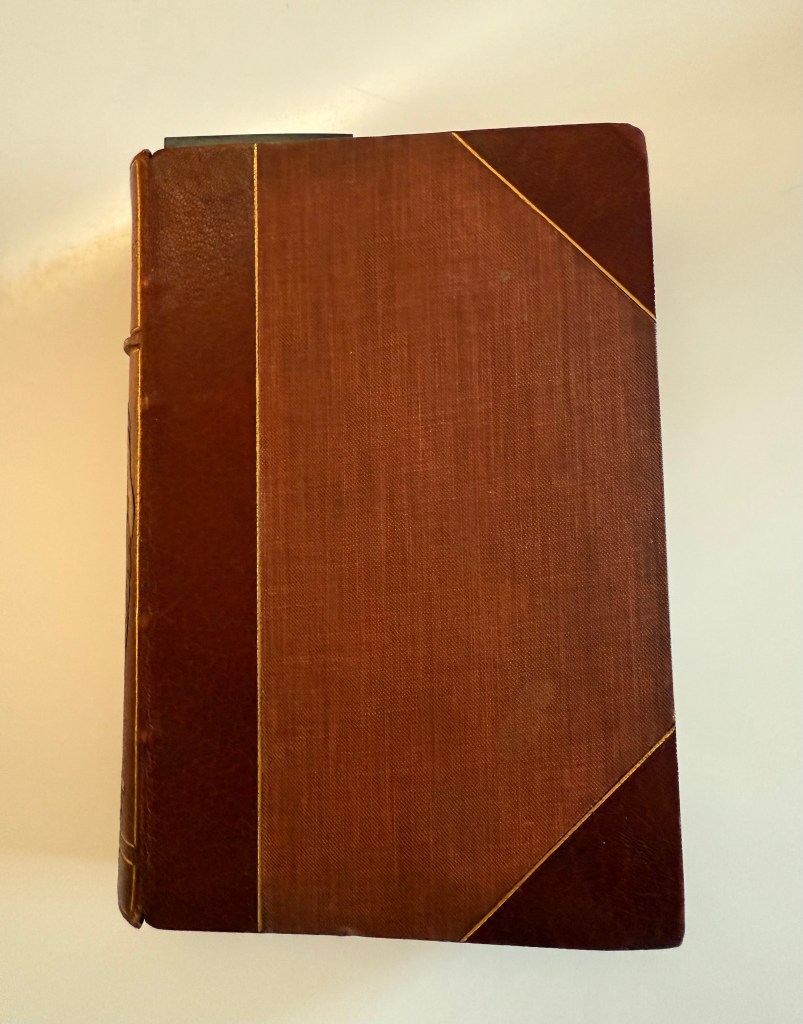
Here, I’m sharing some pictures of the books in my modest collection, which I hope will expand over time.
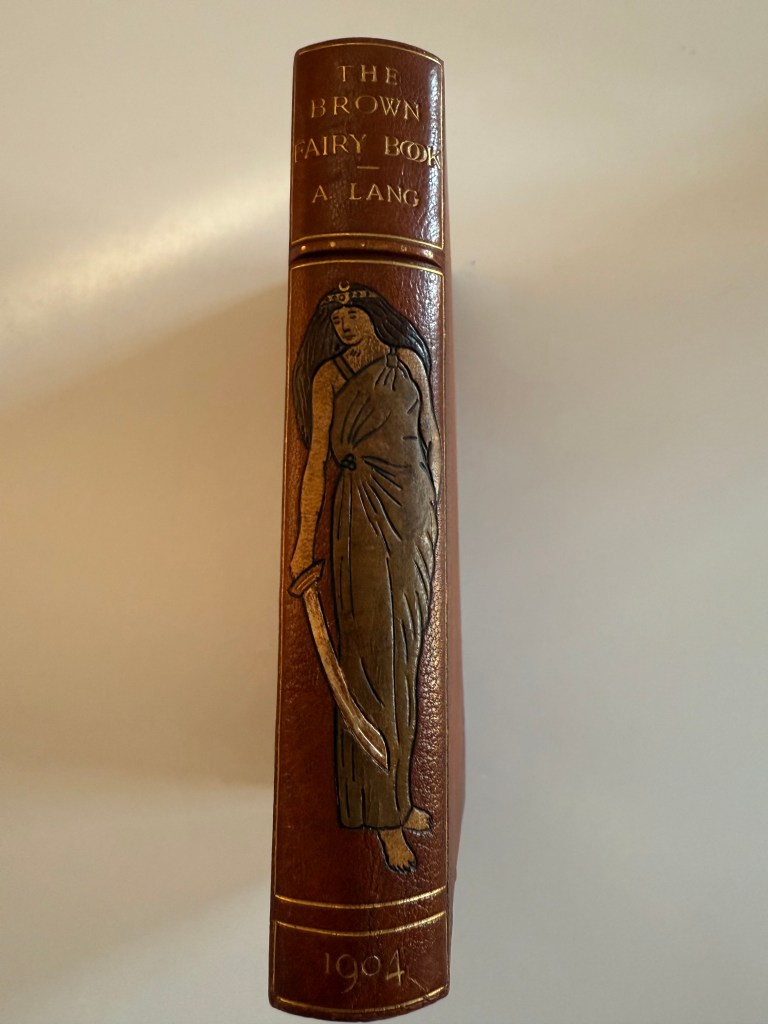
The Brown Fairy Book by Andrew Lang. Illustration below is by H.J. Ford.
Below is a picture of the cover of Princes and Princesses by Andrew Lang.
Illustration below by H.J. Ford.
Below is the cover of Myths & Legends of Japan by F. Hadland Davis.
Illustration below by Evelyn Paul.
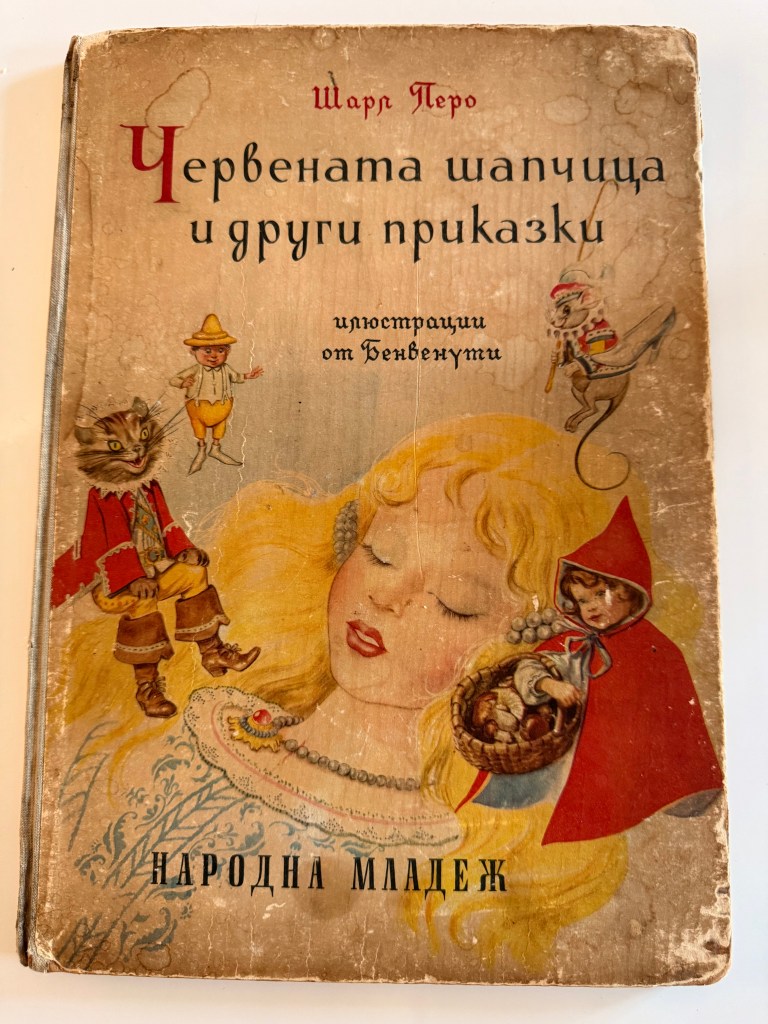
While reading interviews given by P.L. Travers, I discovered that our childhood readings intersected, despite our cultural and generational differences. We both read Beatrix Potter, the Brothers Grimm, and Andersen’s fairy tales, to name a few, only I read them translated in Bulgarian. This realization brought back memories of the fairy tales from my own childhood, with their beautiful illustrations, and I felt a deep grief for having left behind the most cherished treasure of all—my books.
My initial response to counter this grief was to dismiss it as childish. I told myself I had to accept certain losses in life. On a practical level, I also thought it unrealistic to expect I could find copies of these books now that I live so far from my birthplace. But was I being childish? Was this a loss that needed to be accepted, or was it the kind of loss that could be retrieved? P.L. Travers herself pondered the theme of loss often, and in her later years, she would say that all that is lost is somewhere.
I decided to give it a try, and with the help of the internet, I’m happy to report that, after a couple of years, I was able to reconstruct most of my childhood fairy tale book collection. I successfully found old copies of the editions I had as a child, as well as some new reprints of those same editions.
These were the books my mother read to me at bedtime and the ones I learned to read with, before I got acquainted with Mary Poppins.
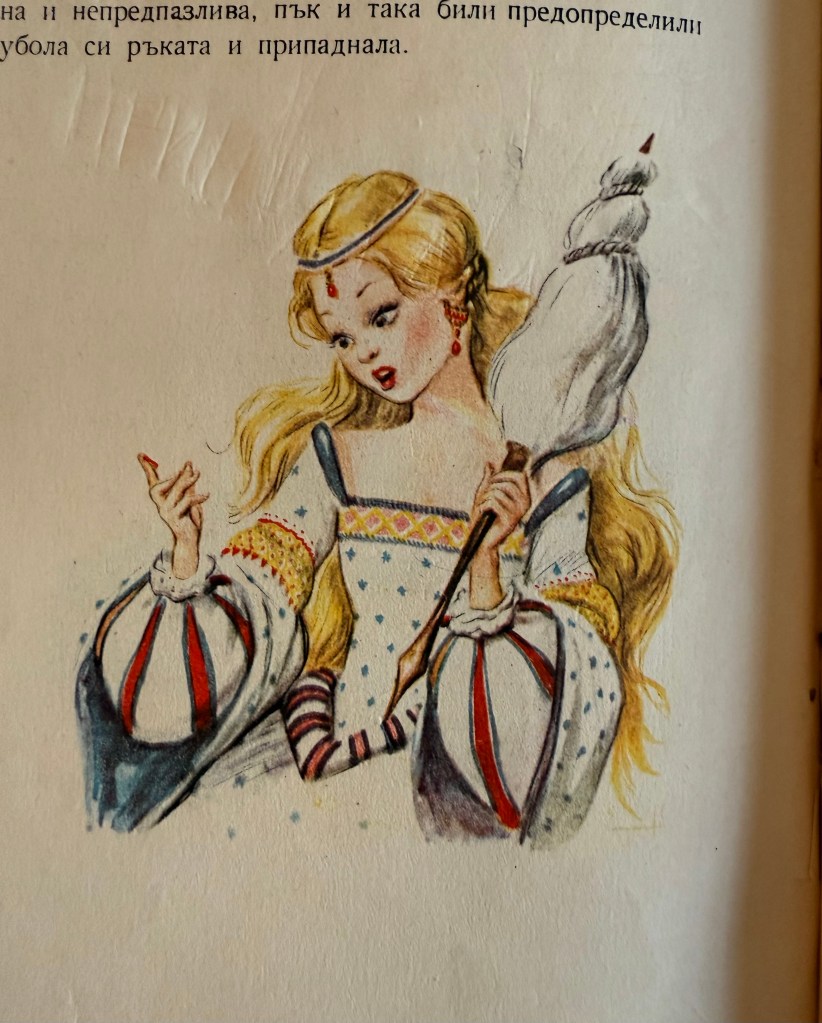
Below are pictures of the illustrations in my copy of Sleeping Beauty. The illustrator is Italian artist Gianni Benvenuti. This was P.L. Travers’s favourite fairy tale. She even wrote her own retelling of it and I wrote two blog posts about it back in 2017; you can read one of them here, and if you’re interested, the other is easily found on the website of this blog.
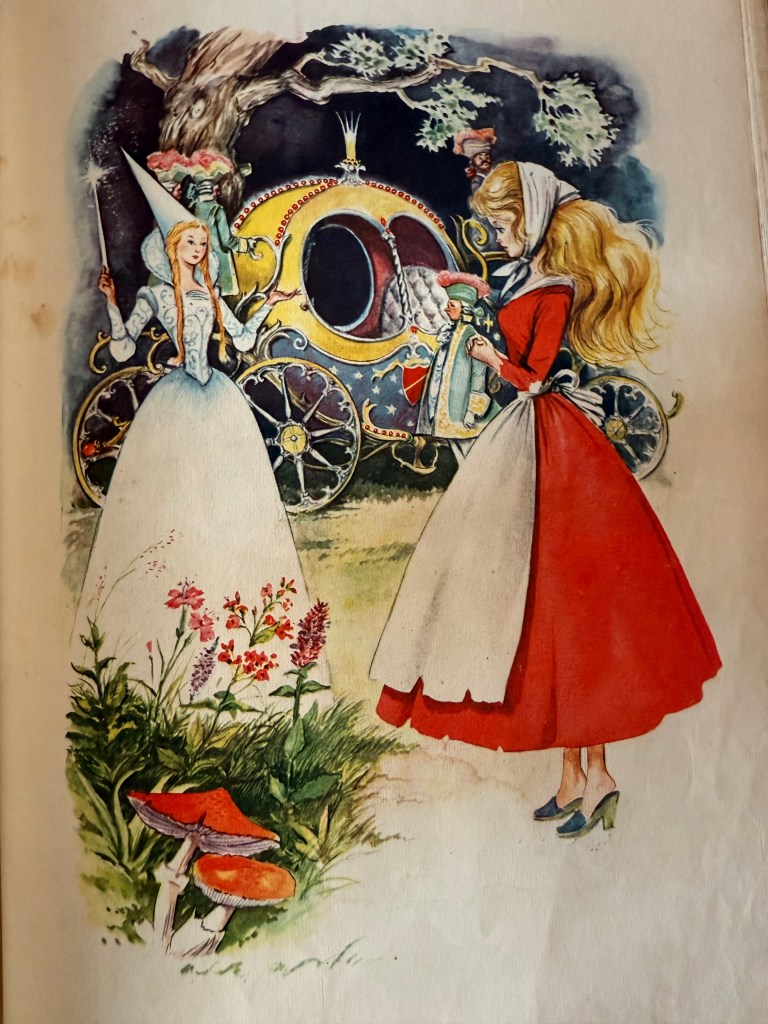
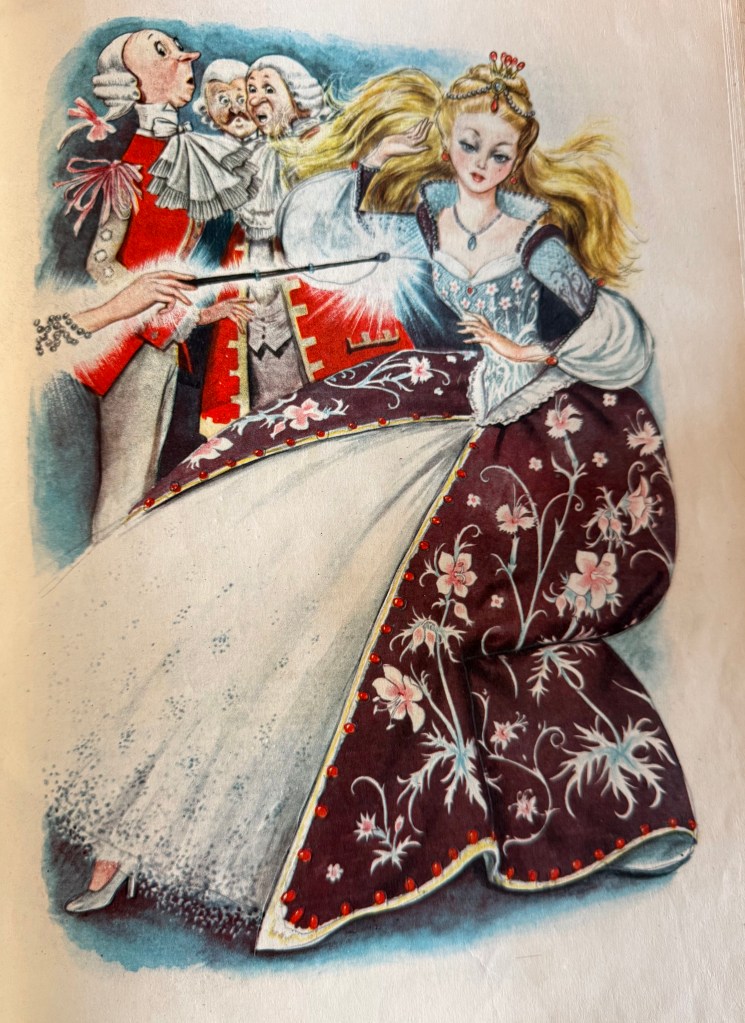
Cinderella was my personal favourite fairy tale as a child, followed closely by Snow White, mostly because Snow White had dark hair like mine. The illustrations below are also by Benvenuti.
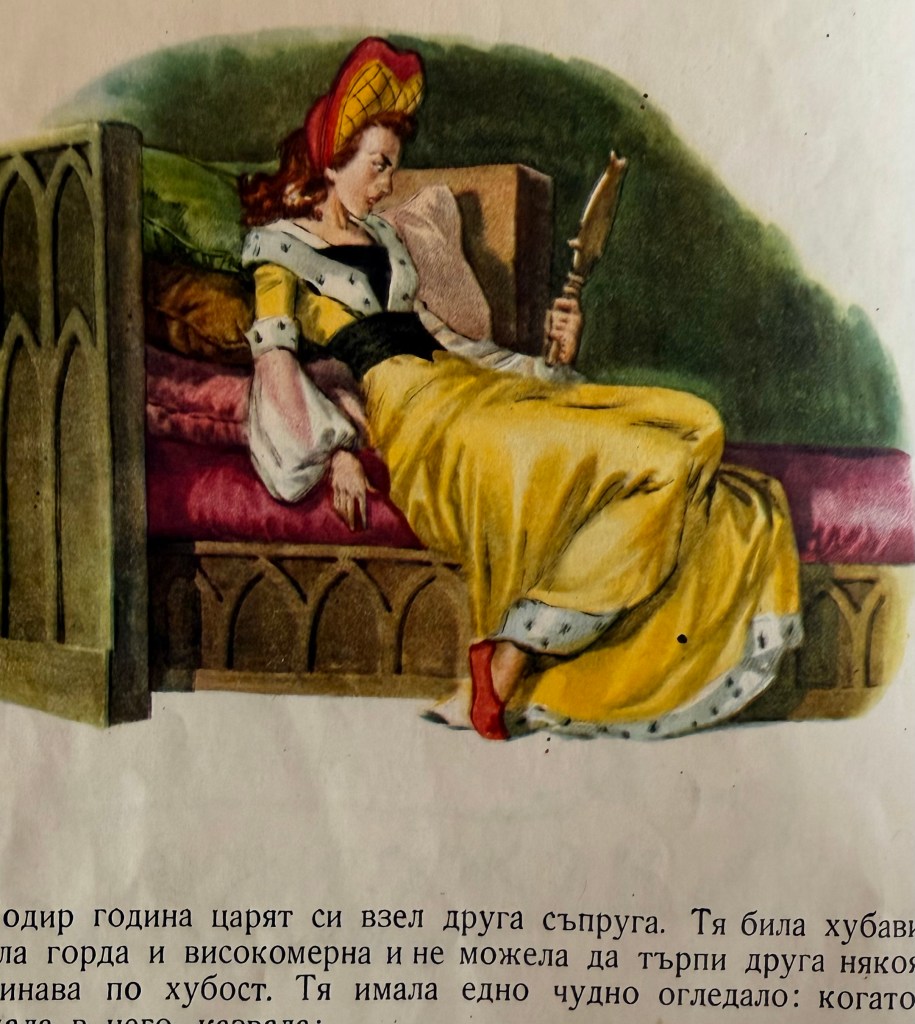
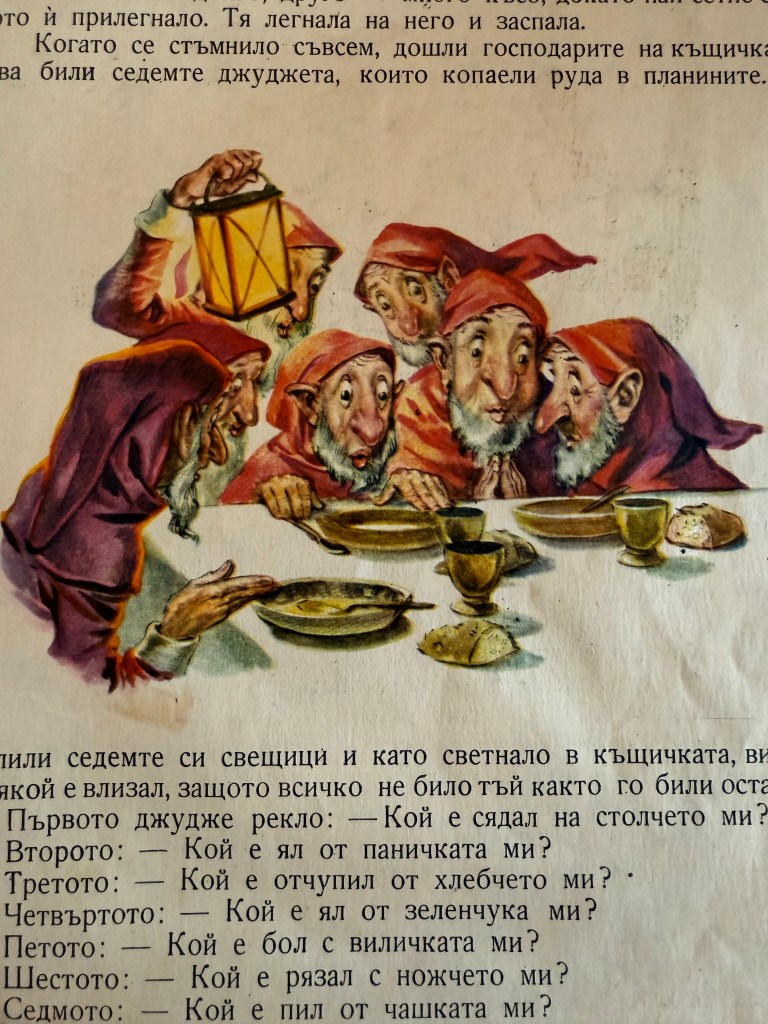
The illustrations of Snow White below are by Sandro Nardini.
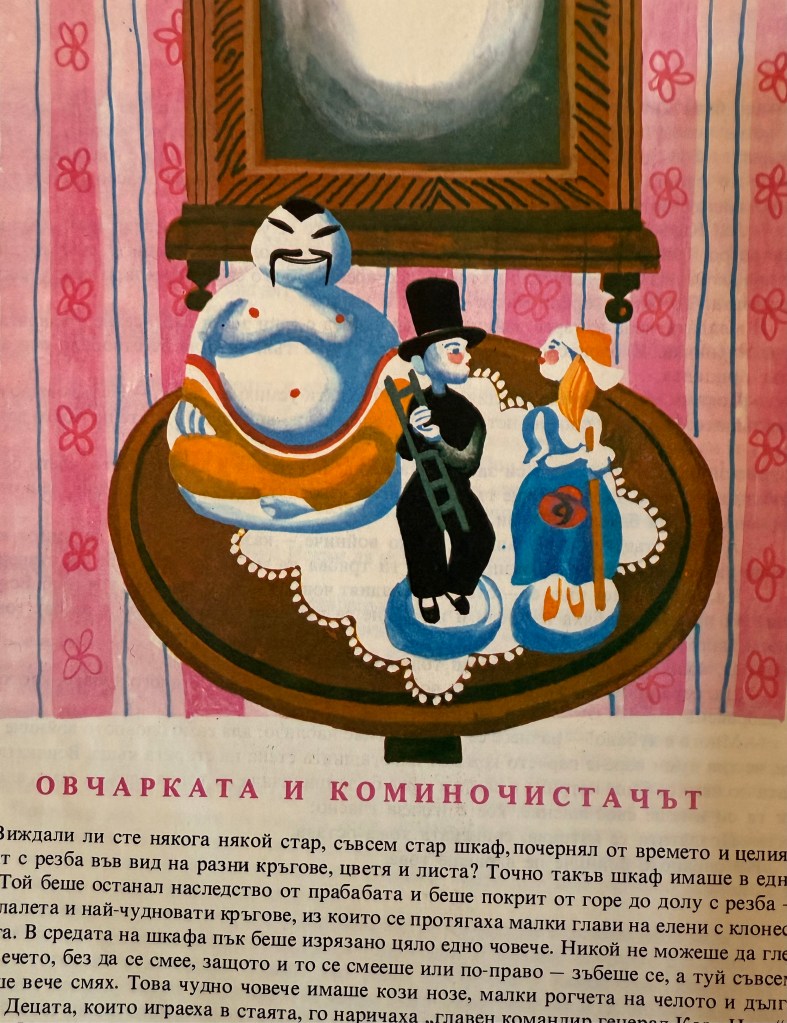
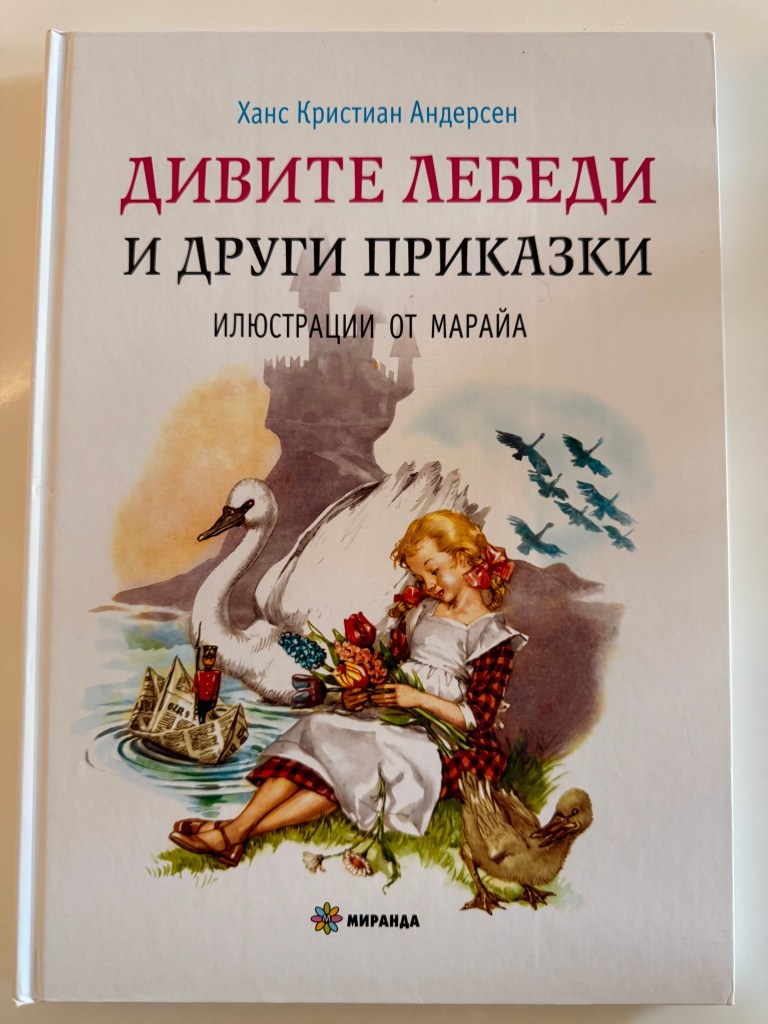
And these are my two books of Andersen’s fairy tales. One is quite tattered, and the illustrations aren’t as beautiful as in the other, but I still enjoyed the stories. P.L. Travers loved Andersen’s fairy tales as a child, but as an adult, she had a different view. She believed Andersen undermined the vitality of his stories through his constant appeal for pity. It’s an interesting perspective, but one I don’t share.
The illustrations above are by Lyuben Zidarov. And the illustrations below are by Libico Maraja.
Here is now Peter Rabbit by Beatrix Potter. I must have been around three years old when my mother read Beatrix Potter’s stories to me, and I remember the illustrations captivated me with such magnetic force. I wish I had P.L. Travers’s lyrical talent to describe the experience. It’s hard to put emotional states and impressions into words, but it truly felt as if I was part of the picture. It’s a strange feeling to remember the state yet not be able to recreate the experience. I still enjoy the illustrations, but our perceptions do grow duller as we age.
P.L. Travers adored Beatrix Potter and wrote a review of The Tale of Beatrix Potter by Margaret Lane. I wrote a blog post about it some time ago, you can read it here.
This is all for now. I’ll share more of my childhood book collection in a future post. In the meantime, take care, and I hope you’ll return to read more about Mary Poppins, P.L. Travers, and my adventures as I continue to explore their world.
I am thrilled to share with you some biographical facts hidden in P.L. Travers’s book ‘I Go by Sea, I Go by Land’. I first read this fictionalized account of her evacuation from the UK to the United States during WWII in 2018.
Briefly, for those who are unfamiliar with the book, it is written in the form of diary entries from 11-year-old Sabrina who recounts her and her brothers’ evacuation to the United States during the Second World War. Sabrina and her brother are accompanied on their journey by Pel, a family friend who is a writer and the mother of a baby named Romulus. As revealed by Valerie Lawson in her biography of P.L. Travers, ‘Mary Poppins She Wrote’ Pel stands for P.L. and Romulus for P.L. Travers’s adopted son Camilus.
My second reading of ‘I Go by Sea, I Go by Land’ proved more fruitful than my first one. (This tends to happen when revisiting books.) At the very beginning of the book P.L. Travers writes that ‘the experiences recorded in the book are authentic’ and as the story is ‘a personal record (…) certain names have necessarily been altered.’ Taking P.L. Travers’s statement to the letter, I approached the story with the mindset of a detective, meticulously following every clue and detail. What follows is what I discovered about P.L. Travers’s visit to Montreal in the autumn of 1940.
Montreal is where my parents and I settled after leaving Bulgaria in the early 1990s, and although I no longer live in the city, it is where I work during the week and where I often spend time with friends. You can imagine the excitement I felt when I connected the dots between the hints in the book about the locations P.L. Travers visited and the people she encountered during her stay.
During her visit to Montreal, P.L. Travers stayed at the Windsor Hotel, where other famous authors, such as Charles Dickens and Mark Twain, had sojourned before her, although the story doesn’t say if she was aware of it. This is how she described the lobby of the hotel in ‘I Go by Sea, I Go by Land’ in the words of Sabrina who writes in her diary that the Hotel ‘is just like a Cathedral inside’.
Below is a picture of the lobby of the Windsor Hotel in 1878 taken by William Notmam and you can see why Sabrina (P.L. Travers) compares it to a Cathedral.
The Windsor Hotel was one of Canada’s most impressive buildings of the Second Empire style and was considered the best hotel in all the Dominion. It was a magnificent nine-story structure of sandstone and granite which span along the entire block of René-Lévesque (then Dorchester) Boulevard and Cypress Street, between Stanley and Peel (then Windsor) streets. To its guests it offered “palatial splendor with its gold-embossed lobby, six restaurants, two ballrooms, concert hall and 382 luxurious guest-rooms”.
Unfortunately, a fire devastated the hotel in 1957 and “the damages caused to the South wing were so great that the structure had to be demolished on August 12, 1959. All that remained was its 1908 North Annex – this portion of the former hotel still stands today.”
Below is a picture I took of it for this blog post.
Now, let’s turn to another revealing entry in Sabrina’s diary. She writes about how, upon their arrival at the hotel, they are greeted by the Red Cross. When Pel signs her name, a Red Cross representative named Letty recognizes her, suggesting that Pel is a famous author, and invites her to lunch at her home. Then the reader learns that Letty has four children, all boys and that her husband is ‘a famous doctor’ called Kent.
When Dr. Kent comes home, he offers the guests “cocktails of lemonade and coco-cola” and then takes Pel and the children for a drive to show them the river (Saint Lawrence River). At the end of the drive, at Pel’s request, he drops them off at the Cathedral. This is what Sabrina writes in her diary: ‘So she and James and I went in and there was water in two enormous sea-shells, very beautiful and fluted.’
The Cathedral in question is Mary Queen of the World Cathedral, which stands diagonally opposite form the Windsor building.
At its entrance stand two seashells filled with holy water. Below are the pictures I took for this blog:
Who was Dr. Kent?
Well, in my opinion, he could only have been Dr. Wilder Penfield, a neurosurgeon who revolutionized brain treatment. He became famous for his epilepsy operation, which came to be known as the “Montreal Procedure”.
I find his physical description in the book quite perceptive; it is exactly the impression Dr. Penfield gave me when I watched a documentary about him.
“He has the kind of face that makes you want to keep on looking at him. Very kind and twinkly and it seems to say to you ‘There now. Everything is all right. Don’t worry.’”
Dr. Penfield was born in 1891 in a middle-class family in Wisconsin, United States. He studied at Princeton and Oxford. He initially sought to establish his career in the United States, but it was not easy for a junior surgeon in an emerging medical field. At that time Montreal was a city with an internationally famous medical community but with no full-time brain surgeon. The only full-time brain surgeon in Canada had set up in Toronto.
The Royal Victoria Hospital went shopping for a brain surgeon in New York and in 1928 Dr. Penfield came to Montreal. In 1934, with the combined help of the Rockefeller Foundation, the City of Montreal and the Quebec government, he founded the Montreal Neurological Institute which is still in existence today.
Dr. Penfield had four children, two boys and two girls, who in 1940 were aged 22, 21, 14 and 13. In my opinion, P.L. Travers tried to keep Dr. Penfield’s identity anonymous by changing the genders of two of his children in the story.
But, there is another clue in “I Go by Sea, I Go by Land” that points in the direction of Dr. Penfield. During WWII his wife, Helen Kermott Penfield, was deeply engaged with a volunteer group helping émigrés from war-stricken Europe. She had joined the circle of the bourgeois Christian women of the United Church on February 20, 1940. In affiliation with St. James Church this group started a refugee committee which met on regular basis and Mrs. Penfield became very active from 1940 until 1943. On a pragmatic level she liaised with the Canadian Red Cross and arranged for collections of clothes and groceries. It seems more than likely that Letty was, in fact, Mrs. Penfield.
When considered together, these elements make a compelling case for a meeting between P.L. Travers and Dr. Penfield. Unfortunately, Dr. Penfield’s children have all passed away, so I couldn’t validate my theory. However, the coincidences are too significant to dismiss.
I hope you enjoyed reading this blogpost as much as I enjoyed writing it, and that you will come back to read more about P.L. Travers and Mary Poppins.
As a devoted fan of P.L. Travers, you can only imagine my delight in having the opportunity to learn firsthand about a private conversation she had with bestselling fantasy author Gregory Maguire back in 1995, a year before her passing. I hope that reading this blog post will be as much of a treat for you as it was for me to write it.
As a young boy, Gregory Maguire loved the Disney adaptation of Mary Poppins, but he loved the books more. And I believe that this is the case for most of us who first encountered the magical nanny on the page. It was certainly my own experience, but then I never saw Disney’s Mary Poppins as a child growing up behind the Iron Curtain. My acquaintance with the cinematographic version of Mary Poppins came much later and at a time when my mind had acquired its critical abilities.
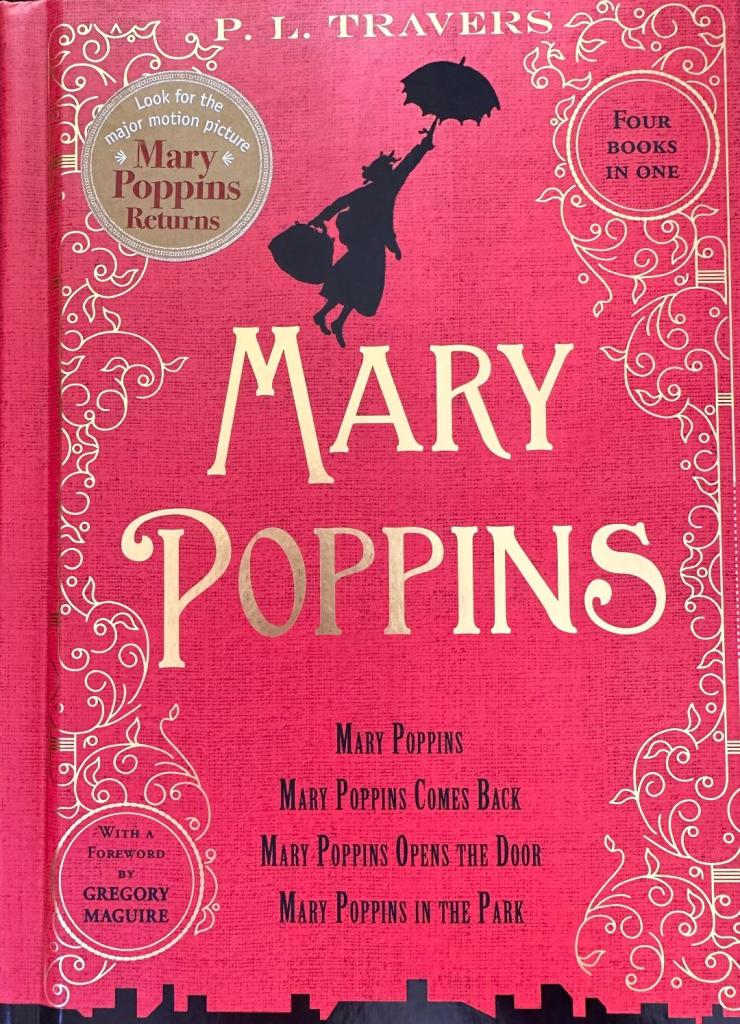
“The movie is sunny and as sweet as a spoonful of sugar. The books, though, show glimmers of a far more mysterious and even dangerous world. For thirty years before the nanny began to sing on the screen, she stalked the pages of these books with ferocity and power.” (Foreword by Gregory Maguire, Mary Poppins Collection published by Houghton Mifflin Harcourt, 2014)
I couldn’t agree more!
At the time of his meeting with P.L. Travers, Gregory Maguire was at a turning point in his writing career as he was just about to publish his bestselling novel “Wicked”. He was living in London, and after discovering that the author of Mary Poppins also lived there, he sent her a note, and in return received an invitation for tea.
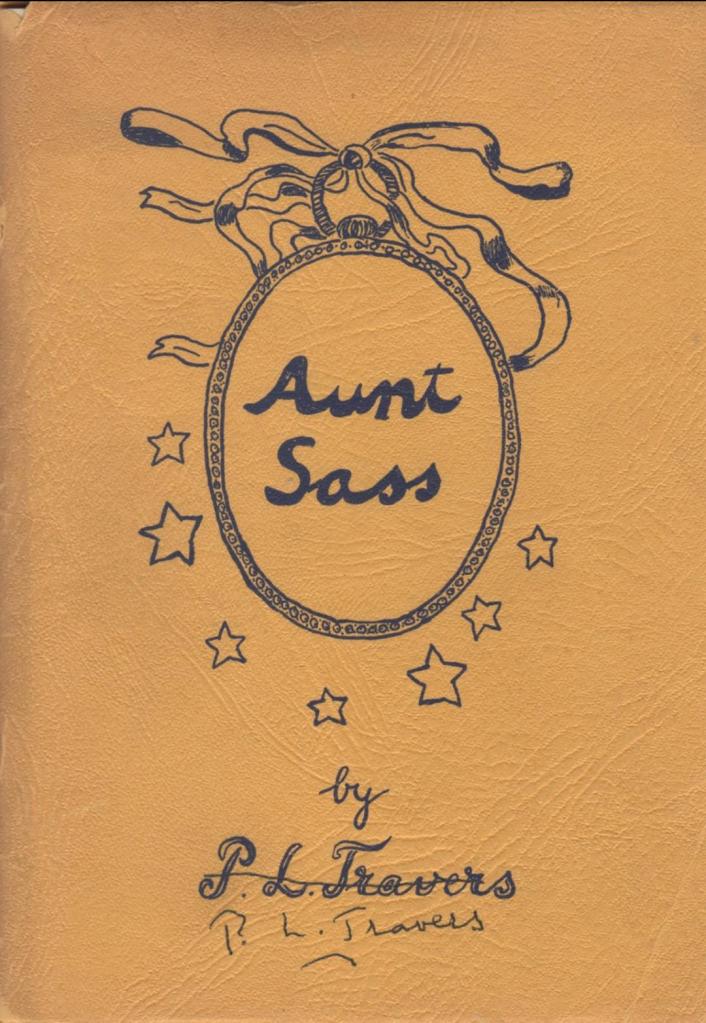
He showed up at Number 29, Shawfield Street, London on the appointed day and time with three of P.L. Travers’s books: one of the Mary Poppins books, “The Fox at the Manger” and “Aunt Sass”.
He found P.L. Travers “an old woman slumped in an upholstered chair set back from the window” in a “shadowy parlor that hadn’t been fluffed up recently”.
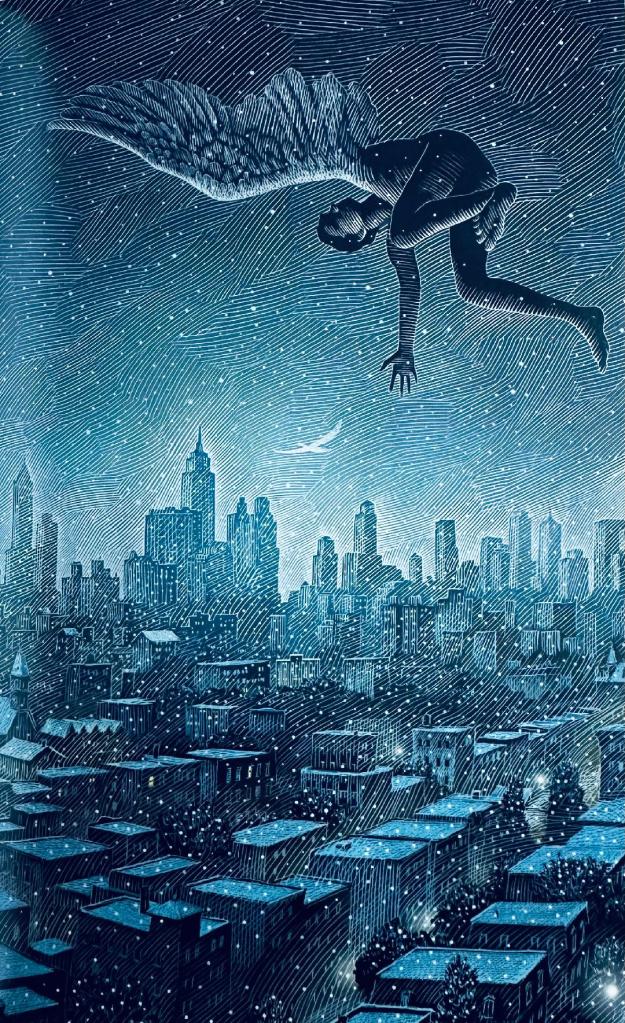
The meeting lasted for about an hour, but it was long enough for P.L. Travers to plant a seed for a story in her visitor’s fertile imagination. It was a comment she made about a fairy tale character, the youngest brother in the fairy tale “The Six Swans” by the Brothers Grimm. In this story the wicked stepmother turns her stepchildren into swans, and it is their sister who, in the end, breaks the spell by knitting shirts from aster flowers. Only she does not have enough time to finish the last shirt and the youngest brother is left with one swan wing instead of an arm.
P.L. Travers felt, and rightfully so, that there, at the end of one story, was the beginning of another.
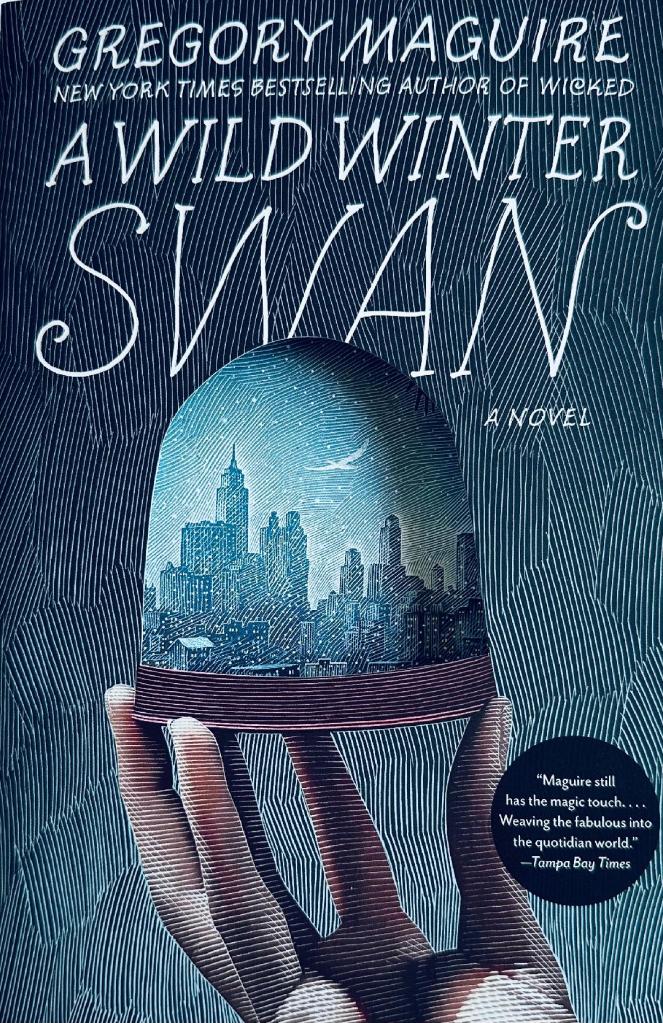
Shortly after Gregory Maguire finished writing his book “A Wild Winter Swan” but before its publication in 2020, he came across in his hand-written journals from 1995 something about P.L. Travers having said to him, “There’ a story – the sixth brother. Give him something to do. The boy with a wing. You know the one I mean?”
As the swan boy had been a beloved figure in his psyche ever since reading Hans Christian Andersen’s beautiful retelling of the Grimms’ fairy tale at the age of ten or twelve, her remark had evidently stuck in his subconscious. But that’s where Gregory Maguire tells us, seeds to stories wait.
This is by far the most exciting interview I have had the opportunity to conduct so far, but before we dive into it, and with Mr. Maguire’s permission, I am reproducing a portion of his lecture “The World at Hand, The World Next Door” presented by the Osborne Collection of Early Children’s Books for the 32nd Annual Helen E. Stubbs Memorial Lecture in November of 2019. Here is his charming recollection of his meeting with P.L. Travers.
I was living in London. Because somehow, I came across her home mailing address—perhaps in the phone book—I’d written to the author of MARY POPPINS, Ms. P. L. Travers, to thank her for her great work. She’d replied in a shaky hand ordering me to come to tea Tuesday week. Perhaps she preferred to receive tribute in person, I thought. (…) It’s nearly time to go—Number 29 Shawfield Street, London. . . .
A Georgian [row] house with a broad single window, behind palings, a small house on the east side of the street, behind a shocking pink door . . . at street level. The doorbell sharp and hard. I thought she might have forgotten, might not be there. A young woman, maybe part Jamaican, came in jeans and answered the door.
P. L. Travers sat in a chair in the corner, angled so she could watch out the window. She looked up when we came in and said to me, “Who are you?” I introduced myself—and she seemed not to hear me, but when I said again, more slowly, “Gregory” she appended “Maguire.” “You invited me to come by, and so I have, for a very short time,” I said. Mostly, in her face, were eyes and smile; she smiled like a small child; she seemed happy at everything, and smiled as a way of conversing. I had heard she was a bitch, a tart and difficult woman, but only at the end of my visit did one small comment erupt.
What follows is a sort of dialogue I devised that day out of notes I scribbled down on the back of a checkbook immediately after I had left Ms. Travers’ home. By this I mean it is more scripted than it may have sounded as it occurred—one can’t help imposing logic on scribbled notes. But the exchanges are verbatim as I could recall them even if they didn’t come out as sequentially as I put them down. Only a few words have been changed, for clarity.
PLT: I’ve been in the hospital and the nursing home for two years. I just got back. I can move very little.
GM: Can you get out at all?
PLT: Up and down the street.
GM: To the end.
PLT: To the second lamp-post. My world has shrunk to the second lamppost. But when I was out the other day, looking down to watch my feet, I found a present—
GM: —?
PLT: A star. A star!—there in the pavement. I’d never seen it there before. There’s a story—the sixth brother. Give him something to do. The boy with a wing. You know the one I mean
GM: Yes (I thought I might but wasn’t certain).
PLT: At the end of the street is a pub called the World’s End.
GM: At the other end, on the King’s Road, is a café called the Picasso Café. I sat there and a storm came up, and a rainbow came over—just ten minutes ago.
PLT: That was for you, to show you that you’re welcome here.
GM: You live between the star and the rainbow.
PLT: Yes! . . . . this is my whole world. There used to be… acres and acres of lavender, and cows mooing.
GM: Where is Cherry Tree Lane?
PLT: What?
GM: Where in London is Cherry Tree Lane supposed to be?
PLT: I don’t know what you mean.
GM: The house that Mary Poppins lived in. Is it in Chelsea? In Kensington?..
PLT: Oh! Well, no. Well, it’s…. it’s…. (she waves her hand)… It’s between here and someplace else.
GM: Do you know, I grew up on Mary Poppins. When I was ten years old, I sat on our front porch and read the books and ate sour-apple hard candy. I never forget it.
PLT: Do you know, when I came home from hospital, I picked up the second Mary Poppins book, and I began to read it. And I didn’t know what was going to happen! I turned the pages—I found it delightful. …. I didn’t know what would come next.
GM: I’m not surprised. She’s a mystery.
PLT: I don’t think we’ve seen the last of her. . . .
GM: Will you sign a few books?
PLT: It is hard to do.
GM: Maybe three? This is MARY POPPINS AND THE HOUSE NEXT DOOR.
PLT: And this is something special for you. (She draws a star). William Butler Yeats told me only to sign my name, but this is for you.
GM: Do you remember this? (A privately printed copy of AUNT SASS, which Travers had once had done up as a Christmas present for close friends.)
PLT: ! (She opens it.) Look! Stars! Nine stars! Who put those there? But where’s myname?
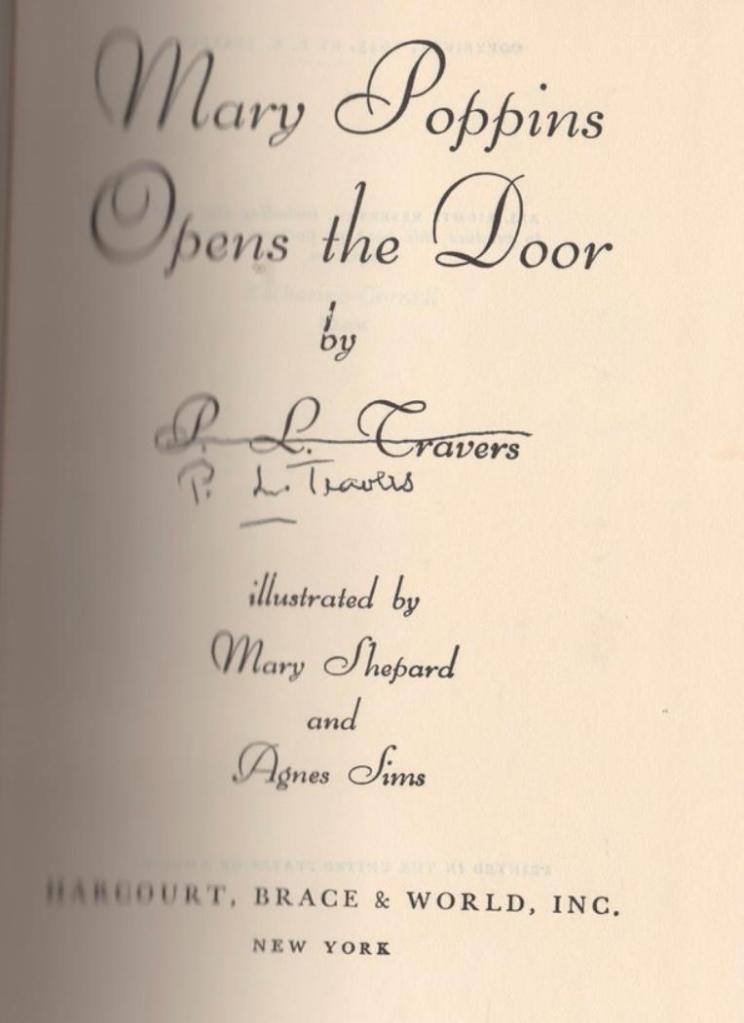
GM: On the front. (She crosses out the printed name and signs her own name.) And this last. MARY POPPINS OPENS THE DOOR. It’s my favorite.
PLT: It’s not for children.
GM: It’s Mystery. Mystery is for children.
PLT: Yes, but also for adults.
GM: Yes. Of course.
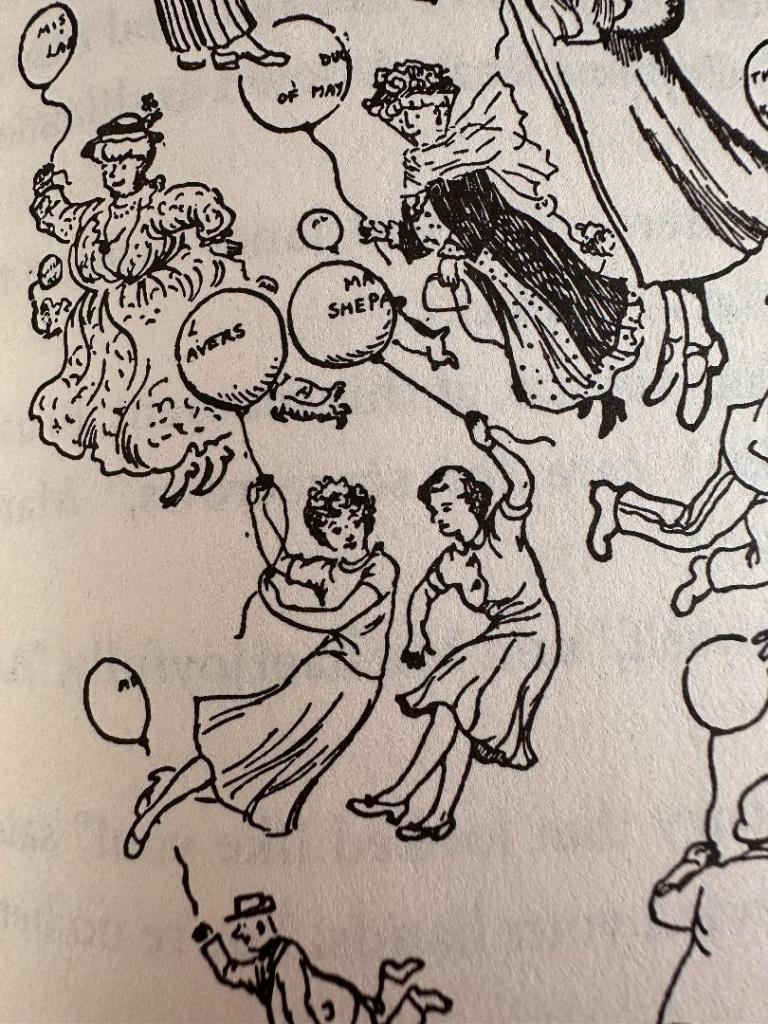
PLT: (She signs it.) I found a picture of myself in the chapter called “Balloons and Balloons.” Me and Mary Poppins and Mary Shepherd.
GM: I’ll look for it when I go home. And I should go soon. I’m flying out tonight.
PLT: Where?
GM: Dublin tonight, and Boston tomorrow.
PLT: I was at Radcliffe once, teaching. And at Smith. I loved Radcliffe. I hated Smith.
GM: Why?
PLT: A man from an American magazine called Life came to every lecture, and all the Smith girls threw themselves at him.
GM: This has been an extraordinary afternoon for me. I will never forget it. Thank you. (I kiss her.) Goodbye.
PLT: Goodbye. Write about this.
GM: Pardon—?
PLT: Write about coming here to tea.
Cheryl shows me to the door. I leave PLT sitting in the corner of the room, all eyes and smile, in a blue cardigan, knees together, hands on her knees. The big square window is now dark with dusk.
Something intriguing about the conversation: “Here I divert from my journals to insert a memory that I didn’t write down at the time. Ms. Travers elected to address me as the man who came to read the meters, and kept telling me they were out back, through that door. She seemed entirely unfazed that the meter man would arrive carrying rare copies of her hardcover books and would be conversant in arcane details of her career and work. I’ve often wondered if she wasn’t having me on.”
Reading about the man who came to read the meters made me smile. She was, most probably “having him on”. Her life quest was all about finding the meaning of life and the questions she asked in her essays were “Who are you?” and “What is man a metaphor for?” It is possible then that she was probing her guest in the manner of her spiritual teacher G.I. Gurdjieff, who used to shock and surprise his pupils with strange statements and behaviours in order to break down their habitual thought patterns and thus strip off their masks.
Now, onto my interview with Mr. Maguire and his delightful book “A Wild Winter Swan”.
LS: Is there is a possibility for a sequel of “A Wild Winter Swan”? In the ending Laura explains the swan boy’s arrival into her world in these words: “No, he has flown away from them once because he could not bear to be other than wholly human. Now he has to try the alternative. He really doesn’t have a choice. Do we.” But what if that alternative does not prove to be the solution either?
GM: I have not contemplated writing a sequel to “A Wild Winter Swan” —but I never say never with conviction. I had not contemplated writing a sequel to “Wicked”, and it was ten years before “Son of a Witch” came out. There have been five more books about my take on Oz after that one—so far.
Still, in regard to “A Wild Winter Swan”, I admit there is something both sad and satisfying in the loss of a character whom one has come to love—even one who is ultimately bewildering. Not unlike, come to think of it, a certain Mary Poppins herself. I tried to leave the reader with a sense of insecurity about how and even why this boy, Hans, had landed in Laura’s life.
LS: Yes, I did wonder about that too. Did Laura somehow summon him because she herself was in a liminal state of being; suspended between the dreamland of childhood and the demands of adolescence, all in the background of the dire circumstances of her personal life? Or was it the other way around. Why did the swan boy happen to Laura?
GM: Why does anything happen to anyone? Why did Peter Pan land on the nursery windowsill of the Darling family instead of the family next door named the Oblenskys, with their fat little cousin visiting from Moscow, the one who dangled the family turtle from a third-floor window and nearly decapitated it? It just happened. Wendy’s mother told stories, after all, and Peter wanted to hear the stories.
Hans might just have landed on Laura’s windowsill by chance. Things happen in stories. On the other hand, Laura had just read the Andersen tale to those first-grade students. Then she’d come home and helped rescue a worker about to fall off Laura’s own roof. The conditions of Hans’s arrival were established in her mind by the events of the day. Maybe they helped her recognize him when it happened—or maybe it was happening largely in her mind, a dream and hope of escape and of rescue from her increasingly dire situation. (Of course, no one else saw the visitor except the cat, and there is the matter of the bloody eels, the most proof that someone else is in the house with the Ciardi family. But maybe the cat did get the eel itself, and Laura was inventing what else must have happened in the terms of the story going on in her head.)
This makes a sequel hard to position in my imagination, for in order for there to be more to Hans, I would have to be more definite about how, and what, he actually is—and that he lives outside of the story Laura is busy telling herself in her own head. And I’m not sure of that myself.
The point is, while I think that Hans is real, and so does Laura, others might not be so sure.
LS: I believe Hans to be real too, but maybe other readers will interpret the story differently. P.L. Travers said that a book is only half the writer, the other half being the reader. I wonder if you intentionally made the parallel between Laura’s inner strength and that of Elise in Andersen’s story.
Elise must knit shirts from stinging-nettle without ever saying a single word and at the risk of perishing because of it. Laura does speak in the story, but she is mute about the existence of the swan boy, and she goes about his rescue in the most secretive way despite all the challenges that his presence creates in her already troublesome situation.
I found Laura to be just as self-contained, determined and resilient as Elise in Andersen’s fairy tale. And just like in Andersen’s fairy tale, by saving the swan boy, Laura saves herself. Did you start writing the story with the end in mind, or did the narrative unfold organically in this way?
GM: When I began to write the story, I wanted Laura to be clever imaginatively but not socially—perhaps a bit backward in school. I never know how stories are going to end when I start them—that means I am uncovering the story in an organic way, as I want readers to do, too. I didn’t realize until about 2/3 of the way through the story that as Laura didn’t have the capacity—as Elise in Andersen’s story didn’t, either—to do surgery upon the swan boy and convert his swan wing to an arm, there really was only one other choice: she had to return to him a second wing, and confer upon him agency to fly away. This is also what she has to do for herself, and so I intended that the act of rescue for Hans should be synonymous, or at any rate practice, for the act of rescuing herself.
LS: Why did Laura’s grandparents choose a boarding school in Montreal as an alternative to her education? I live on the south shore of Montreal and work in the city, so naturally, this caught my interest.
GM: There is one main reason for this. As I loved books like “A Wrinkle in Time”, “Mary Poppins”, “The Wizard of Oz” and the Narnia books—among many others—I noted even then that there is a consistency of literary genre in these beloved titles. I didn’t know the word “fantasy” until I was in high school, I mean not as applied to a type of story. I called them “magic books” —books about magic (though they seemed to do magic, too, in how they made me feel!)
But I had one favorite title from childhood that was not a literary fantasy. It was the novel by Louise Fitzhugh called “Harriet the Spy”. You’ve heard of it, and perhaps you’ve read it. Harriet is a sixth-grade girl who spies on her classmates, writes things down in her journal, and intends to become a writer when she grows up. She is wildly curious and, like all children, quite naive, but she is working at increasing her bank of experiences so she can understand the world better.
In writing “A Wild Winter Swan”, I wanted to pay homage to Harriet a little. I set the story in roughly the same patch of neighborhood where Harriet lives, on the Upper East Side of New York—and in very nearly the same couple of years. (“Harriet the Spy” came out in 1964, I think, and my story takes place in 1962.) I imagined Harriet and Laura passing one another on the pavement. I didn’t want Laura to be a writer per se, as that would be too imitative, and besides Laura’s capacity to “see” and experience Hans is predicated on her simplicity, perhaps her simple-mindedness—so working arduously with words the way Harriet does would contradict Laura’s open and believing nature. Her gullibility, perhaps.
Instead, I had Laura “think” stories—narrate her own experiences in her head as she would write them—if she were a writer. She is not shy of imagination and thoughtfulness, after all—or of imaginative sympathy—but she is not academically robust, either. This method allowed me to have Laura comment on her own experiences but only in her head. It’s another proof that she lives in her mind, and therefore another hint that the incidents with Hans may be self-generated. (You might say she is having a schizoidal break, unable to separate between reality and fantasy. I mean some might say that. I wouldn’t.)
In “Harriet the Spy”, the child’s beloved governess leaves the household about halfway through the novel to get married. She tells Harriet she is going to move with her beau to Montreal. To Harriet, Montreal seems as far away as the moon. “Mon-tre-ALLLL?” she wails when she hears the plan. My threat of sending Laura to Montreal was a quiet tip of the hat to Louise Fitzhugh.
I like Montreal, though. My big sister, who was a little like Laura in 1962, grew up and married a Canadian man and spent all her adult life in Montreal, Quebec, and Toronto, and is now retired as a grandmother in Ontario. So, growing up in Albany NY, Montreal was to me a place of warmth and attraction, and I liked, and like, visiting.
LS: In your interview by Kristen McDermott, you say that “Magic helps the young reader skip over some of this as-yet-imponderable mysteries and supplies instead a set of inchoate influences that organize a mystifying world to the young mind.” What role and significance does magic hold in the world of adult readers?
GM: At this point in my life I think fantasy is largely a gift for the young. I don’t seek it out to read as an adult (though I do love to return to books I loved as a child). There are some exceptions. The Philip Pullman novels come close to matching, in moral seriousness, what Ursula Le Guin managed in her Earthsea books. But I think a sort of disservice has been done to the reading of fantasy by the technical marvels of CGI in the film industry. When virtually anything can be pictured, and pictured convincingly, thanks to the wizardry of computer animation etc., then the thrill of reading of something impossible happening on the page is somewhat demoted.
The strength of fantasy in the lives of children is still potent, though. Fantasy still has power to charm because children have not yet finished pacing off the dimensions of the structure of reality. In fantasy, they are playing with “what might be” without being entirely sure. Of course once they get to the age of five, most children realize that humans don’t fly, and can’t fly, and they won’t—and yet they can fly in their dreams! So what’s that all about? And there are other enchantments (the thrill of romance and sex, when they get there) that will seem to open up the world to them in ways they couldn’t have anticipated a year or two earlier.
While adults, having convinced themselves that they’ve (largely) got the measure of reality, must approach fantasy in literature with a different expectation. Indulging in that literary art is a bit nostalgic, perhaps; it can more easily be read as metaphoric; in any case fantasy is at least diverting and a consolation, allowing one to turn away from the vicissitudes of our increasingly hostile and dangerous life on this planet. But as a rule, fantasy literature for adults can no longer tempt as a possible alternative construction to reality that we might someday find our way into embracing—as Laura does, in my story. That magic casement is closed. Peter Pan knows it, and so even does Mary Poppins.
A new biography of P.L. Travers is scheduled for release in 2025 by Pen & Swords, a British publisher specializing in history and true crime. The author of this biography is Elisabeth Galvin, a British journalist and author who currently resides with her family in Brisbane, Australia.
Last year after discovering this blog, Elisabeth reached out to me, sparking a correspondence that eventually, to my delight, culminated in my contribution of a chapter about P.L. Travers’s spiritual beliefs.
Elisabeth Galvin has written two other biographies of famous children’s writers. The first one, “The Extraordinary Life of E. Nesbit”, which will be the subject of this blog post, was published in 2018. The second, “The Real Kenneth Graham”, was published in 2021.
P.L. Travers was in her own words “a tremendous Nesbit fan” and read her books again and again even as an adult.
I think so highly of her, and I’m absolutely sure that such writers as C.S. Lewis, forinstance, good though his books are, could never have existed without Nesbit.”
Transcripts of A Talk About Sorrow, July 1965
P.L. Travers and Janet Rance
Elisabeth Galvin drew some interesting similarities between the two writers during a recent conversation we had, and I’ve decided to share some snippets of it here for the benefit of the readers of this blog. But just before, let me provide a brief note about the life of E. Nesbit for those of you who are not familiar with her work.
E. (Edith) Nesbit was an English author and poet. She was born in 1858 and died in 1924, the year when P. Travers first came to London, so the two women never met. Edith lost her father when she was only four years old and had to change homes and schools often as her mother traveled frequently to France and Spain seeking a cure to the ailments of Edith’s older sister Mary.
Edith married Hubert Bland who later became an influential socialist journalist and with whom she co-founded the Fabian Society, a socialist organization in the late 19th and early 20th centuries.
She wrote numerous short stories, poems and novels both for children and adults. Her most well-known works for children include “The Railway Children”, “Five Children and It”, “The Story of the Treasure Seekers”, “The Phoenix and the Carpet”, and “The Enchanted Castle”.
Her ability to blend fantasy with everyday experiences resonated with readers and contributed to the evolution of children’s literature and as such had a significant influence on later writers, including C.S. Lewis, J.K. Rowling, and Jacqueline Wilson.
Now to my conversation with Elisabeth Galvin.
LS: Why did you choose to write a biography about E. Nesbit?
EG: Well, I always wanted to be an author, and I became a magazine journalist, and I absolutely loved my job. Then, when the opportunity came to submit some ideas for biographies about children’s authors to a publisher, I knew I had to take that chance. I thought about all the stories that I loved when I was younger, and Railway Children was one of my favorite stories. I still have the book that my parents gave me, a red leather-bound book with a gold spine – it’s such a lovely story, and E. Nesbit led such an interesting life as well, and I believe that is why I chose to write about her.
LS: Yes, she did have a tumultuous life, and I really enjoyed reading your book because you recreate the atmosphere of that period so vividly. I imagine you had to visit some of the places you write about in your book. Could you share some insights into your research process for the book?
EG: Yes, of course. It was an exciting process because as a journalist, I love meeting and talking with people and exploring different places. A notable experience was visiting Well Hall, where E. Nesbit lived with her family for some twenty years. I had the privilege of exploring it in the company of a member of the E. Nesbit Society, which truly brought the whole experience to life. We walked around Well Hall; while the original house was demolished in 1930, parts of the original gardens still remain and I saw the wooden statues portraying characters from E. Nesbit’s books, so yes, her spirit was definitely there.
(Picture taken from “The Extraordinary Life of E. Nesbit” by Elisabeth Galvin. Dame Jacqueline Wilson at Well Hall unveiling the wooden sculpture of the Psammead, commissioned by the E. Nesbit Society in 2013.)
I visited another one of E. Nesbit’s residences, Halstead Hall in Kent (click on the link to see the pictures). It was one of her childhood’s homes. It was lovely, it had the quintessential English garden and that is where she loved to spend time reading during her teenage years. I think she was 13 when she was there. The vicar who lived in the village at that time lent her his books and that is when she first came across Shakespeare. I could imagine this impressionable young girl lying in her garden looking at the apple trees and the roses and get a picture of her character, so it was very helpful going to those places.
Surprisingly, after E. Nesbit’s death, her personal papers were sold to The University of Tulsa in Oklahoma. She never went to America but was published there too, so I had to go there. I spent five intense days reading letters and other materials from the late eighteen hundreds and early nineteen hundreds and then suddenly came outside to see a Taco Bell and fire engines. It was a funny experience.
LS: Yes, I can imagine, it sounds like a real time travelling experience.Now, what proved to be the most difficult part in writing the book?
EG: The most difficult was knowing that I would never meet her, or talk to her or hear her voice, or ask her questions. A lot of biographies really are speculation, even if it is unintentional, your natural biases do come out. As a journalist you always want to tell the truth and be as fair as you can, and there is a sense of responsibility when delving into someone else’s life.
LS: Definitely, and this also applies to P.L. Travers, especially considering she did not want people to inquire about her private affairs. You mentioned previously that during your research on both women you noticed certain similarities between them. Could you tell us more?
EG: Well, it is amazing, actually. The more you think about it, the more similarities there are – both physically and in terms of their personalities. The way they approach life, the events that unfolded in their early childhood as well as their literary works exhibit striking similarities.
Firstly, both were very tall women with short curly hair. They possessed a somewhat androgynous appearance, attracting men and women. They were both, in a sense, single parents. E. Nesbit was married, but her husband was not particularly supportive.
They both had a “get up and go” attitude toward life. They experienced significant hardships, losing their fathers at a young age, and both had a nomadic childhood—P.L. Travers throughout Australia, and E. Nesbit across Europe, attending school in France and Spain.
Despite the disarray of their early years, they shared a deep love for reading, voraciously consuming any available books. Their affection for Shakespeare and a natural flair for writing emerged early in their lives. Both harbored aspirations to become poets, and perhaps even experienced a tinge of disappointment for not receiving the recognition they desired.
And they both wrote about ordinary children and everyday magic. Their skill was to remember what it was to be a child and to transpose the essence of childhood into their writings. And I don’t know if it is because they had such unusual childhoods, losing a parent at a very young age, but they always had an idealized version of family life.
LS: Do you think they would have gotten along if they had met?
EG: I am sure they would have had a lot in common to talk about. E. Nesbit loved bohemian parties and thrived on that kind of energy. Similarly, P.L. Travers loved to meet new people and make new friends. They were not solo writers, they loved sharing their knowledge and taking part in artistic gatherings.
And I believe they would have connected on the fairy tale aspect as well. P.L. Travers wrote about Sleeping Beauty in the 1970s, and E. Nesbit was also deeply interested in fairy tales, writing her own collection of fairy stories.
LS: I agree, they would have had a lot to talk about. They even shared common acquaintances, George Bernard Shaw for example. Their lives and literary contributions provide an endless well of discussion and we can go on for hours.
I want to thank you for taking the time to share your thoughts with the readers of the Mary Poppins Effect blog, and I hope to share more about our collaboration and your forthcoming biography of P.L. Travers in the coming months.