Where Mary Poppins Meets Alice: Hidden Threads Between Two Literary Worlds

Dear Reader,

One of the things I enjoy most is uncovering subtle connections that link different literary worlds, and today, I invite you to explore the connections between the Mary Poppins stories and the adventures of Alice as imagined by Lewis Carroll.

The creation of Alice’s world precedes that of Mary Poppins, and it is therefore no surprise that P.L. Travers, consciously or unconsciously, drew on elements from the Alice stories. Not in the sense of direct borrowing, but rather that certain moments in Mary Poppins seem clearly inspired by Alice’s Adventures in Wonderland and Through the Looking-Glass, and What Alice Found There.
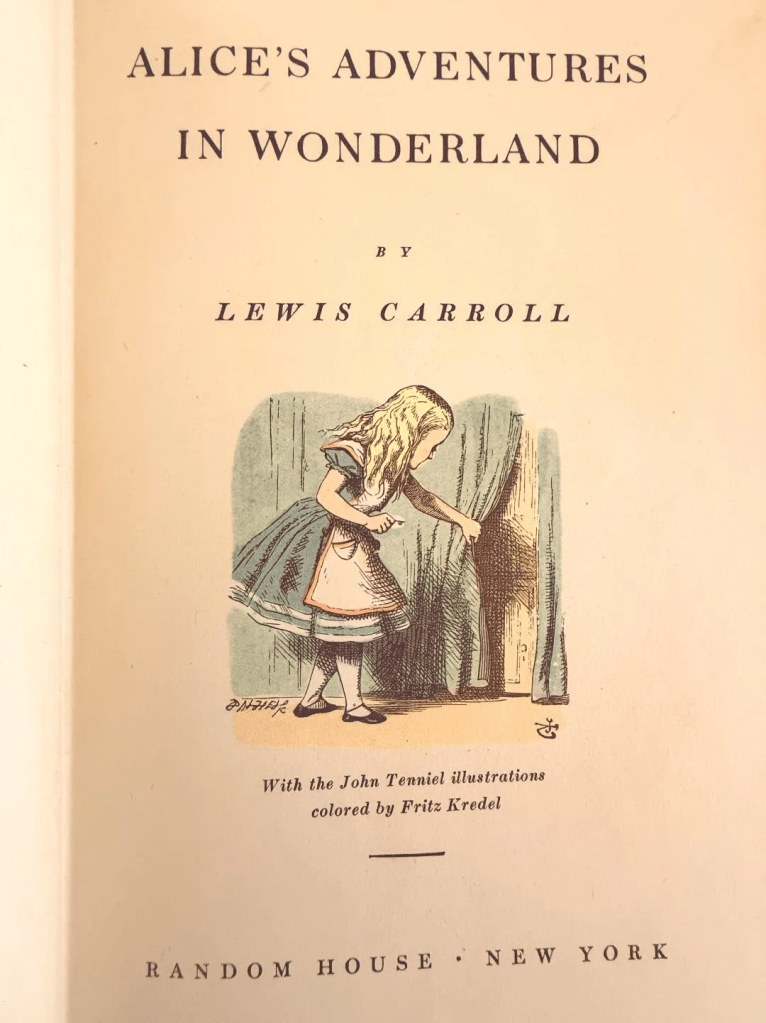
Alice’s Adventures in Wonderland and Through the Looking-Glass were among P. L. Travers’s favourite childhood books. She later remarked that while she revered Alice, she harbored a “lurking, sneakish lack of liking” for Lewis Carroll. She did not elaborate further on her dislike, but it may have been related to his unusual attraction to young children. I must admit that I, too, felt deeply uncomfortable reading the sections of Carroll’s biography by Morton N. Cohen that address his relationships with children, even though Cohen clearly admired Carroll’s mind and imagination and attempted to approach this aspect of his personality with empathy for the suffering it caused him.
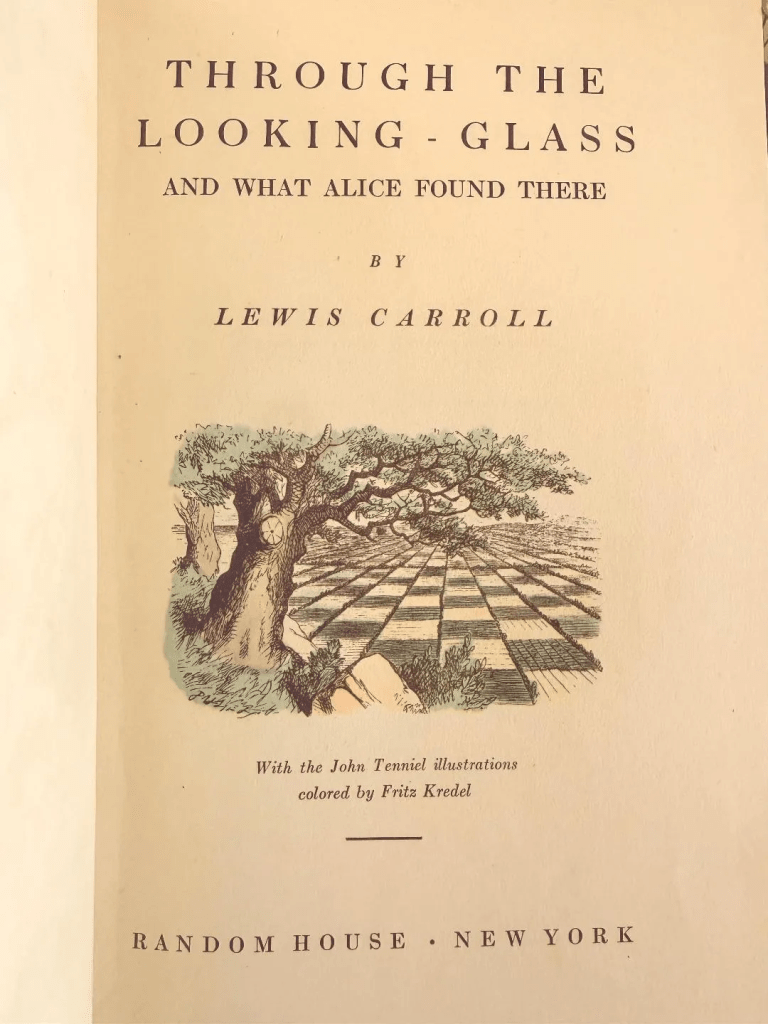
P. L. Travers repeatedly told interviewers that she did not write Mary Poppins with children in mind. To illustrate her point that books are not necessarily written for children, she referred to the creation of Alice’s Adventures in Wonderland. In her interview with Edwina Burness and Jerry Griswold for The Paris Review (The Art of Fiction No. 63), she said:

“If you look at other so-called children’s authors, you’ll see they never wrote directly for children. Though Lewis Carroll dedicated his book to Alice, I feel it was an afterthought, once the whole was already committed to paper.

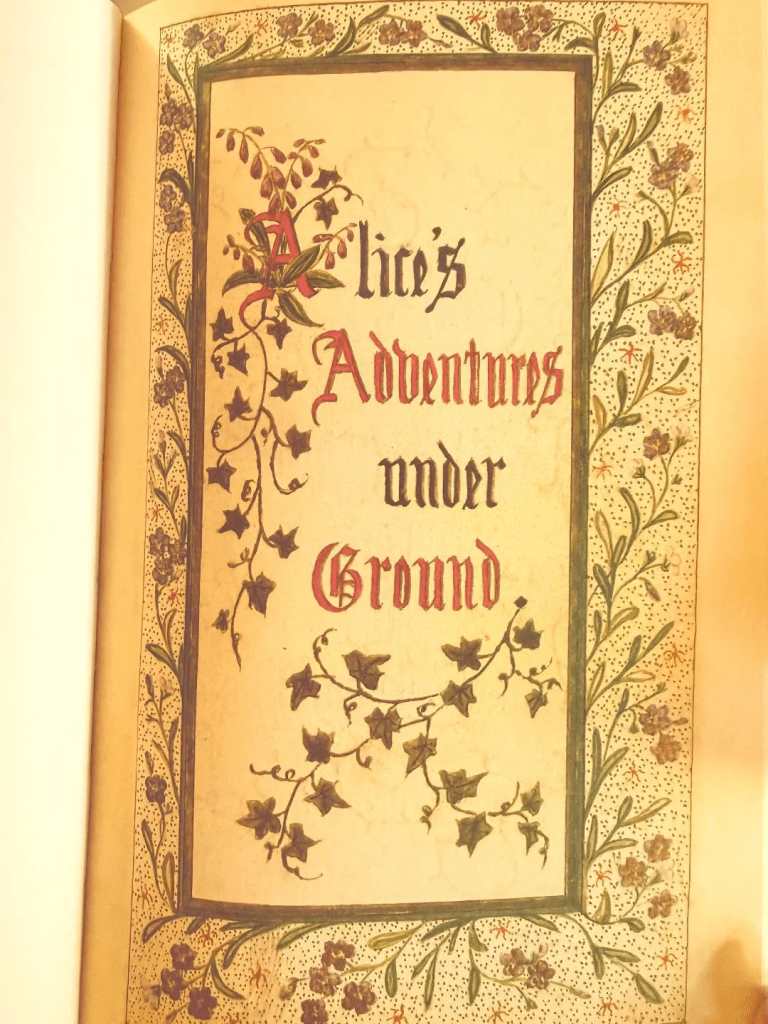
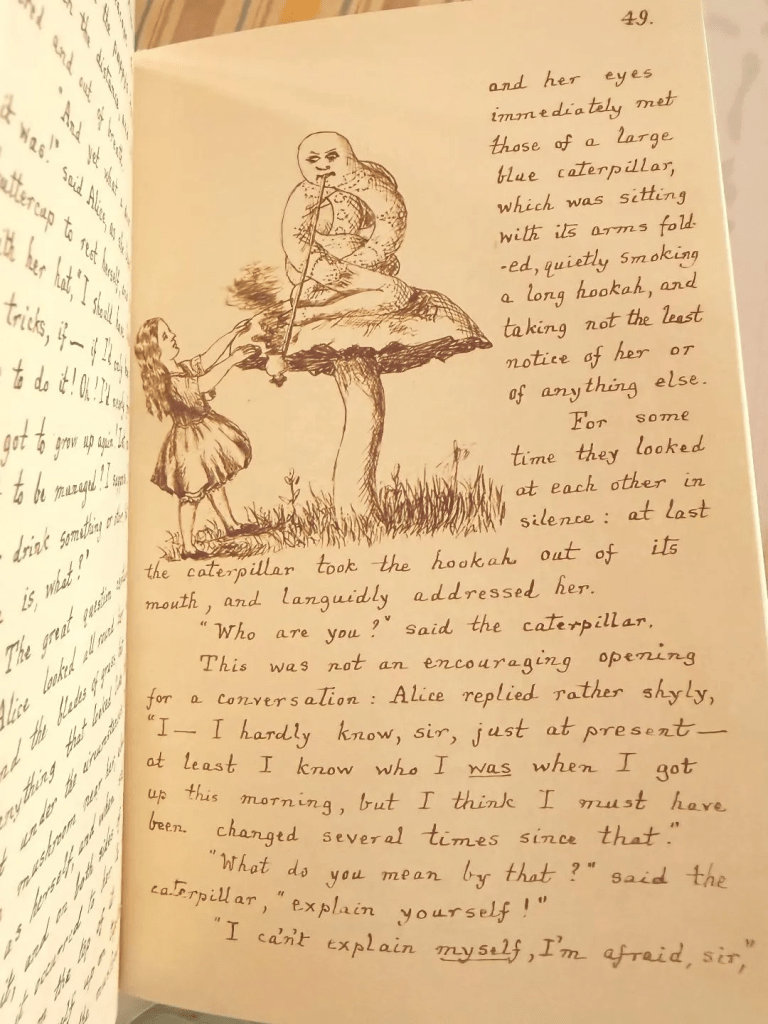
This, however, is not entirely accurate. Carroll did write the first version of the story, Alice’s Adventures Underground, at the request of Alice Liddell, and it was later revised and expanded. This is Carroll’s own account of the creation of Alice in Wonderland:

The germ of Alice was an extempore story, told in a boat to the three children of Dean Liddell: it was afterwards, at the request of Miss Alice Liddell, written out for her… without the least idea, at the time, that it would ever be published. But friends urged me to print it, so it was re-written, enlarged, and published.

This is how Alice’s Adventures in Wonderland came to be. And even though it began as a story told for the amusement of children, it is undoubtedly much more than that. As with Mary Poppins and many other enduring works of children’s literature, these stories contain deeper layers of meaning that are accessible only to adult readers who bring the necessary depth of experience.

But for now, let us consider how the imagination of one writer may have quietly nourished the imagination of another. For no human creation, however original it may appear, emerges in isolation. It grows from what has come before.

Scholar Julia Kunts, in Intertextuality and Psychology in P. L. Travers’s Mary Poppins Books, draws a number of perceptive connections between Alice and the Mary Poppins stories. She identifies the first echo in the opening chapter, “East Wind,” when Mary Poppins arrives at 17 Cherry Tree Lane.

As Mary Poppins unpacks her carpet bag in the nursery, Jane and Michael watch with great curiosity. Among the items she produces is a bottle labelled “One Tea-Spoon to be taken at Bed-Time,” recalling the bottle marked “Drink Me” that Alice finds on the glass table in the long hall she finds herself in once down the rabbit hole. And just as Alice discovers a liquid with a curious “mixture of flavours, cherry-tart, custard, pineapple, roast turkey, toffee, and hot buttered toast’, the contents of Mary Poppins’s bottle transform according to each child’s taste: strawberry ice for Michael, lime-juice cordial for Jane, milk for the twins John and Barbara, and rum punch for Mary Poppins herself.

Kunts also observes that, much like the characters in Alice who subvert and mock the logic of the ordinary world, Mary Poppins repeatedly unsettles the expected order of things, much to the distress of the Park Keeper, who is determined to keep everything properly arranged.

Another obvious parallel between the two fictional worlds is the use of characters from nursery rhymes. Just as Lewis Carroll incorporates nursery rhyme figures in Through the Looking-Glass, P. L. Travers introduces similar characters in the story “Happy Ever After” from Mary Poppins Opens the Door. Among them are Humpty Dumpty and the Lion and the Unicorn, who appear in both worlds.

When Alice meets Humpty Dumpty, he is perched on a high wall so narrow that she wonders how he manages to keep his balance. He, however, is entirely unconcerned. Having secured the King’s promise that all his men will put him back together again should he fall, he speaks with great confidence. Yet, in the end, there is a great crash that echoes through the forest.

When Michael Banks encounters Humpty Dumpty in “Happy Ever After,” he is surprised to find him in one piece. Humpty Dumpty replies: “Pooh — horses! What do they know about it? And as for the King’s men — stupid creatures! — they only know about horses! And because they couldn’t put me together, it doesn’t say no one else could, does it?”

In Through the Looking-Glass, Alice witnesses the battle for the crown between the Lion and the Unicorn, interrupted by a pause for refreshments of white and brown bread. In Mary Poppins’s story, however, the Unicorn and the Lion dance instead of fighting, as they find themselves in the Crack, the moment between the first and last stroke of midnight on New Year’s Eve, a brief interval in which all opposites are harmonised and held in balance.

But beyond the parallels noted by Julia Kunts, one detail struck me in particular. I believe the origin of Mary Poppins’s bottomless carpet bag to lie in Haigha’s bag in the chapter “The Lion and the Unicorn” in Through the Looking-Glass:

Haigha took a large cake out of the bag and gave it to Alice to hold, while he got out a dish and carving knife. How they all came out of it Alice couldn’t guess. It was just like a conjuring trick, she thought.

The resemblance is difficult to dismiss. What appears in Carroll as a conjuring trick re-emerges in Travers as a defining attribute of Mary Poppins: a magic bag that appears empty but contains a surprising number of items.

Building on these parallels, I would argue that P.L. Travers’s imagination does not merely echo Carroll’s but transforms it in a distinctly original way and what matters is that, despite these subtle echoes of another enchanted world, her imagination remains entirely her own. She does not imitate. She transforms.

Thank you for reading. If you enjoyed this article, I invite you to subscribe to The Mary Poppins Effect, where I explore the work of P.L. Travers, the world of Mary Poppins, its connections to other literary worlds, and the symbolic imagination at the heart of classic children’s literature.

Until next time, be well.

Lina
A Mary Poppins Effect

Dear Reader, 

This blog post is going to be slightly more personal than usual as I want to share with you one of the many Mary Poppins effects in my personal life. These, for me magical, effects are incontestably transformative and have greatly enriched my inner life and personal happiness. That said, I am not suggesting that all personal challenges have vanished, but my ability to sustain and show resilience comes directly from these various effects.   

First and foremost, reconnecting with my childhood reading of “Mary Poppins” reminded me of my deep love for magic and fairy tales. It also made me realize that my daily life had, sadly, become quite dull and ordinary. It’s not that I wasn’t surrounded by people and events—my life was filled with all the things that keep us busy and distracted. Of course, my family is a great source of love and support, and I am forever grateful to them, but there was an emptiness within me that couldn’t be filled by anyone, no matter how loving they were. It just dawned on me (and perhaps this realization had been building up inside of me for some time) that I felt constrained. Faced with this moment of recognition I had to acknowledge the need for more joy and wonder in my life.  

But where to find them? 

I decided to go search for them in the places where I had found them as a child. The day had come when I was finally old enough to start reading fairy tales again, to paraphrase a quote by C.S. Lewis. I felt goosebumps when I first read this quote by C.S. Lewis because the truth of his words resonated so deeply with my own experience.  

Then, organically, one thing led to another, and I found myself collecting old books of fairy tales and fantastical adventures, something that I would never have thought I would be doing a few years ago, as it was so remote from the spheres in which I operated.

The moments I spend reading fairy tales and fantasy novels, or treasure hunting for old books, are pure bliss—a breath of fresh air in my daily life. It’s not just an escape from the ordinary; these activities also allow me to see the world in a new light. Looking at my bookshelves fills me not only with joy but with a sense of groundedness—a feeling of coming home. And I owe it all to P.L. Travers and her Mary Poppins

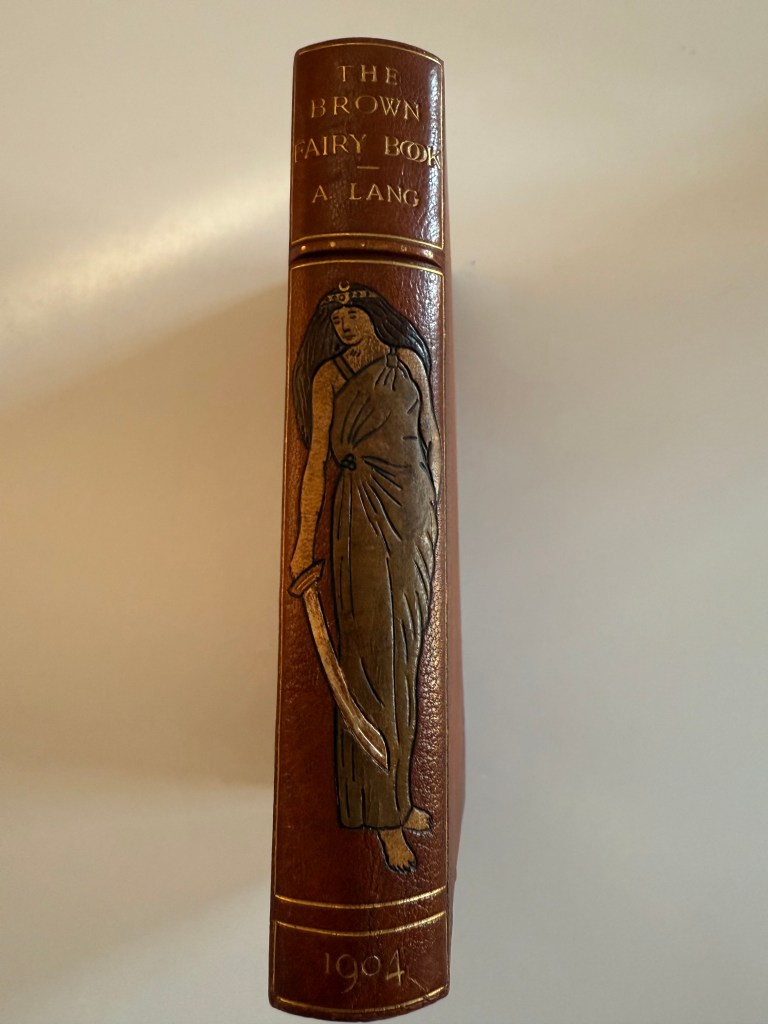
Here, I’m sharing some pictures of the books in my modest collection, which I hope will expand over time. 

The Brown Fairy Book by Andrew Lang. Illustration below is by H.J. Ford.

Below is a picture of the cover of Princes and Princesses by Andrew Lang.

Illustration below by H.J. Ford.

Below is the cover of Myths & Legends of Japan by F. Hadland Davis.

Illustration below by Evelyn Paul.

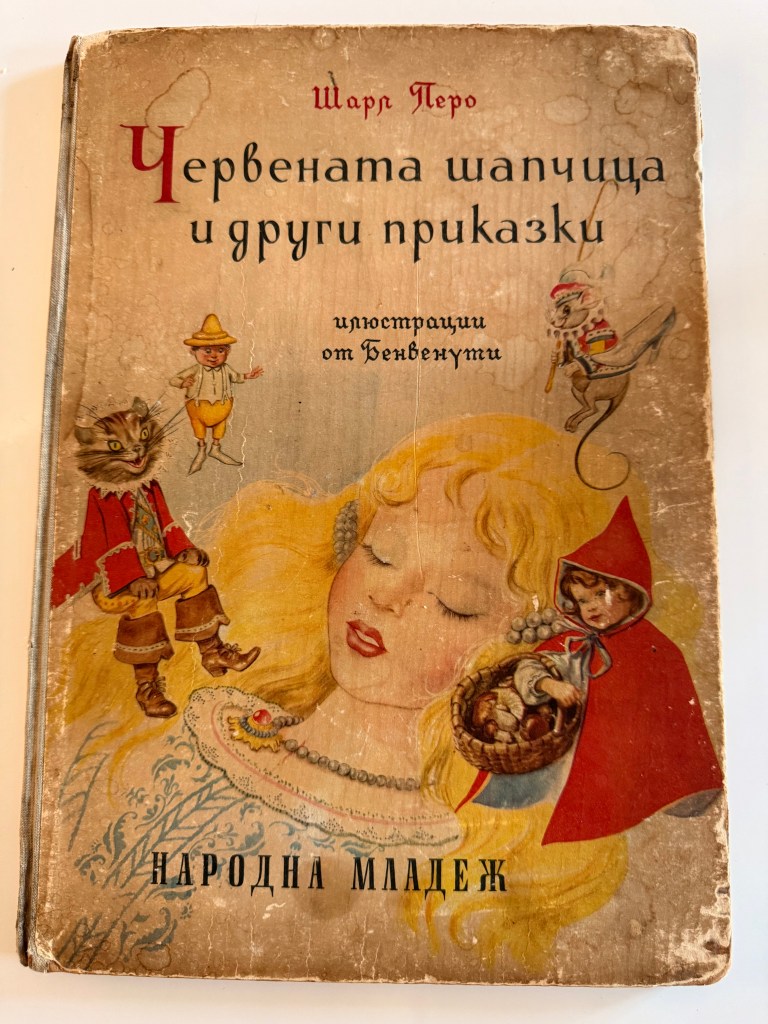
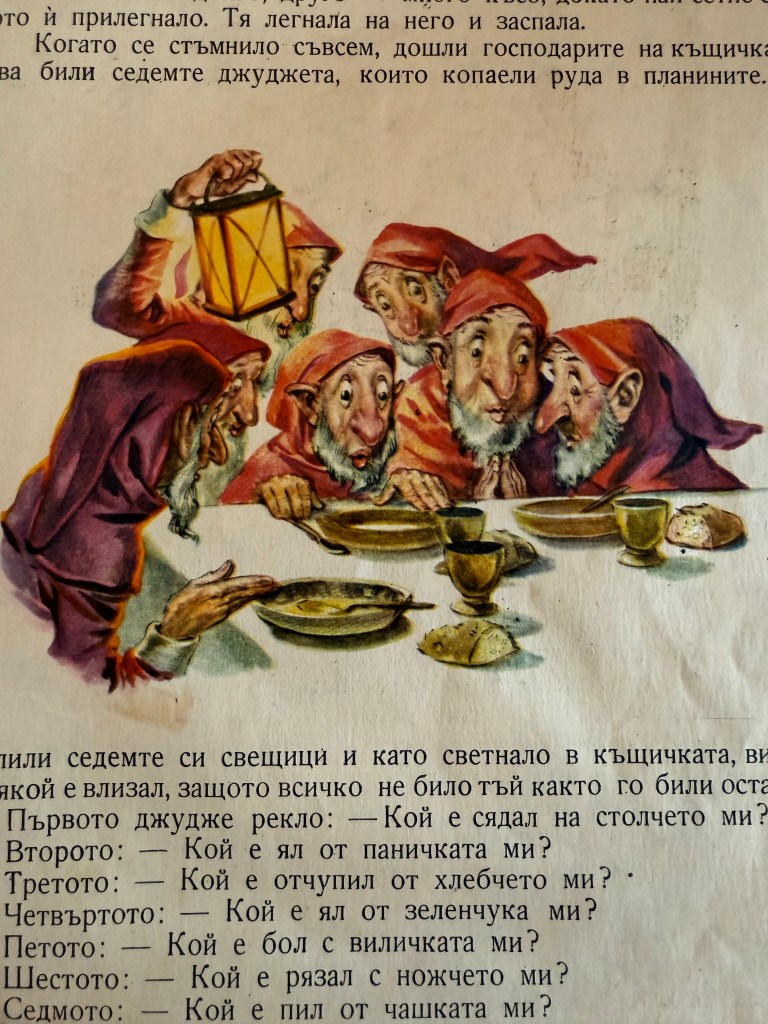
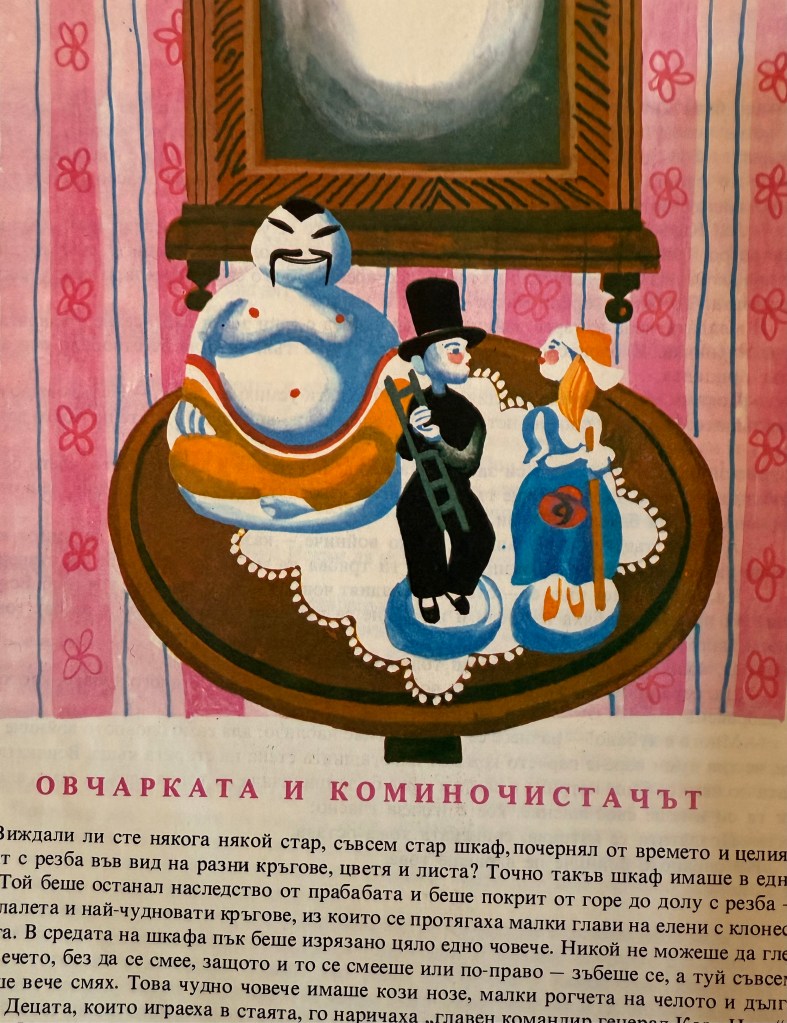
While reading interviews given by P.L. Travers, I discovered that our childhood readings intersected, despite our cultural and generational differences. We both read Beatrix Potter, the Brothers Grimm, and Andersen’s fairy tales, to name a few, only I read them translated in Bulgarian. This realization brought back memories of the fairy tales from my own childhood, with their beautiful illustrations, and I felt a deep grief for having left behind the most cherished treasure of all—my books.  

My initial response to counter this grief was to dismiss it as childish. I told myself I had to accept certain losses in life. On a practical level, I also thought it unrealistic to expect I could find copies of these books now that I live so far from my birthplace. But was I being childish? Was this a loss that needed to be accepted, or was it the kind of loss that could be retrieved? P.L. Travers herself pondered the theme of loss often, and in her later years, she would say that all that is lost is somewhere. 

I decided to give it a try, and with the help of the internet, I’m happy to report that, after a couple of years, I was able to reconstruct most of my childhood fairy tale book collection. I successfully found old copies of the editions I had as a child, as well as some new reprints of those same editions. 

These were the books my mother read to me at bedtime and the ones I learned to read with, before I got acquainted with Mary Poppins.

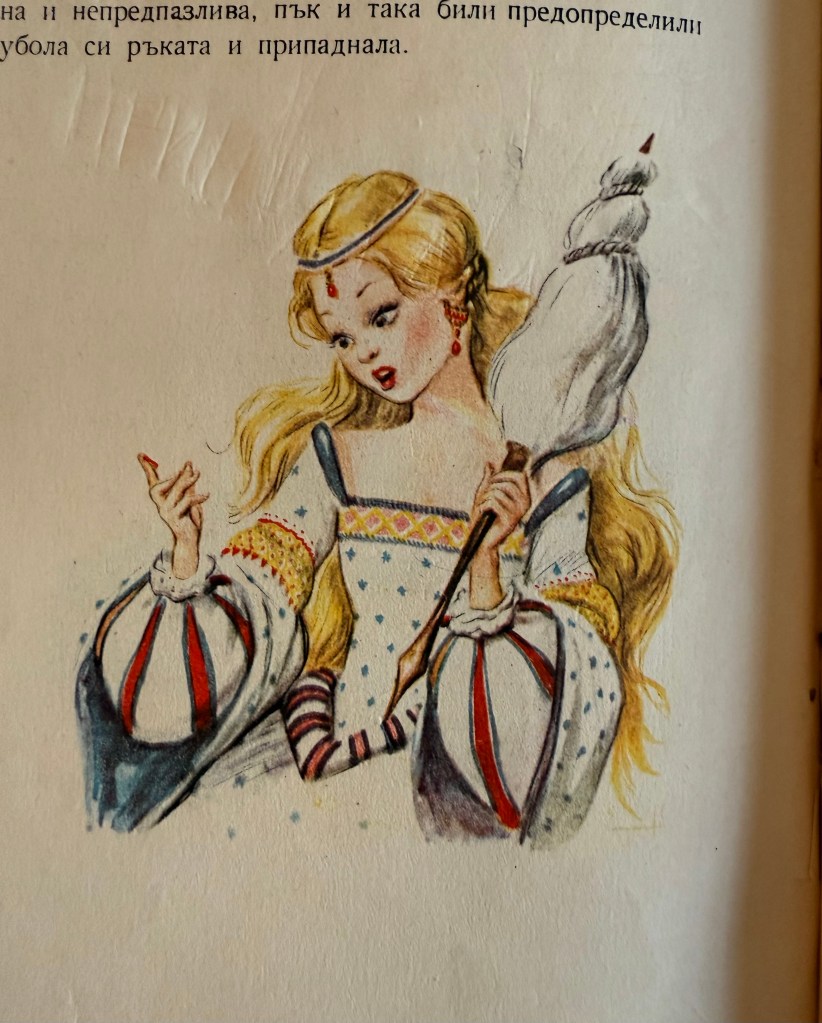
Below are pictures of the illustrations in my copy of Sleeping Beauty. The illustrator is Italian artist Gianni Benvenuti. This was P.L. Travers’s favourite fairy tale. She even wrote her own retelling of it and I wrote two blog posts about it back in 2017; you can read one of them here, and if you’re interested, the other is easily found on the website of this blog. 

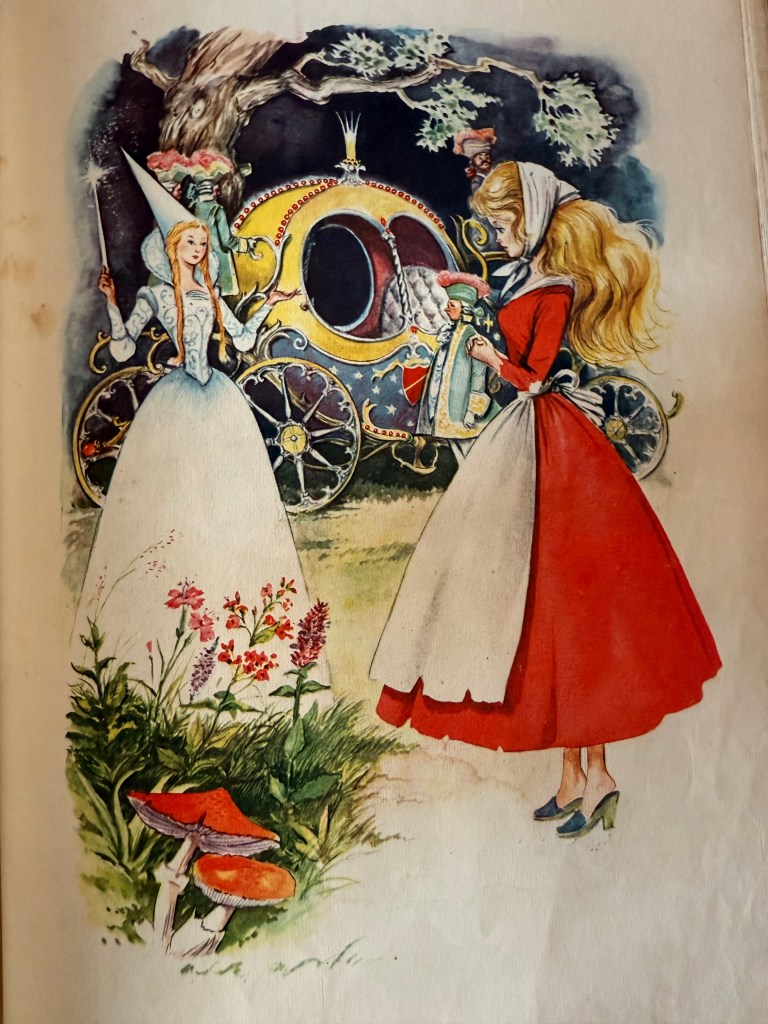
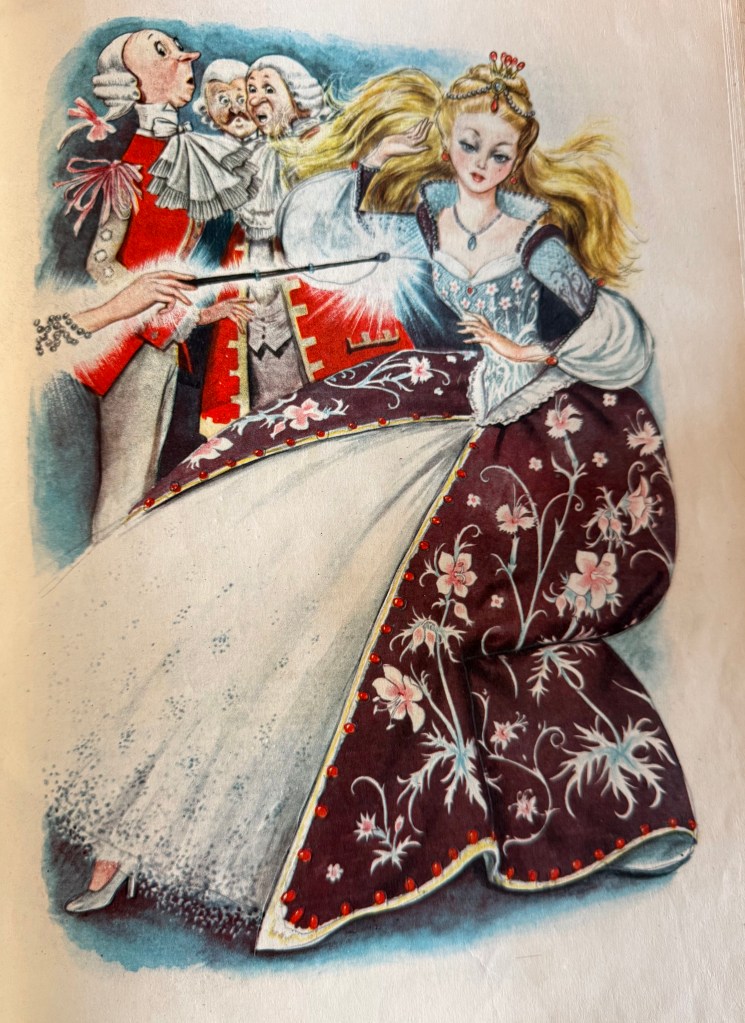
Cinderella was my personal favourite fairy tale as a child, followed closely by Snow White, mostly because Snow White had dark hair like mine. The illustrations below are also by Benvenuti.

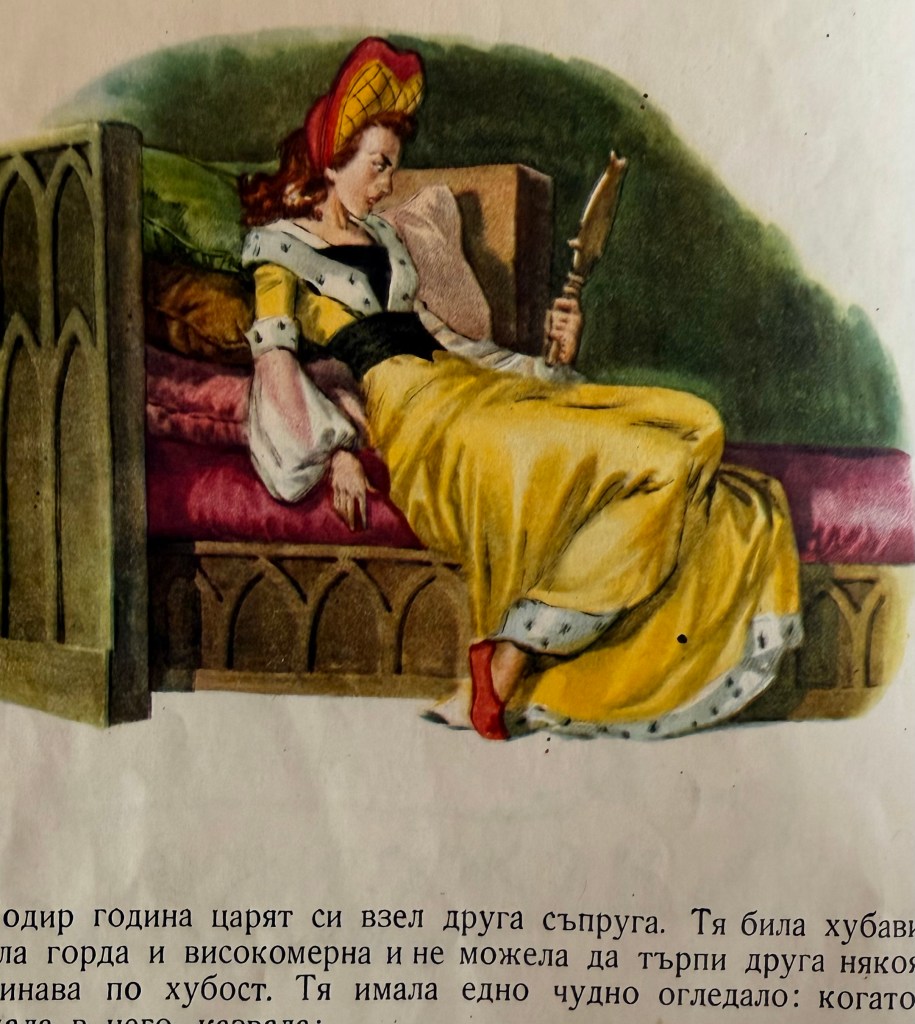
The illustrations of Snow White below are by Sandro Nardini.

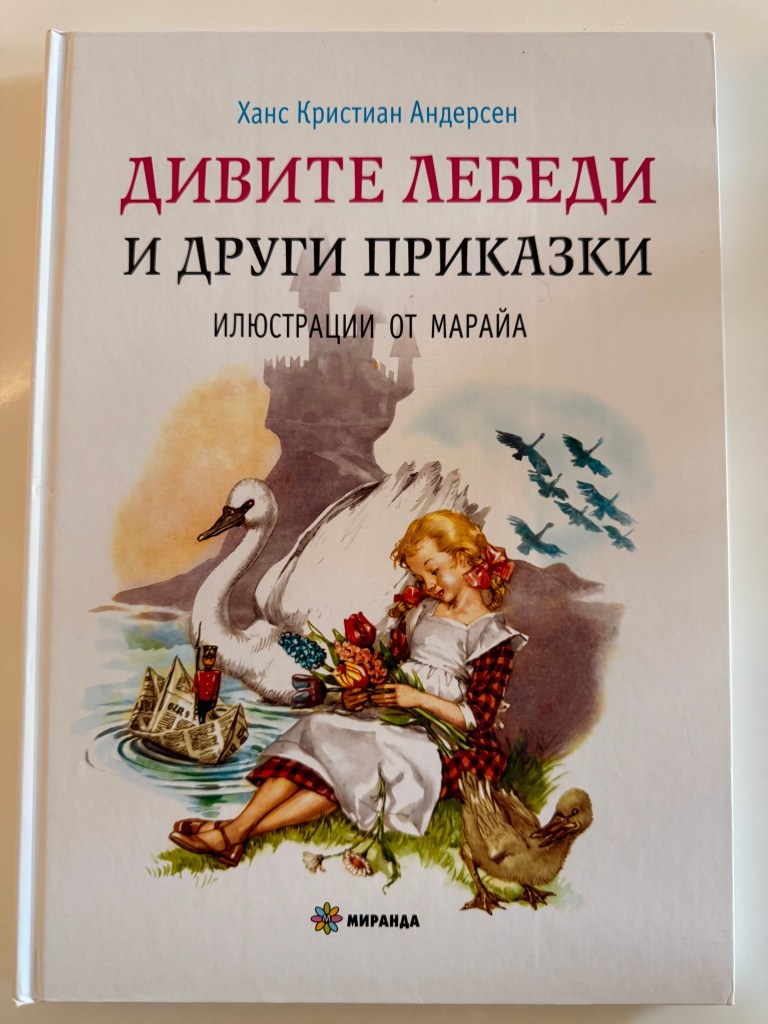
And these are my two books of Andersen’s fairy tales. One is quite tattered, and the illustrations aren’t as beautiful as in the other, but I still enjoyed the stories. P.L. Travers loved Andersen’s fairy tales as a child, but as an adult, she had a different view. She believed Andersen undermined the vitality of his stories through his constant appeal for pity. It’s an interesting perspective, but one I don’t share. 

The illustrations above are by Lyuben Zidarov. And the illustrations below are by Libico Maraja.

Here is now Peter Rabbit by Beatrix Potter. I must have been around three years old when my mother read Beatrix Potter’s stories to me, and I remember the illustrations captivated me with such magnetic force. I wish I had P.L. Travers’s lyrical talent to describe the experience. It’s hard to put emotional states and impressions into words, but it truly felt as if I was part of the picture. It’s a strange feeling to remember the state yet not be able to recreate the experience. I still enjoy the illustrations, but our perceptions do grow duller as we age. 

P.L. Travers adored Beatrix Potter and wrote a review of The Tale of Beatrix Potter by Margaret Lane. I wrote a blog post about it some time ago, you can read it here

This is all for now. I’ll share more of my childhood book collection in a future post. In the meantime, take care, and I hope you’ll return to read more about Mary Poppins, P.L. Travers, and my adventures as I continue to explore their world.

Christmas with “Hansel and Gretel” 

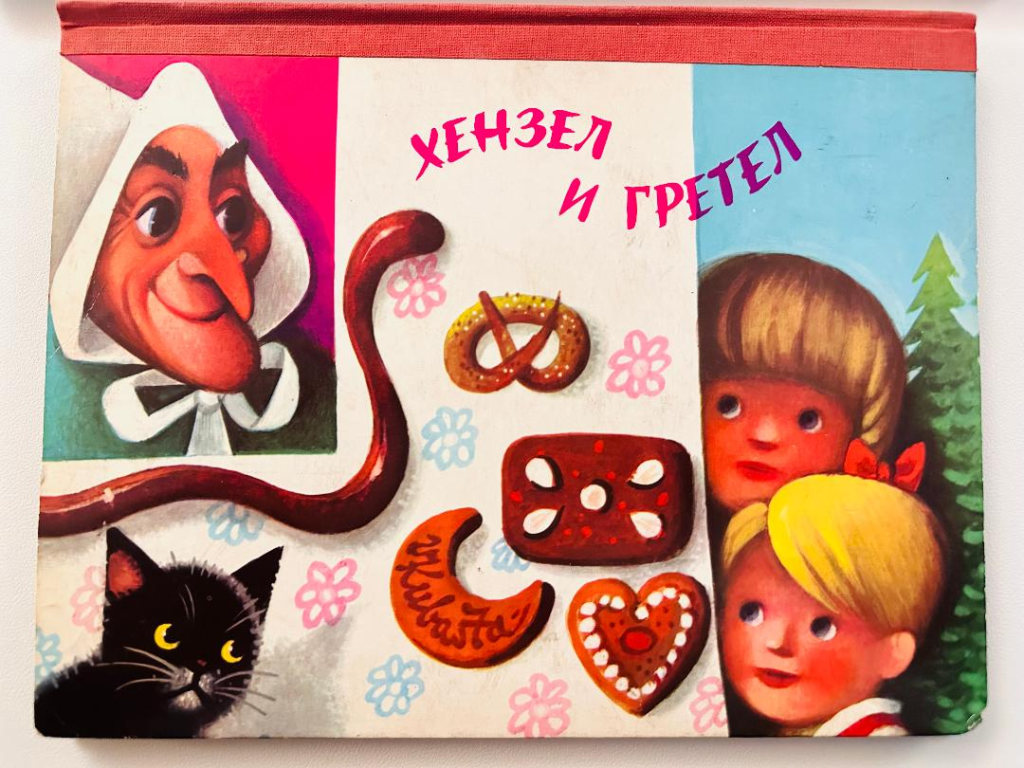
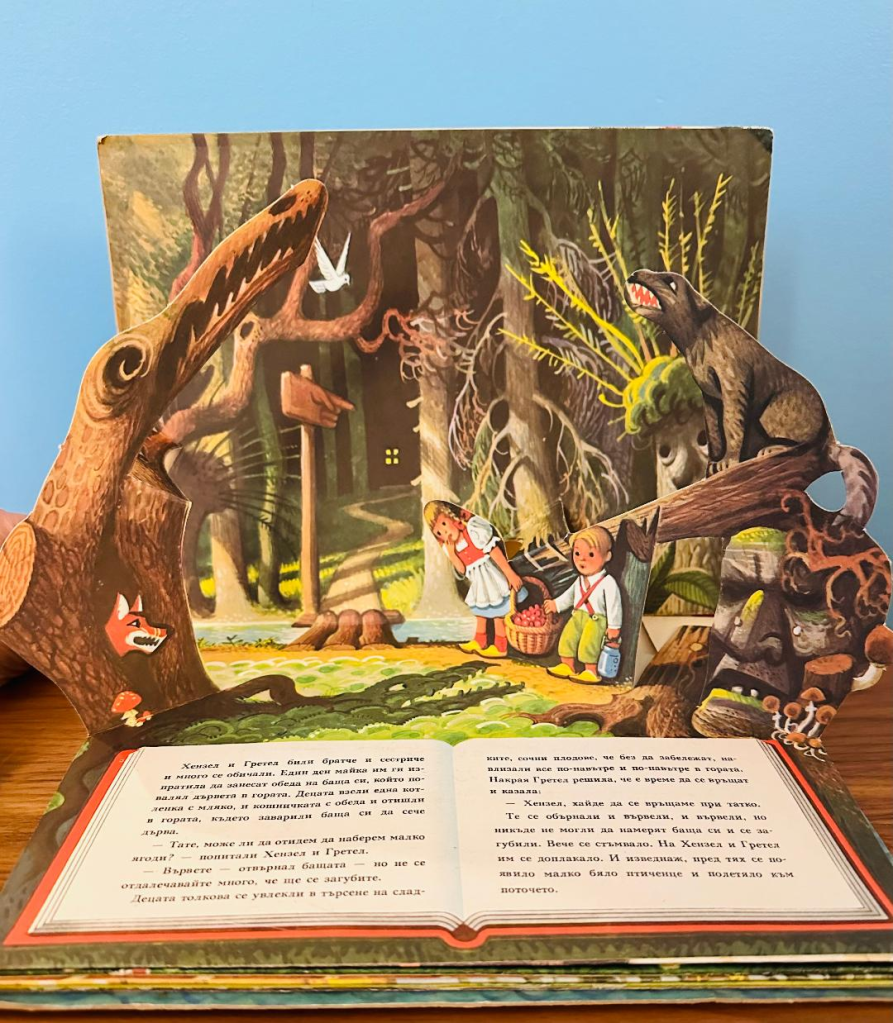
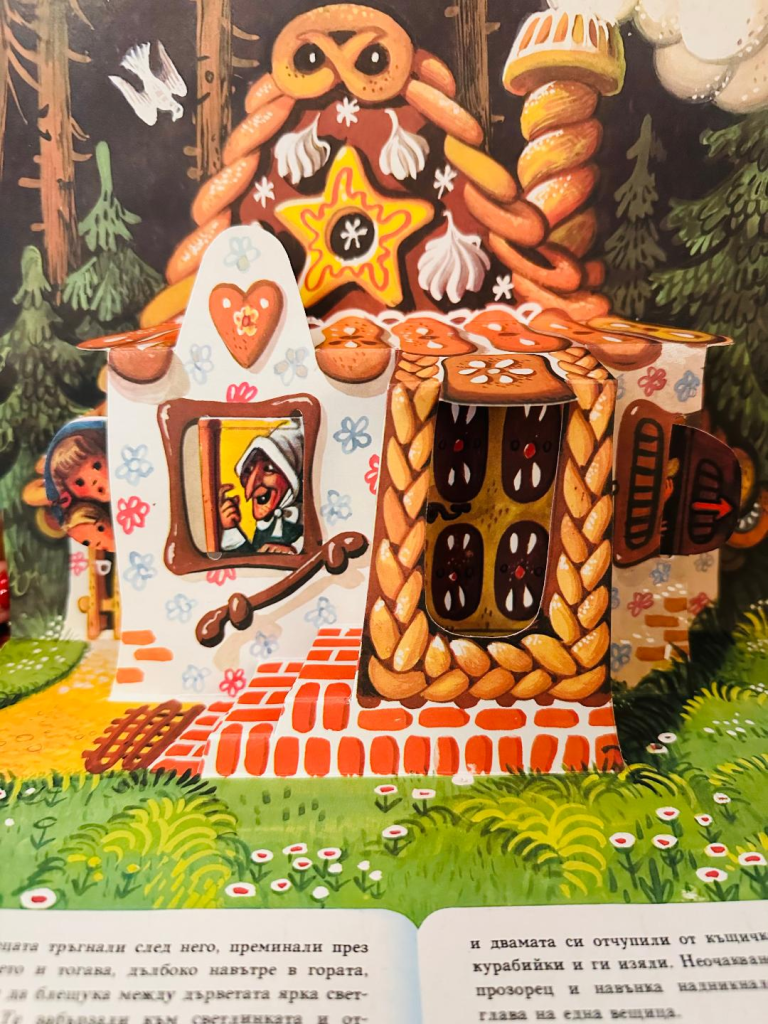
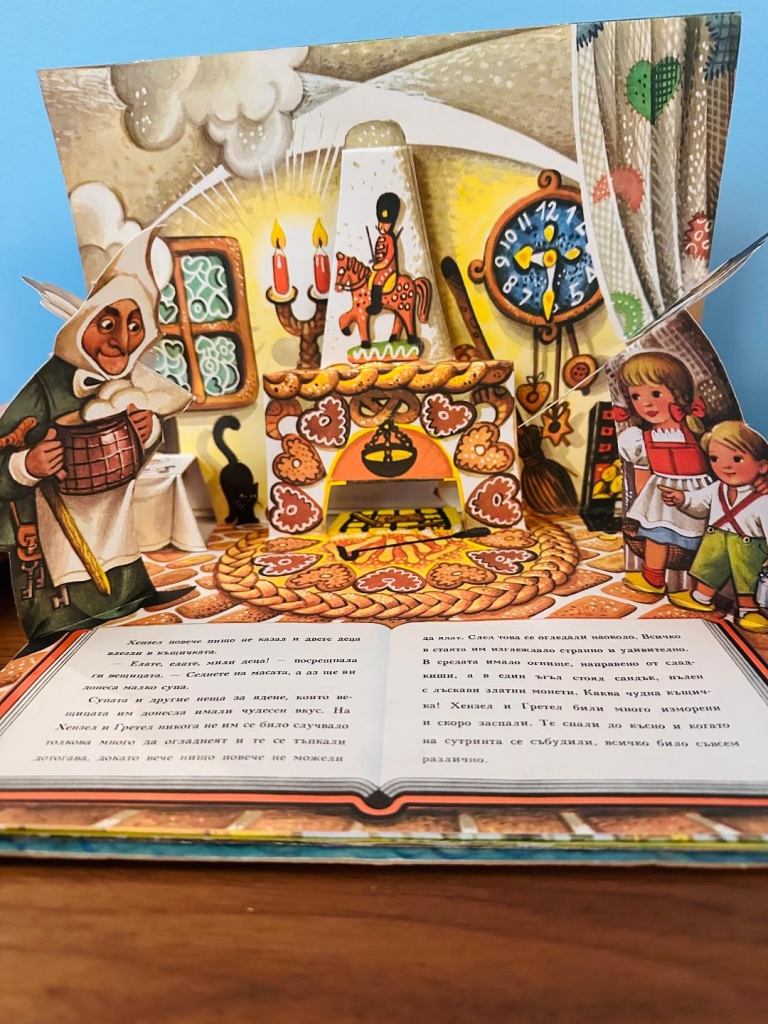
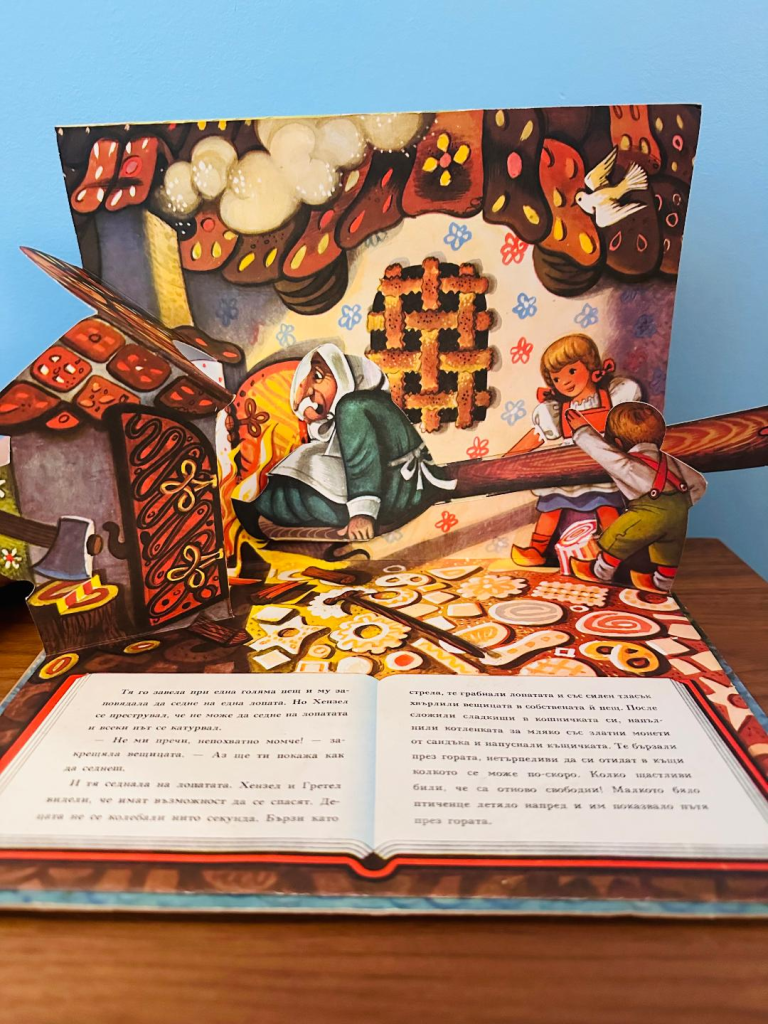
One of the many Mary Poppins effects in my personal life was the sudden desire to retrieve the long-lost books from my childhood spent in Bulgaria in the 1980’s. This old pop-up edition of ‘Hansel and Gretel’ (1979) is the newest addition to my reassembled collection.  

The gorgeous illustrations are by Vojtěch Kubašta, a Czech architect, graphic artist, children’s book illustrator and master of the pop-up book. He was the illustrator of the unsigned series of pop-up books tied to “Bambi,” “101 Dalmatians” and other Walt Disney films.  

Of course, as a child I wasn’t aware of the authors and illustrators of my beloved books. What mattered then were the stories and the pictures. This is still true, but in addition, I am now fascinated by the creative spirit behind the creations. 

I loved fairy tales as a child, and the beautiful illustrations that accompanied these stories heightened my earliest reading experiences. In fact, they are probably the reason why I remember how I felt when I first read them. Going back to these stories as an adult however is an entirely different experience.  

The story of “Hansel and Gretel” is a perfect example. As a child I simply enjoyed the story for the story. Two children get lost in the forest, find a house made from sweets and candy, they get trapped and are about to be eaten by an evil witch, when one of them plays a trick on her and sends her into the flames of her oven. Good triumphs over evil, and the ending is happy as the two siblings find their way back home.  

Rereading the story now reveals a much deeper meaning that I could not have grasped back then for the obvious reason that I lacked both life experience and understanding of symbols and metaphors.  

I would have loved to have the opportunity to discuss “Hansel and Gretel” with P.L. Travers. She wrote about it briefly in her essay “The Fairy -Tale as Teacher”: 

Hansel and Gretel. How it beguiles the child with its lollipop house and peppermint doorstep! For us, however, this is only the lure. The trap, the real secret, is the journey through the wood. If you want to find your home, it says (back to the beginnings, becoming as little children) you must scatter something less ephemeral than peas or rose-leaves. Birds will eat one, and the wind will blow the other away. Only by making the path with pebbles – enduring, hardly found, indestructible – can you pick up the trail and escape the witch’s oven which is extinction.   

I agree with P.L. Travers that the real secret to the story is the journey through the forest. Yet, what saves the children from the witch’s oven are not the pebbles, but their own cunning; and what leads them back home is a white bird… 

For me “Hansel and Gretel” is a story about growing up, survival and tapping into one’s own inner resourcefulness. The message for me is that one cannot use cunning (the pebbles, the rose-petals and breadcrumbs) to avoid the adventure of growing up (the forest), but one must use cunning to survive an ordeal. 

The children had to get lost and trapped. They had to learn about evil and danger and how to face it all on their own. It is all about seizing the moment and doing what needs to be done – which is to shove the witch into the fires of the oven – all, without any hesitation. After facing something so terrible and surviving it – who needs pebbles to find their way back home?  

Now, what does this story have to do with Christmas? Well, actually it is not the story itself that has to do with Christmas, but a prop from it: the house made of sweets.  

Gingerbread houses originated in Germany during the 16th century, but their popularity rose when the Brothers Grimm wrote the story of “Hansel and Gretel” in 1812. It is believed that it sparked a creative renaissance amongst German bakers; apparently a house made of cake and candy is not alluring only to children! With time the cookie-walled houses became associated with Christmas and spread throughout Europe and North America.  

We did not have gingerbread houses in Bulgaria when I was a child. I got acquainted with them only when we came to Canada in the 1990’s, but now the decorating of a gingerbread house has become a well-established family tradition, and each year it invariably reminds me  of the time when I first read the story of “Hansel and Gretel” and gazed at Kubasta’s beautiful illustrations wishing I could too have a taste of the witch’s house.  

I wonder, does Christmas bring back warm memories from your childhood too? I sincerely hope that it does!