The Hidden Connection Between Mary Poppins and a 17th-Century French Fairy Tale 

Dear Reader,  

I feel like “Lucky Thursday,” one of the stories in Mary Poppins in the Park (the fourth book in the series) published in 1952, is the perfect story to revisit during this misty time of year. Hopefully you will find my musings entertaining enough to forget the grey hues of November at least for a little while.  

“Lucky Thursday,” is one of four stories in the Mary Poppins books in which P.L. Travers explores the tricky nature of wishes and the unsettling truth that they sometimes come true in ways we never intended. However, as much as this theme deserves a deeper dive and one that I will certainly take on another occasion, in this post I want to show you something a bit different. I want to tell you about a curious connection between the eerie elements in this Mary Poppins story and a French fairy tale written by Madame d’Aulnoy in the late seventeenth century.  

In “Lucky Thursday,” Michael Banks, who has been stuck alone all day with a cold in the nursery, makes three wishes on the first star in the night sky. The next day, strange events begin to unfold, but he does not realize the connection between them and the wishes he made the night before in a moment of frustration until it is almost too late. One of his three wishes is to be far away from his siblings. That wish is granted, and he soon finds himself in a very strange place, as you will see. 

I did not have the chance to read Mary Poppins in the Park as a child. My copy of Mary Poppins included only the first two books in the series, so I cannot compare my reading experiences, but the strong uncanny elements in “Lucky Thursday” impressed me even as an adult reader. I couldn’t stop wondering how on earth P. L. Travers dreamed up the idea of an alien abduction of Michael Banks who lands on a planet ruled by cats. (You see, practical questions like this often pop into my head while I’m stuck in traffic on my daily commute.) For a long time, and until quite recently, I had no answer to this question as P. L. Travers was famously private about the inspiration behind her stories. 

Let me give you a little bit of context. After a day stuck in the nursery, Michael Banks is feeling better and joins Mary Poppins and his siblings on their usual visit to the Park. There, while Mary Poppins sits quietly reading What a Lady Should Know, he takes a silver whistle from her open handbag without asking permission and strolls farther into the park, where he can enjoy playing with it undisturbed. 

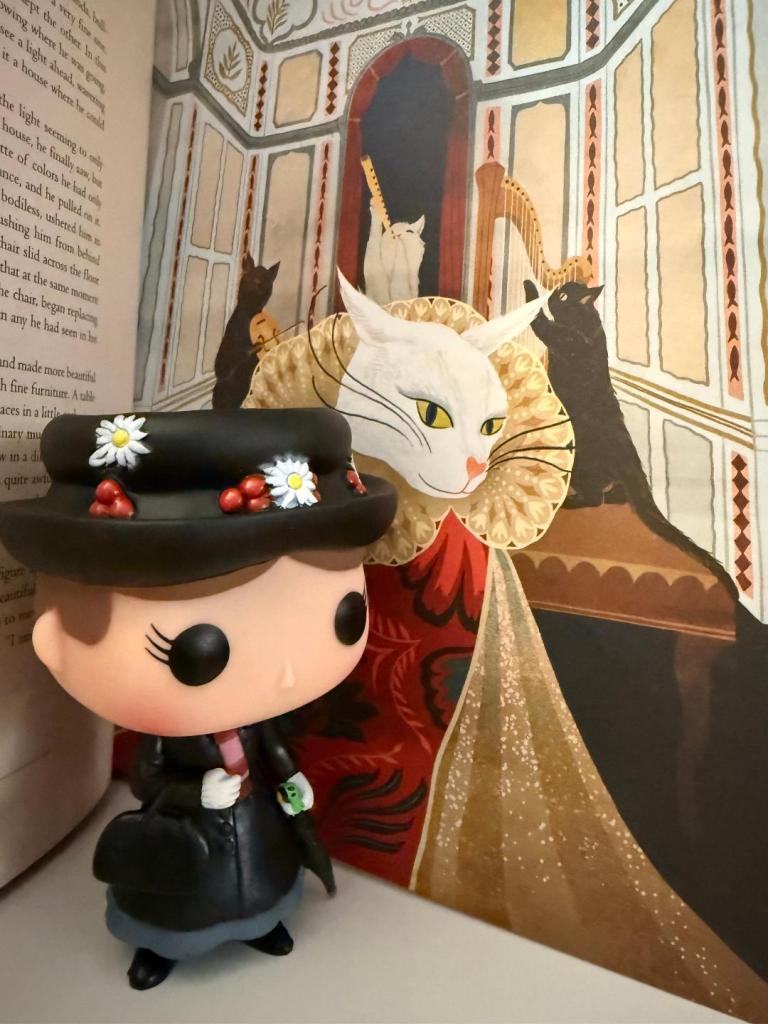
A cat with a “black and yellow coat” that “shone in the sunny mist, more like dapples of light and shadow than ordinary fur,” which Michael had noticed on the windowsill the night before, guides him farther into the Park. A steaming vapor rises from the earth and envelops them both. Prompted by the cat, Michael jumps into the air and suddenly feels himself lifted upward into empty space. Moments later, he lands on the steps of a golden palace on the Cat Planet, which turns out to be the very first star on which he had made his three wishes the night before. 

The golden castle is inhabited by the Cat King, the Cat Queen, their three daughters, and many cat courtiers. At first, everything seems amusing to Michael until he is offered a meal of a dead mouse, a bat, and small raw fish, all served on golden plates, along with milk in a saucer. It is then that he realizes the cats are far from friendly. Soon after, he discovers the horrifying truth about his position at their court: all the cats’ food is prepared by enslaved children who, like him, had wished upon a star to be away from their families. 

Michael is offered a chance to escape his predicament, but only if he can solve three riddles. Should he succeed, he is told, he must marry one of the King’s daughters. Michael finds the answers to the riddles easily enough, but he has no desire at all to marry a cat. His refusal is not well received by his hosts. The offended cats begin to hiss and close in on him, and they might have torn him to pieces had he not blown the silver whistle to summon Mary Poppins to his aid. 

“Lucky Thursday” is a strange and uncanny story, and it is not impossible that P. L. Travers came up with the idea of a royal court of cats on her own. However, when I recently read Madame d’Aulnoy’s fairy tale The White Cat, the similarity of the setting made me wonder: could P. L. Travers, who was deeply immersed in fairy tale lore, have borrowed this motif from Madame d’Aulnoy’s tale?  Writers often draw inspiration from one another. Human creativity does not exist in a vacuum, for ideas, like bees, cross-pollinate among our minds.  

The fairy tale The White Cat unfolds in a distant kingdom where a prince, sent on a quest by his father, meets the White Cat, a princess presiding over a court of cats and bodiless hands serving as attendants. Unlike Michael, the prince is offered human food while the cats dine on dead mice and the White Cat helps the prince in his quest. He eventually falls in love with her and when he declares his love, she asks him to cut off her head and tail. He initially refuses to do so, but at last he complies, and by doing so, he breaks the spell that bound her, revealing that the White Cat is, in fact, a princess.  

The similarities between the settings in these two stories, a golden palace in one and a castle of gleaming gemstones in the other, each with a royal court of cats and both situated in distant locations, are too striking in my opinion to be mere coincidence.  

As is often the case with P. L. Travers, one question leads to another. If she knew about the fairy tales of Madame d’Aulnoy, why didn’t she mention her in her writings? She often spoke of the Brothers Grimm. A possible explanation might be that she dismissed Madame d’Aulnoy because she was inventing her stories rather than retelling old tales from anonymous sources, as the Brothers Grimm did. 

But little did she know that even the Brothers Grimm and Charles Perrault had taken inspiration from Madame d’Aulnoy and her circle of women writers, who called themselves “the fairies” and were, in fact, the first to coin the term fairy tales. 

I learned about Madame D’Aulnoy and the other fairies, Henriette-Julie Murat, Charlotte-Rose La Force, Marie-Jeanne L’Heriter, Catherine Bernard, Catherine Duran and Louise D’Auneil from Jane Harrington’s wonderful new book Women of the Fairy Tale Resistence, The Forgotten Founding Mothers of the Fairy Tale and the Stories That They Spun. 

Harrington’s book is a must-read for any fairy tale aficionado. I was deeply fascinated to discover the lives of these women writers in Paris who challenged social norms during the reign of Louis XIV, the Sun King. Their lives were far from easy, yet despite the many obstacles they faced, their voices sustained them. Although men tried to erase their names from history, their writings have endured, offering a vivid glimpse into their struggles to find true love and live happily ever after. 

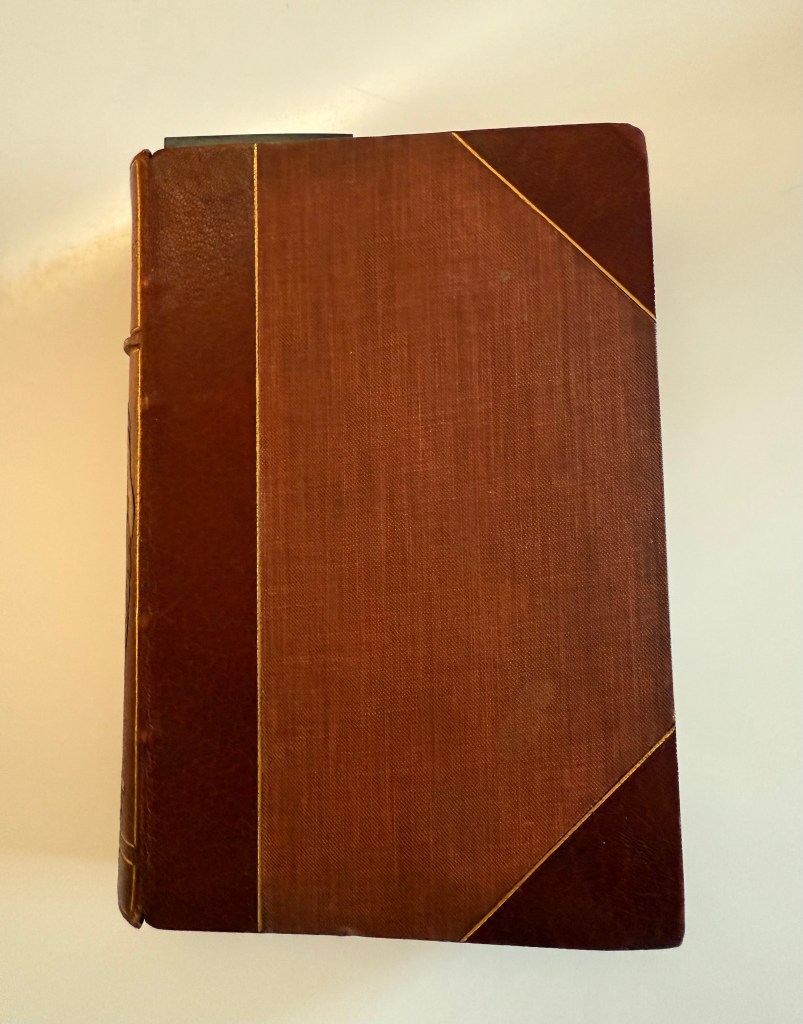
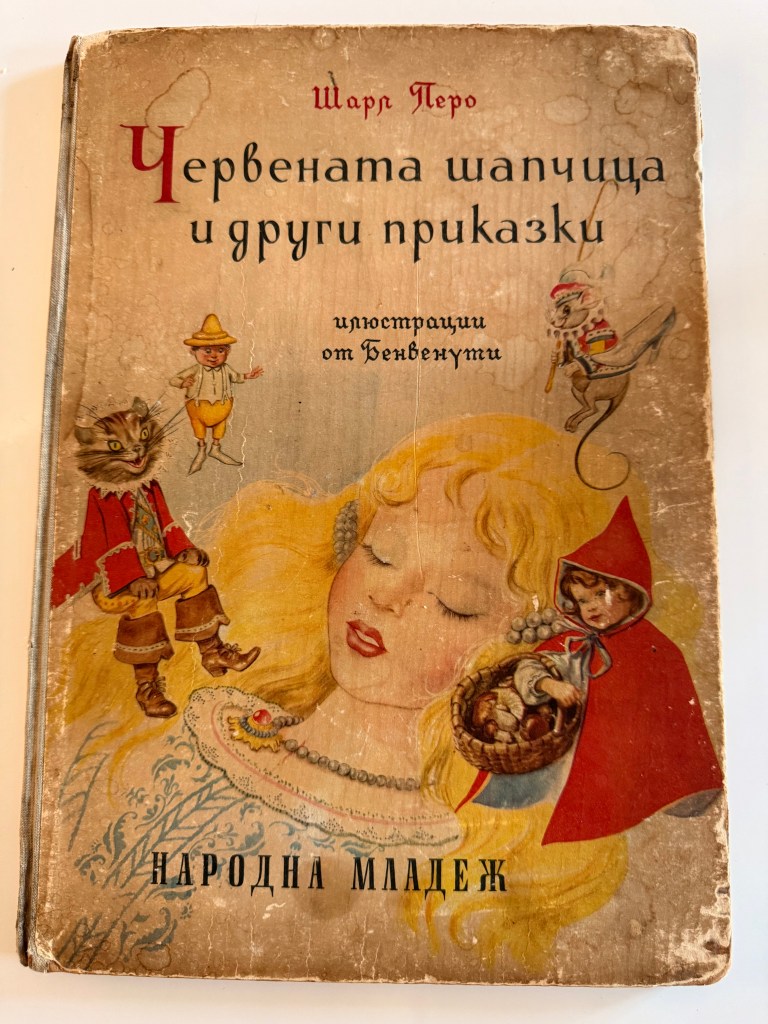
The research conducted by Harrington is truly remarkable. I was astonished to learn that Charles Perrault, whose fairy tales I devoured as a child (I still have my old Bulgarian editions), borrowed from her stories without giving her any credit. According to Harrington, L’Héritier often remarked that Perrault had plundered her work. One of the tales I loved as a child, “Diamonds and Toads,” is in fact a simplified retelling of “Blanche,” a story written by Marie-Jeanne L’Héritier, who, incidentally, was also his relative. 

I wonder what P. L. Travers would have thought of Harrington’s book and of the lives of these women writers. If she dismissed Madame d’Aulnoy because she was a writer of fairy tales rather than a “reteller,” that only adds to the paradoxes in Travers’s thinking. After all, she herself was a writer of fairy tales. Of course, she would have argued that the Mary Poppins stories are not fairy tales, and perhaps from an academic standpoint they do not fit the definition, not even as literary fairy tales, which are often written adaptations of stories from oral traditions.  

P.L. Travers was influenced by myth, mysticism, and Gurdjieff’s spiritual teachings. She thought in mythic rather than folkloric terms, but her stories are an original combination of fairy-tale motifs with mythic cosmology and spiritual allegory. 

In conclusion, the Mary Poppins stories are not traditional fairy tales but rather hybrid modern literary wonder tales that adapt the structure and spirit of fairy tales to explore mythic and metaphysical themes within a domestic setting. And this is why they are so fascinating to explore.  

I wish I could talk about all this with P. L. Travers, but even if that were possible, there is no guarantee she would answer my questions.  

After all, she was known for avoiding direct answers. 

That’s it for now—thanks so much for reading! If this post brought you a little joy, go ahead and click the subscribe button in the bottom-right corner of your screen so you don’t miss any future posts. You can also follow me on Facebook, Instagram, and Substack for more peeks into the magical world of Mary Poppins, P. L. Travers, and other enchanting literary adventures.  

Until next time, take care and be well! 

Discover Mary Poppins’ London: A Literary Travel Guide for Fans of P.L. Travers – Part II 

Dear Reader, 

This post continues the story about my first Mary Poppins–themed trip to London with my daughter in the summer of 2023. In last month’s post, I shared our visit to P. L. Travers’s former homes at 50 Smith Street and 29 Shawfield Street in Chelsea. If you haven’t read it yet, you can find it here

In this blog post, we will visit St Paul’s Cathedral, stroll through Poppin’s Court near Fleet Street, shop for parrot-headed umbrellas at James Smith & Sons and admire the Mary Poppins statue in Leicester Square Gardens.  

St Paul Cathedral, London 

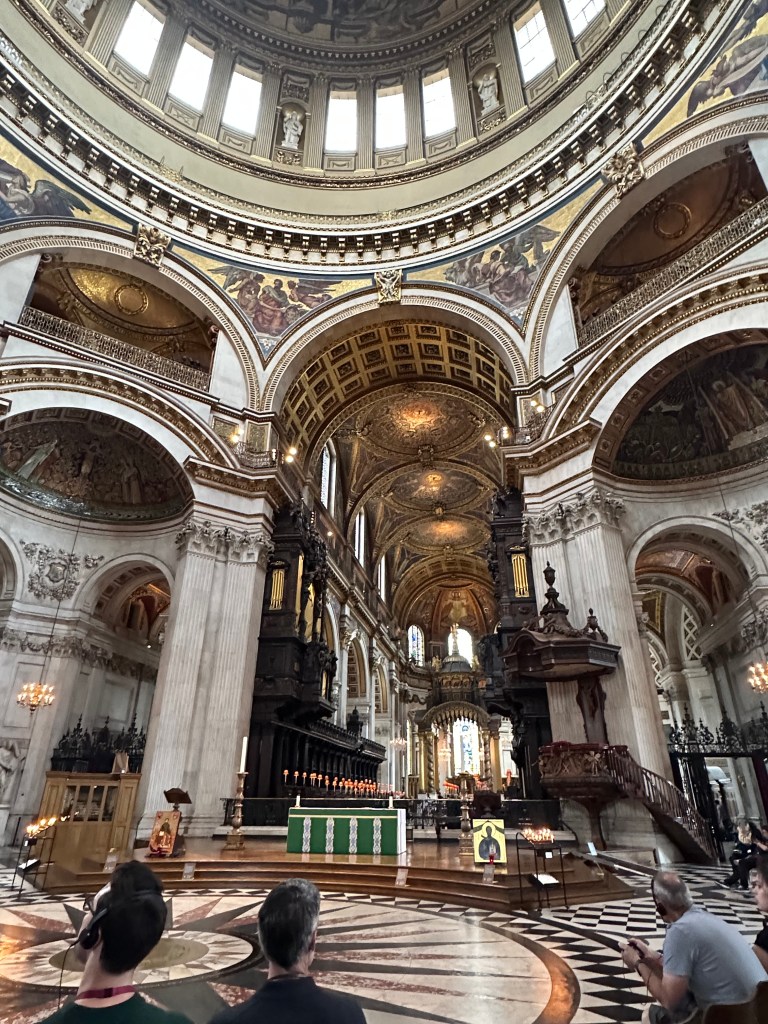
If you find yourself in London, a visit to St Paul’s Cathedral is, in my humble opinion, an absolute must. Its grandeur is astonishing—from the soaring colonnades to the magnificent domed ceiling—and the vast interior, adorned with intricate mosaics, takes your breath away the moment you step inside.

This iconic landmark was especially dear to P.L. Travers, who featured it not only in The Bird Woman chapter of her first Mary Poppins book, but also in her later 1975 Christmas tale The Fox at the Manger. I’ve explored this story in detail on the blog—you can read more in: A Christmas Story by Pamela L. Travers, The Nativity Reimagined by the Author of Mary Poppins, The Fox at the Manger (Part I) and (Part II). 

In The Bird Woman, Mary Poppins takes the Banks children to visit their father who works at the bank, where he, as described in the very first Mary Poppins story, East Wind, “sat on a large chair in front of a large desk and made money. All day long he worked, cutting out pennies and shillings and half-crowns and threepenny-bits.”   

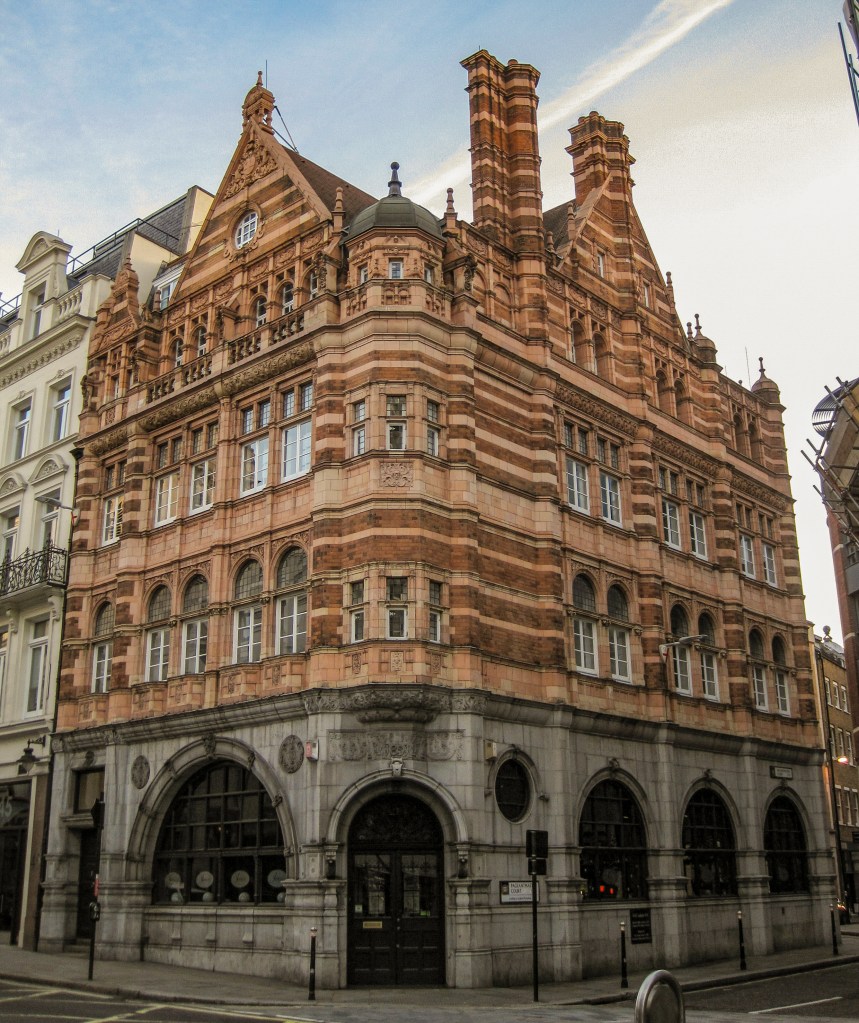
I wish the idea of looking up banks around St Paul’s Cathedral had occurred to me while I was there, but it didn’t—so this will have to go on my list for my next trip to London. I’m talking about the bank where I believe P. L. Travers imagined Mr. Banks working: the Ludgate Hill branch of the City Bank at 45–47 Ludgate Hill, which, according to Memoirs of a Metro Girl, is now a wine bar.

The picture above was taken by Metro Girl and is shared here with her permission 🙂

How do I know this was the bank P. L. Travers had in mind when she wrote “The Bird Woman”? Because she writes: ‘They were walking up Ludgate Hill on the way to pay a visit to Mr. Banks in the City.’  

In The Bird Woman we learn that Mr. Banks is entirely absorbed in material pursuits and has no time for small pleasures. But we can hardly blame him—he is the sole provider for his ever-growing family (by the second book in the series, the Banks family counts five children). Hoping to offer him a rare moment of joy and respite, Mary Poppins and the children plan an outing for tea and Shortbread Fingers. Yet Jane and Michael are far more excited by the possibility of meeting the Bird Woman and her pigeons outside St Paul’s Cathedral than by the promised tea and shortbread.    

Because of the sharp contrast between the Bird Woman’s quiet act of feeding the birds and Mr. Banks’s worldly occupation, The Bird Woman takes on a distinctly spiritual undertone for the adult reader. The doves, traditionally associated with the Holy Spirit in Christianity, serve here as a visual metaphor for the nourishment of the soul. Clearly, P.L. Travers is concerned with our human struggle to balance material responsibilities with the quest for spiritual fulfilment.  

Yet for carefree Jane and Michael, the Bird Woman and her doves are simply companions to delight in and play with. For them, the magic of the day is found in this gentle, enchanting encounter—an experience that carries them beyond the ordinary and into a realm of wonder. 

I love how P. L. Travers conveys Jane and Michael’s understanding of the doves, while at the same time revealing her own gift for remembering how to see the world through the eyes of the child she once was. 

There were fussy and chatty grey doves like Grand-mothers; and brown, rough-voiced pigeons like Uncles; and grey, cackling, no-I’ve-no-money-today  pigeons like Fathers. And the silly, anxious, soft blue doves were like Mothers. That’s what Jane and Michael thought, anyway.” 

Jane and Michael (and probably P.L. Travers) relate to the animal world far more naturally—and kindlier—than most adults. To them, the birds are not pests but companions, each a living being with its own character. We, on the other hand, tend to brush past pigeons and doves as if they were mere annoyances, hardly pausing to see them at all—too busy rushing for the train or speeding down the highway, intent on our own version of cutting pennies and shillings. 

I experienced my own version of feeding the birds—not at St. Paul’s Cathedral, but in St. James’s Park. While we were there, a little girl, slightly older than Jane and Michael Banks, had a bag full of seeds. She was not only feeding the birds but also offering seeds to passersby who, like me, wanted to join in the experience. It was deeply touching, and here is a short clip of me feeding the birds.

Feeding the birds in St. Jame’s Park

Many of the characters in the Mary Poppins stories—if not all—have their roots in the real-life experiences and encounters of P.L. Travers. She rarely revealed these inspirations openly, though hints occasionally surfaced in interviews she gave throughout her long writing career.  

I have never come across an interview in which P. L. Travers spoke about the origin of the Bird Woman. However, I did find an old picture of a man standing outside St Paul’s, his arms and shoulders alive with pigeons as he feeds them. In the late 1920s and early 1930s, while working as a freelance journalist near Fleet Street, P. L. Travers often passed by St Paul’s Cathedral, and I can’t help but wonder whether this man might have been the true inspiration behind the Bird Woman. 

St Paul’s Cathedral, as P.L. Travers writes in The Bird Woman, was built long ago by “A man with a bird’s name. Wren it was, but he was no relation to Jenny.” That man, of course, was Sir Christopher Wren, England’s most celebrated architect of his day. When my daughter and I visited St Paul’s Cathedral in the summer of 2023, we saw a lovely exhibit inside about Sir Christopher Wren and the reconstruction of the building after the Great Fire of London in 1666. 

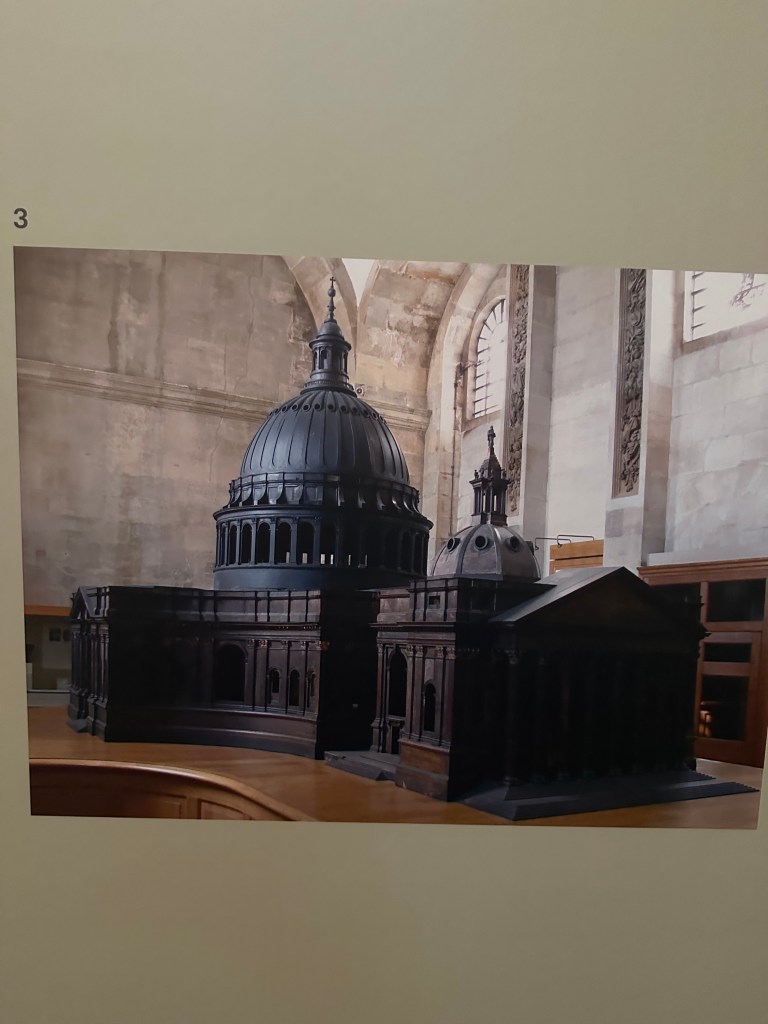
Wren designed the Great Model of the cathedral in 1672–73. The version you see in the picture below was executed by William Cleere and a team of thirteen joiners. This design differed from the original in style, evolving from the “Greek Cross” plan by extending the nave and adding a domed bell tower. 

King Charles II, who awarded the reconstruction contract to Wren, requested a slight modification: the domed bell tower had to be replaced with a traditional spire. But Wren was not a man easily discouraged. Once the plans were approved and the contract signed, and construction was well under way, he discovered a loophole in the fine print: it permitted ornamental rather than essential changes. So, he made his alterations accordingly. 

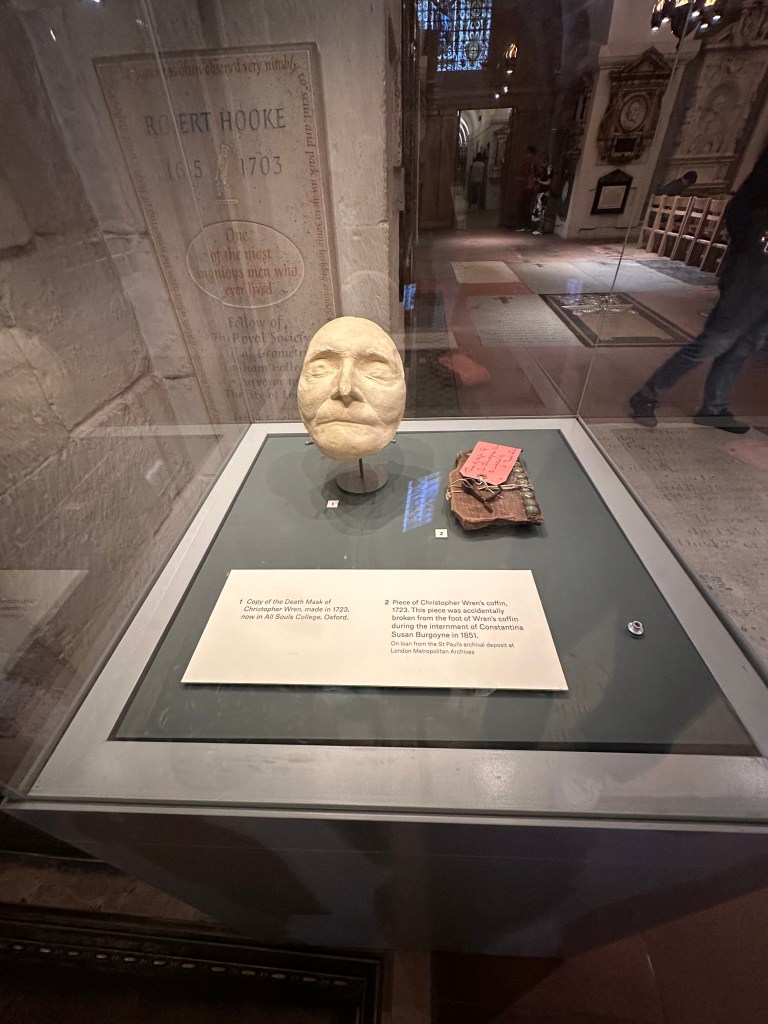
St Paul’s Cathedral is also Wren’s final resting place. Below is a photo of a copy of Wren’s death mask—the original is preserved at All Souls College in Oxford. A little morbid, perhaps, yet also a fascinating human attempt at transcending death.  

Now who is Jenny Wren? What did P.L. Travers meant by saying that Wren was not related to Jenny? The reference is a pun woven by P.L. Travers—one I had completely missed, since English folklore and nursery rhymes were not part of my upbringing. For those who may also be unfamiliar: the wren, a tiny brown bird, was affectionately called “Jenny Wren” in English tradition. She appears in old songs and nursery rhymes, often paired with Robin Redbreast as husband and wife. 

Children in P.L. Travers’s time would have instantly recognized “Jenny Wren” as shorthand for the little wren, and the playful wordplay would have delighted them. It signals to young readers that the world is whimsical, alive with hidden connections. The pun weaves together architecture (Wren), folklore (Jenny Wren), and the story’s imagery of birds and the mystical Bird Woman—perfect for a chapter set at St. Paul’s amid flocks of pigeons. 

And for adult readers, there’s yet another layer: an echo of Dickens. Jenny Wren is also a character in Our Mutual Friend. That reference escaped me as well, but this Dickens novel has now joined my ever-expanding TBR list. 

Poppin’s Court 

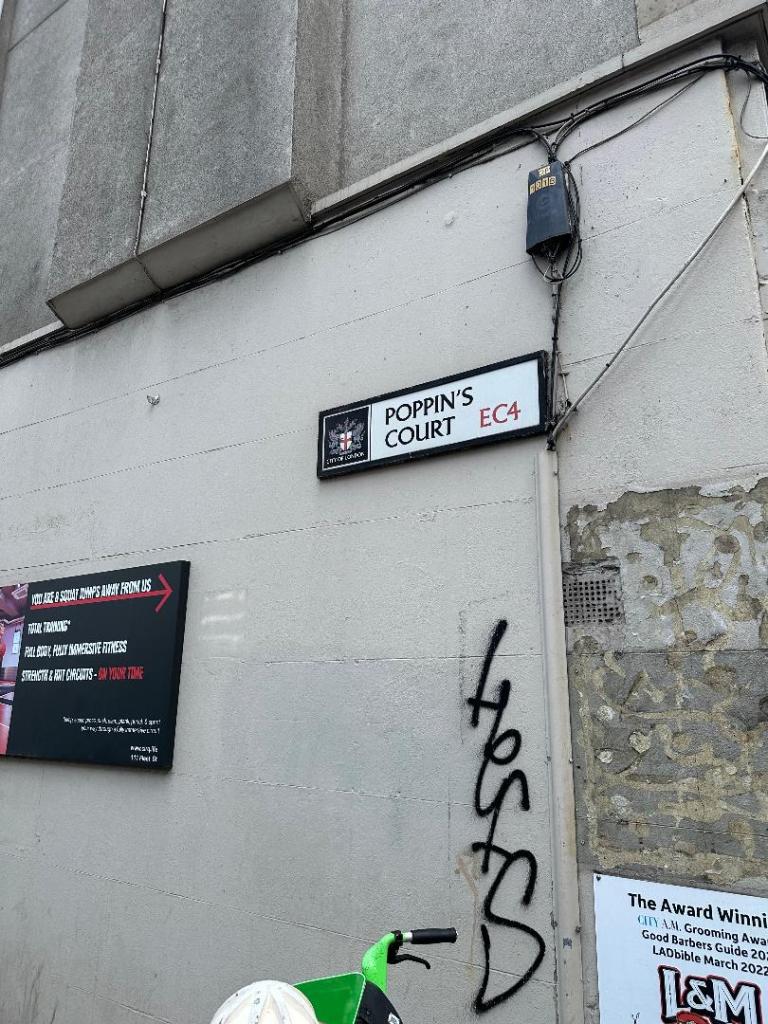
Not far from St Paul’s Cathedral, just off Fleet Street, you will come across a narrow lane called Poppin’s Court. When P.L. Travers first came to London she worked as a free-lance journalist on a street near Fleet Street and she must have passed by Poppin’s Court on her way to St Paul’s Cathedral, and it is, as her friend Brian Sibley wrote, possible that this is how she came up with the idea for the name of her famous nanny.  

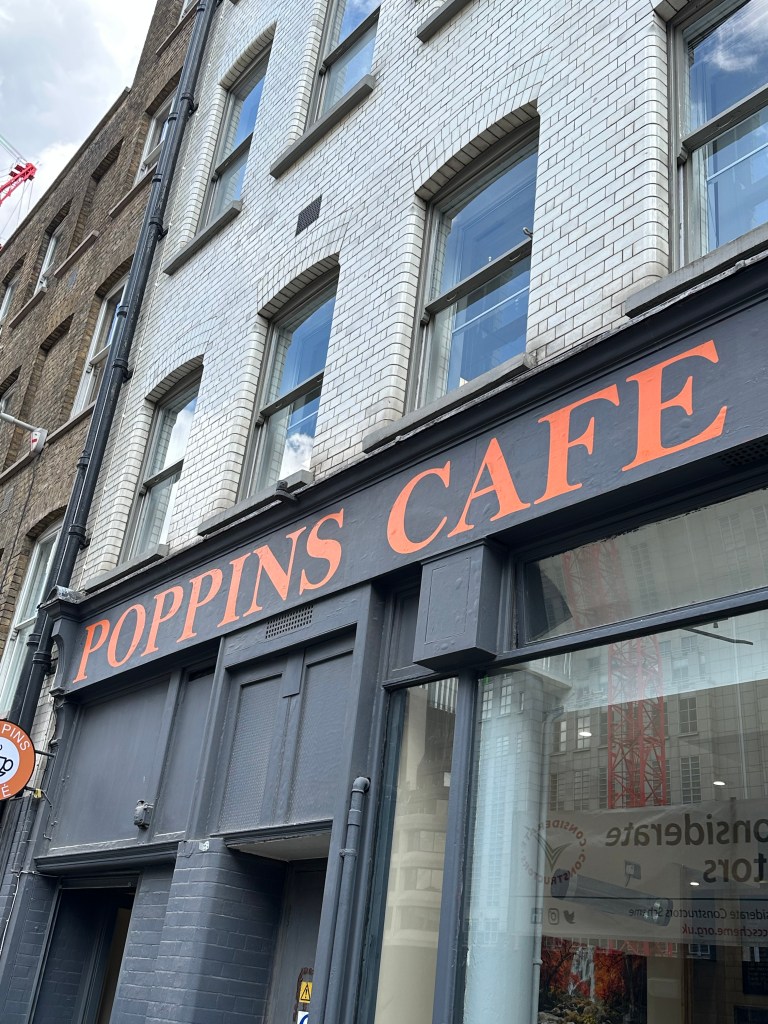
Back in 2023, when my daughter and I visited Poppin’s Court, there was a Poppins Café, which may still be there. Sadly (for me), it had nothing to do with Mary Poppins. I would have loved to visit a Mary Poppins–inspired tea room based on the books.

Leicester Square Gardens 

If you have time, be sure to stop by Leicester Square, where you’ll find several statues capturing iconic movie moments from different decades since the 1920s — and of course, one of them is Mary Poppins. Although the Mary Poppins statue in Leicester Square celebrates the film character rather than the one from the books, I couldn’t resist trying to ‘fly away’ on her umbrella. 

Since this Mary Poppins statue was created many years after P.L. Travers’s death, we can only guess what she might have thought of it. What we do know is that she once wished for a statue of her character in London—though her dream location was Kensington Gardens. I will tell you more about that in a future post on this blog.  

James Smith & Sons Umbrellas  

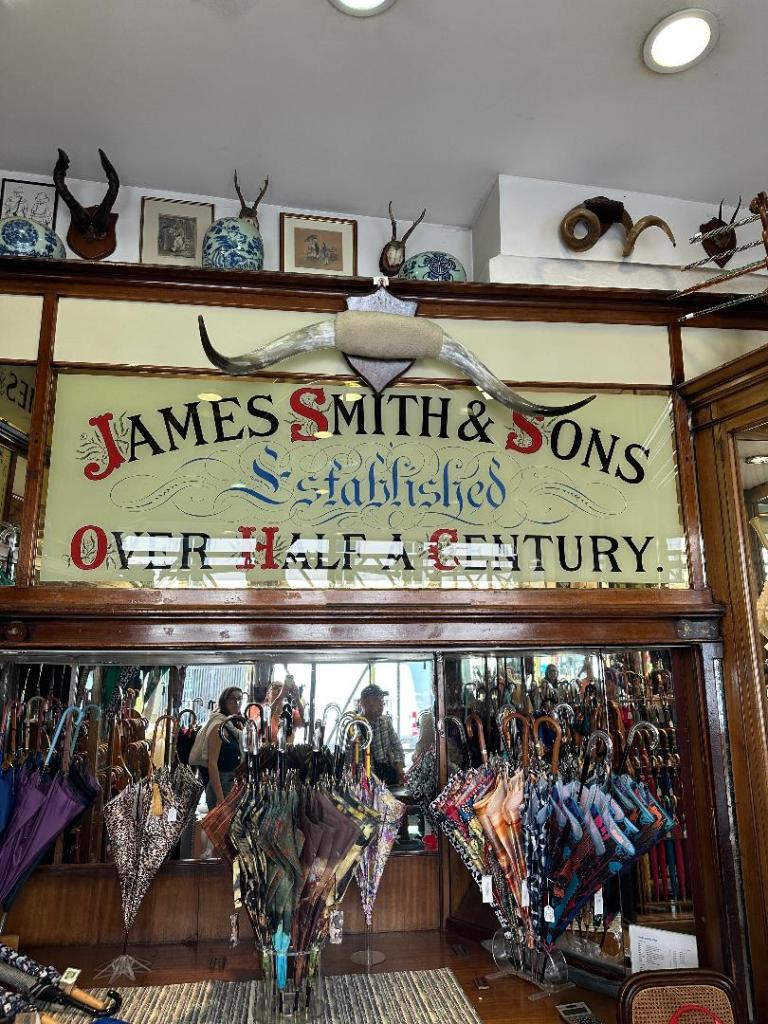
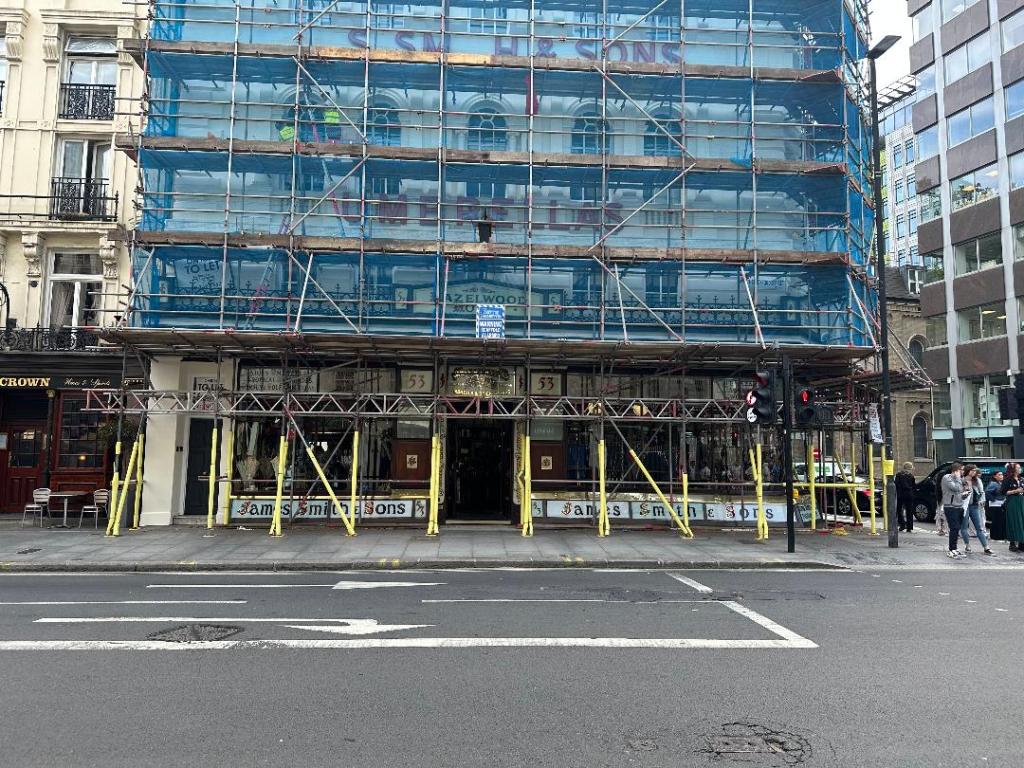
If you want to get a parrot-headed umbrella like Mary Poppins’, you should definitely visit James Smith & Sons Umbrellas, a tiny shop founded back in 1830. I have no idea whether P.L. Travers knew about this shop or if she ever visited it. According to her own account, the inspiration for the parrot-headed umbrella came from a childhood memory of a servant’s umbrella in the Travers household in Australia (and maybe by something else, which I also plan to tell you about in a future post). But whether or not P. L. Travers ever visited this shop, I thoroughly enjoyed our own visit — dampened only by the scaffolding on the facade, which was under renovation.  

Here is a picture of a parrot-headed umbrella standing proudly beside another famous fictional character. I was tempted to purchase both, but the price tag quickly discouraged me. But two years later I am still thinking about this parrot headed umbrella … 

That’s it for now—thank you for reading! If this post brought you a little joy, just click the subscribe button in the bottom-right corner of your screen and join me for the next stop in my Mary Poppins adventures through London and beyond. You can also follow along on Facebook and Instagram for more glimpses into the magical world of Mary Poppins and P.L. Travers. 

Until next time, take care and be well. 

Discover Mary Poppins’ London: A Literary Travel Guide for Fans of P.L. Travers – Part I 

Introduction 

If you’re a devoted fan of Mary Poppins and P.L. Travers—like I am—or if you have a passion for literary travel, this blog post is for you. Through sharing my travel experiences, I hope to offer you some inspiration for visiting locations in London and its surroundings that are deeply connected to the enchanting world of Mary Poppins and her creator. 

My Mary Poppins-Themed Trips to London and its Surroundings 

In the summer of 2023, I finally fulfilled my long-held dream of visiting London—and the cherry on top was that my daughter decided to join me on the adventure. The trip was inspired by my love for P.L. Travers and Mary Poppins, and my daughter’s enthusiasm for Harry Potter. We also carved out time for some book shopping, exploring iconic historical landmarks, and visiting the Charles Dickens Museum. However, in this blog post, I’ll be focusing specifically on the Mary Poppins side of our journey. 

So, let’s begin with a truly special address for any Mary Poppins fan. 

50 Smith Street, Chelsea, London  

P.L. Travers lived at 50 Smith Street, Chelsea, London with her adopted son, Camillus, from 1946 to 1962. It was here that she wrote Mary Poppins in the Park, the fourth book in the series. Today, the building proudly bears an English Heritage blue plaque in honour of her literary legacy. I used to come across photos of fans on its doorstep shared on social media, and I must admit, I always looked at them with a hint of envy. But now, it was my turn to see the place where she once lived and to experience history in a truly sensory way. 

I remember fighting the urge to break into a run as we emerged from the Tube station and began walking down King’s Road. I glanced at the shop windows lining the sidewalks and the red double-decker buses on the street, their colours unusually vivid in the bright daylight, like freshly painted canvases. Even my daughter could sense my heightened emotional state and the spring in my step, and she teased me, ‘You do realise you’re not actually going to meet her in person?’ And I knew she was right—but this was the closest I could ever get to meeting her in the physical world. 

In fact, I could hardly believe I was finally just steps away from something I had dreamed about for years—and had often doubted would ever come true. For one reason or another, it was never the right time; something always held me back from booking the trip. This may sound strange to experienced travellers, but I’m not much of a traveller myself—and Canada is a long way from London. So, this first trip to London was a big deal for me on many levels and as it turned out, the experience was truly transformative.

Now you can imagine my disappointment when we reached the corner of Smith Street and I saw a huge construction box blocking the entrance to 50 Smith Street.

The only positive thing, as suggested by a friend who saw the picture afterwards, was that there was a blown-up reproduction of the blue commemorative plaque on display, but that was probably just a friend’s way of trying to lift my spirits.  

In a moment of madness (and ignoring my daughter’s rational arguments), I dialed the number displayed on the notice in the window of the construction box. It said that all visitors or anyone seeking access could call the number on the notice. Well, I was definitely a visitor wanting access. The person on the other end of the line clearly didn’t agree—they actually dared to hang up on me. Needless to say, I was offended, but as I gradually came to my senses, I realised not only was I acting a bit unhinged, but I also had a second chance just a few minutes’ walk down King’s Road: Number 29 Shawfield Street, the last residence of P.L. Travers.  There really was no need to get so agitated. 

29 Shawfield Street, Chelsea, London 

P.L. Travers lived at number 29 Shawfield Street for the last thirty years of her life and it is in her the study on the second floor that she wrote Mary Poppins in Cherry Tree Lane and Mary Poppins and the House Next Door, the last two books in the series.

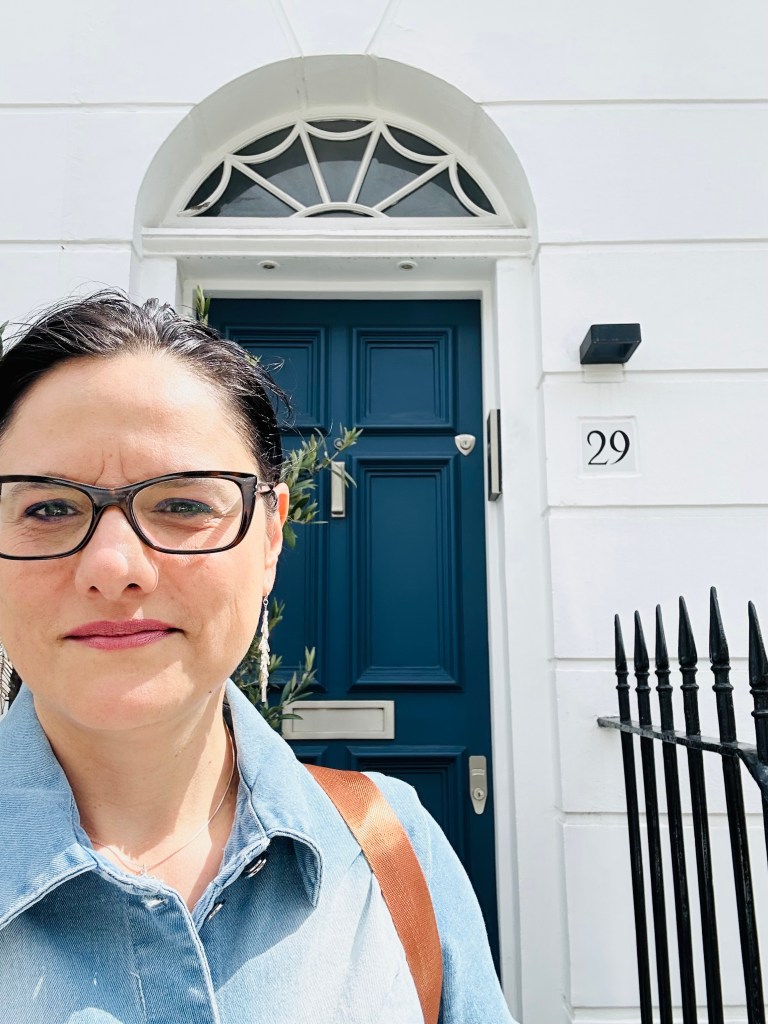
As we turned the corner onto King’s Road and began walking toward Number 29 Shawfield Street, I felt a tinge of sadness that only deepened when I saw the front door, no longer pink as it had been when P.L. Travers lived there. We walked back and forth along the sidewalk, trying—but not quite succeeding—to be circumspect. After all, how circumspect can you really be when snapping selfies in front of someone’s front door? 

It was a weekday, and I had convinced myself that the residents of Number 29 were probably at work. But then, a postman happened to walk by and rang the doorbell—and suddenly, the door opened. Feeling a bit embarrassed, we crossed to the other side of the street and sat on the edge of the sidewalk, while I continued to stare intently at the front door. 

How I envied all those who had visited her here and, even if only briefly, had been granted a glimpse into her personal world. Below are two personal accounts from people who visited her home and the lasting impression it made on them.

She lives in a small Georgian house in Chelsea. Her sitting room, where she received me, is light, airy and sparsely furnished. She sits on the corner of a long sofa the rest of which is covered with stacks of books, letters, various publications. On the creamy wall hang a Paul Klee, portraits of great grandmothers and aunts, a drawing of P.L. Travers by AE (George Russell), a Tree of Life by one of her students … The mantle piece is covered with photographs of family and friends, including many children.”    

Looking Back, by Shusha Guppy 

P.L. Travers lives in a quiet, small period house in the Chelsea section of London, and everything in her home contributes to a visitor sensing the emptiness of plenitude and the plentitude of emptiness – exemplified in, her upstairs study, by several beautiful Japanese scroll and screen paintings, mostly by Sengai: a willow almost breaking in the wind; six persimmons; a cock crowing to the morning and a little hen bird nearby; the depiction of the syllable mu (literally meaning “not” or  “without” and referring to a famous Zen koan and the extraordinary  “Ten Oxherding Pictures” (attributed to the twelfth- century Chinese Zen master Kaku-an Shi-en).  

Pipers at the Gates of Dawn, by Jonathan Cott 

I tried to picture her stepping out of the front door, then slowly descending the three steps. I imagine her gaze fixed on the pavement as she walks down the street, her mind clearly elsewhere. Then she stops. Something has caught her eye. It must be the small star embedded in the sidewalk. She smiles. She loved pointing it out to friends who came to visit, inviting them to find it too—as if it were a secret only she could truly see. 

How many people before me had walked that same stretch of pavement, searching for the star? And how many had actually found it? Not being able to see it myself was somewhat of a letdown. Could it be that she made it up? Or had time and countless footsteps worn it away?

Then I remembered reading a blog post by her friend, writer Brian Sibley in which he recounts his first encounter with her and, at the very end of his recollections, mentions the star on the pavement. 

Light was failing, but I found it, at last: just as Pamela had said – a star-shape, faintly but clearly marked in the surface of a paving stone. Doubtless it was some rouge imprint on the surface from the manufacturing of the cement paving-stone, but I was remembering the words of the old snake, the Hamadryad, on that night of the full moon when Mary Poppins took Jane and Michael to the zoo: ‘We are all made of the same stuff… The tree overhead, the stone beneath us, the bird, the beast, the star – we are all one, all moving to the same end…’ ” 

Chelsea Physic Garden, London 

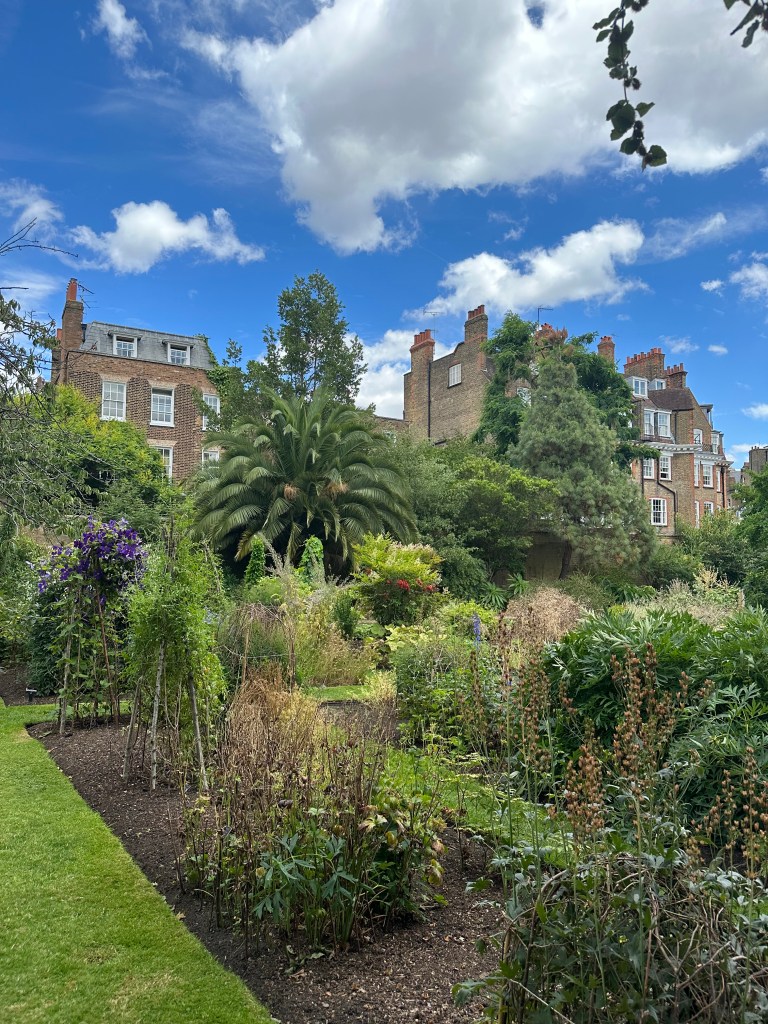
London’s oldest botanical garden, the Chelsea Physic Garden, is just around the corner from 29 Shawfield Street. It was founded in 1673 by the Worshipful Society of Apothecaries with the mission to grow medicinal plants for study and healing. Located in London, the garden played a key role in botanical research, plant exchange, and the advancement of medical science. Chelsea Physic Garden was open to the public in 1987 with the aim to increase public awareness and support for its historical and scientific significance.   

I don’t know for sure if P.L. Travers ever visited the garden, she was 88 years old at the time, but it is possible. What I do know is that in her eighties she was very interested in the medicinal and magical properties of plants, probably motivated by a desire to find a cure, or at least some relief from her digestive problems. Her granddaughter Kitty, recalling childhood memories in an interview for the BBC, said her grandmother was always drinking strange teas and concoctions. These were probably the infusions she made from the herbs she cultivated on her balcony at 29 Shawfield Street.  

In an interview she gave to South East at Six, a local BBC teatime news bulletin for viewers in London and the South East, promoting her book Mary Poppins in Cherry Tree Lane, we see P.L. Travers at the end of the video standing on her balcony, gathering herbs into a small wicker basket, a wooden birdhouse behind her. The balcony has a quiet, romantic storybook charm befitting of a writer steeped in fairy tales and mythology.

While the herbs aren’t central characters in the plot of Mary Poppins in Cherry Tree Lane, they do take on a magical, symbolic role during the Midsummer’s Eve adventure of the Banks children. The book also includes at its end a list of herbs with both common and Latin names that are mentioned in the story—a tangible nod to P.L. Travers’s knowledge of plants.

Occasionally, she also gave herbs as a gift to friends who came to visit her at her home.  

At the time I visited P.L. Travers in July 1979, I was feeling perplexed and confused about several things in my life, whose murkiness contrasted sharply with the clarity of the pictures in her study. (…) She also took me to her garden in the back, where she was growing more than twenty varieties of herbs, many of which appear in her recent Mary Poppins in Cherry Tree Lane. (“Taste all of them,” she suggested, “they will do you good.”) Then, as a friendly gesture, she cut off some rosemary sprigs and gave them to me (“This will last forever and bring you good luck. It means “To Remember”

Pipers at the Gates of Dawn, by Jonathan Cott 

This is all for now. I hope you enjoyed reading this post and that you’ll return to read more about Mary Poppins, P.L. Travers, and my adventures as I continue to explore their world. In the next blog post, I’ll be continuing the story of my Mary Poppins-themed trips to London and its surroundings, so stay tuned! And do let me know if you go on a Mary Poppins adventure of your own—or if you enjoy literary trips in general. 

Until next time, be well!

A Mary Poppins Effect

Dear Reader, 

This blog post is going to be slightly more personal than usual as I want to share with you one of the many Mary Poppins effects in my personal life. These, for me magical, effects are incontestably transformative and have greatly enriched my inner life and personal happiness. That said, I am not suggesting that all personal challenges have vanished, but my ability to sustain and show resilience comes directly from these various effects.   

First and foremost, reconnecting with my childhood reading of “Mary Poppins” reminded me of my deep love for magic and fairy tales. It also made me realize that my daily life had, sadly, become quite dull and ordinary. It’s not that I wasn’t surrounded by people and events—my life was filled with all the things that keep us busy and distracted. Of course, my family is a great source of love and support, and I am forever grateful to them, but there was an emptiness within me that couldn’t be filled by anyone, no matter how loving they were. It just dawned on me (and perhaps this realization had been building up inside of me for some time) that I felt constrained. Faced with this moment of recognition I had to acknowledge the need for more joy and wonder in my life.  

But where to find them? 

I decided to go search for them in the places where I had found them as a child. The day had come when I was finally old enough to start reading fairy tales again, to paraphrase a quote by C.S. Lewis. I felt goosebumps when I first read this quote by C.S. Lewis because the truth of his words resonated so deeply with my own experience.  

Then, organically, one thing led to another, and I found myself collecting old books of fairy tales and fantastical adventures, something that I would never have thought I would be doing a few years ago, as it was so remote from the spheres in which I operated.

The moments I spend reading fairy tales and fantasy novels, or treasure hunting for old books, are pure bliss—a breath of fresh air in my daily life. It’s not just an escape from the ordinary; these activities also allow me to see the world in a new light. Looking at my bookshelves fills me not only with joy but with a sense of groundedness—a feeling of coming home. And I owe it all to P.L. Travers and her Mary Poppins

Here, I’m sharing some pictures of the books in my modest collection, which I hope will expand over time. 

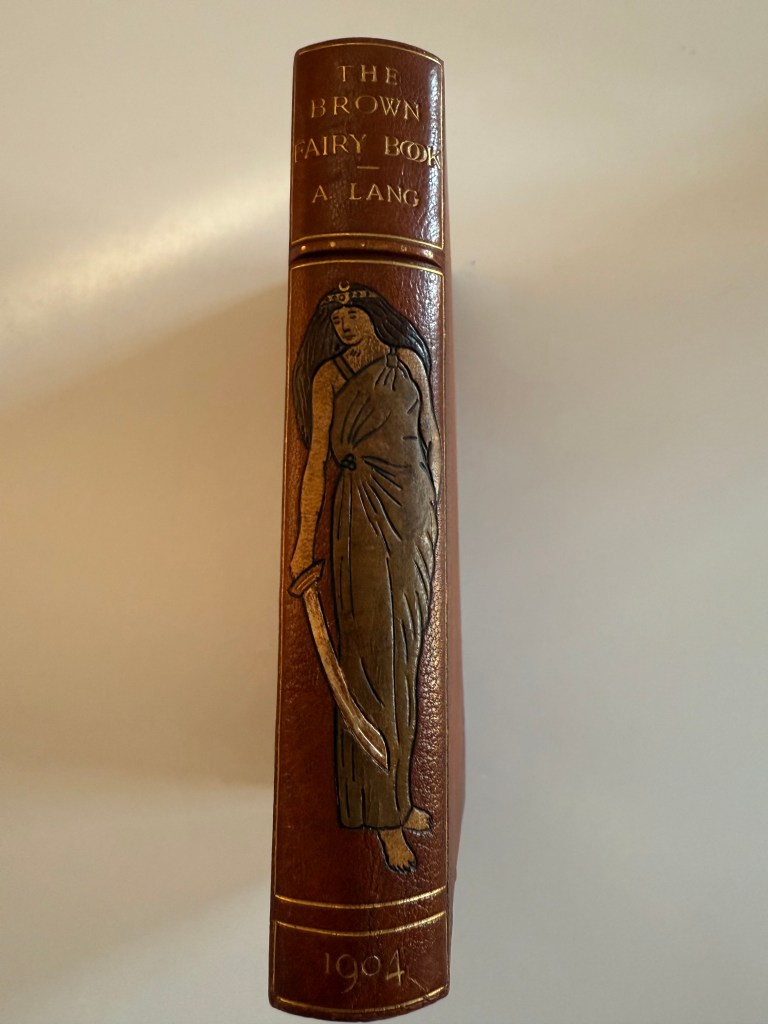
The Brown Fairy Book by Andrew Lang. Illustration below is by H.J. Ford.

Below is a picture of the cover of Princes and Princesses by Andrew Lang.

Illustration below by H.J. Ford.

Below is the cover of Myths & Legends of Japan by F. Hadland Davis.

Illustration below by Evelyn Paul.

While reading interviews given by P.L. Travers, I discovered that our childhood readings intersected, despite our cultural and generational differences. We both read Beatrix Potter, the Brothers Grimm, and Andersen’s fairy tales, to name a few, only I read them translated in Bulgarian. This realization brought back memories of the fairy tales from my own childhood, with their beautiful illustrations, and I felt a deep grief for having left behind the most cherished treasure of all—my books.  

My initial response to counter this grief was to dismiss it as childish. I told myself I had to accept certain losses in life. On a practical level, I also thought it unrealistic to expect I could find copies of these books now that I live so far from my birthplace. But was I being childish? Was this a loss that needed to be accepted, or was it the kind of loss that could be retrieved? P.L. Travers herself pondered the theme of loss often, and in her later years, she would say that all that is lost is somewhere. 

I decided to give it a try, and with the help of the internet, I’m happy to report that, after a couple of years, I was able to reconstruct most of my childhood fairy tale book collection. I successfully found old copies of the editions I had as a child, as well as some new reprints of those same editions. 

These were the books my mother read to me at bedtime and the ones I learned to read with, before I got acquainted with Mary Poppins.

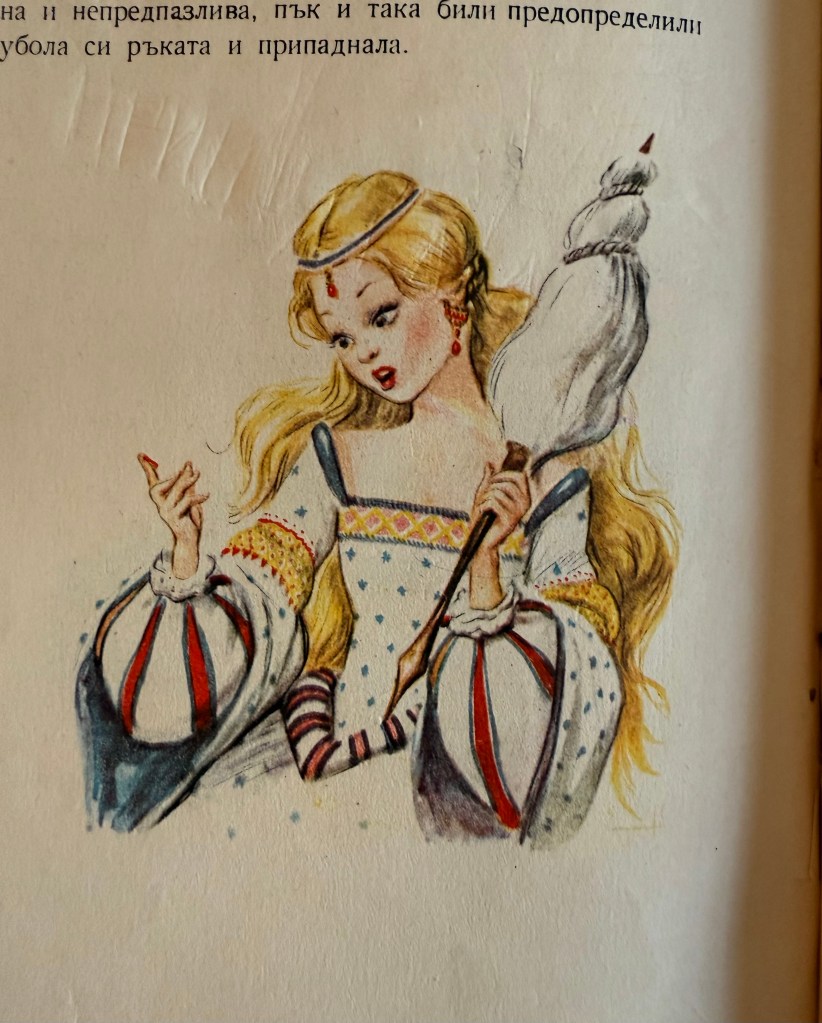
Below are pictures of the illustrations in my copy of Sleeping Beauty. The illustrator is Italian artist Gianni Benvenuti. This was P.L. Travers’s favourite fairy tale. She even wrote her own retelling of it and I wrote two blog posts about it back in 2017; you can read one of them here, and if you’re interested, the other is easily found on the website of this blog. 

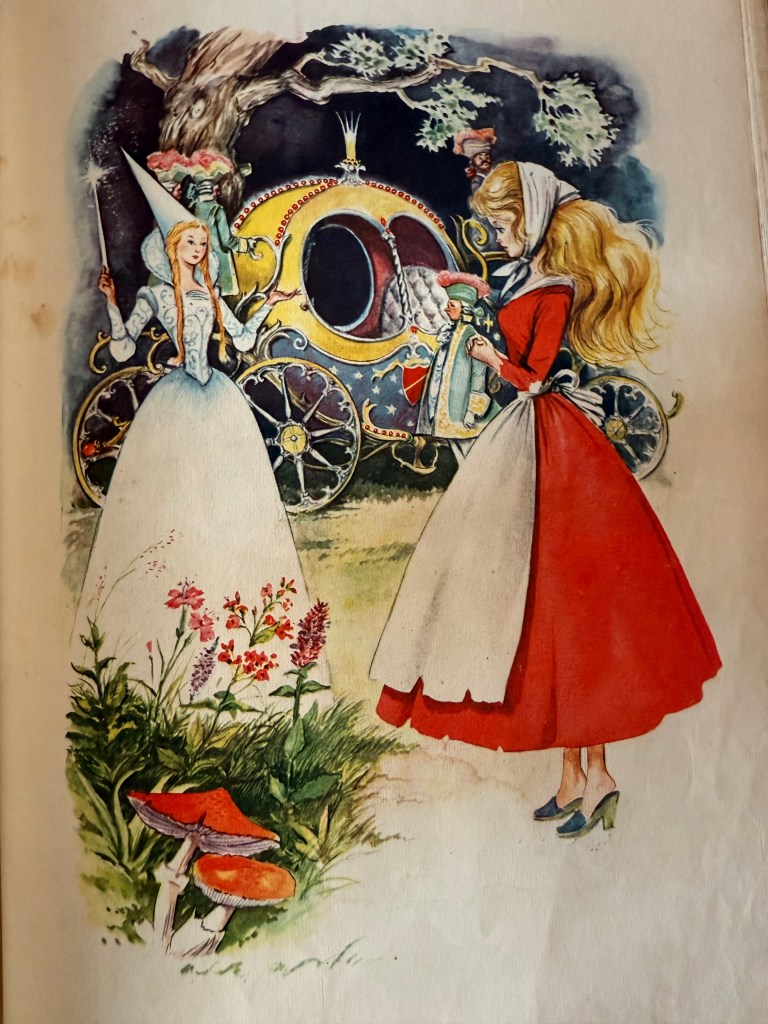
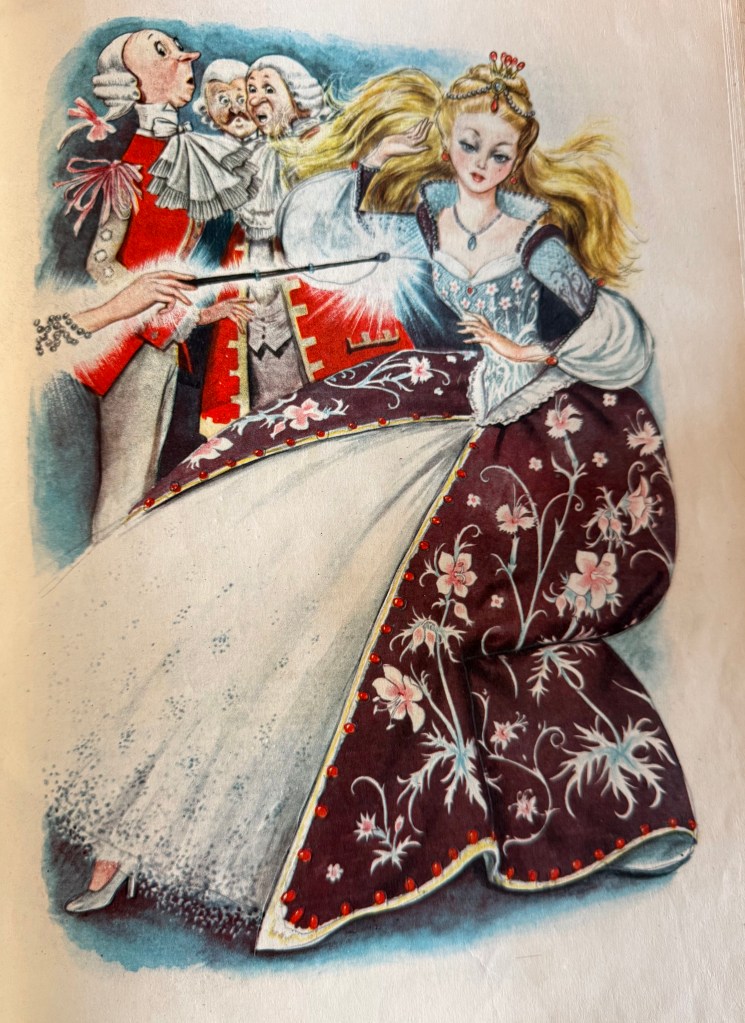
Cinderella was my personal favourite fairy tale as a child, followed closely by Snow White, mostly because Snow White had dark hair like mine. The illustrations below are also by Benvenuti.

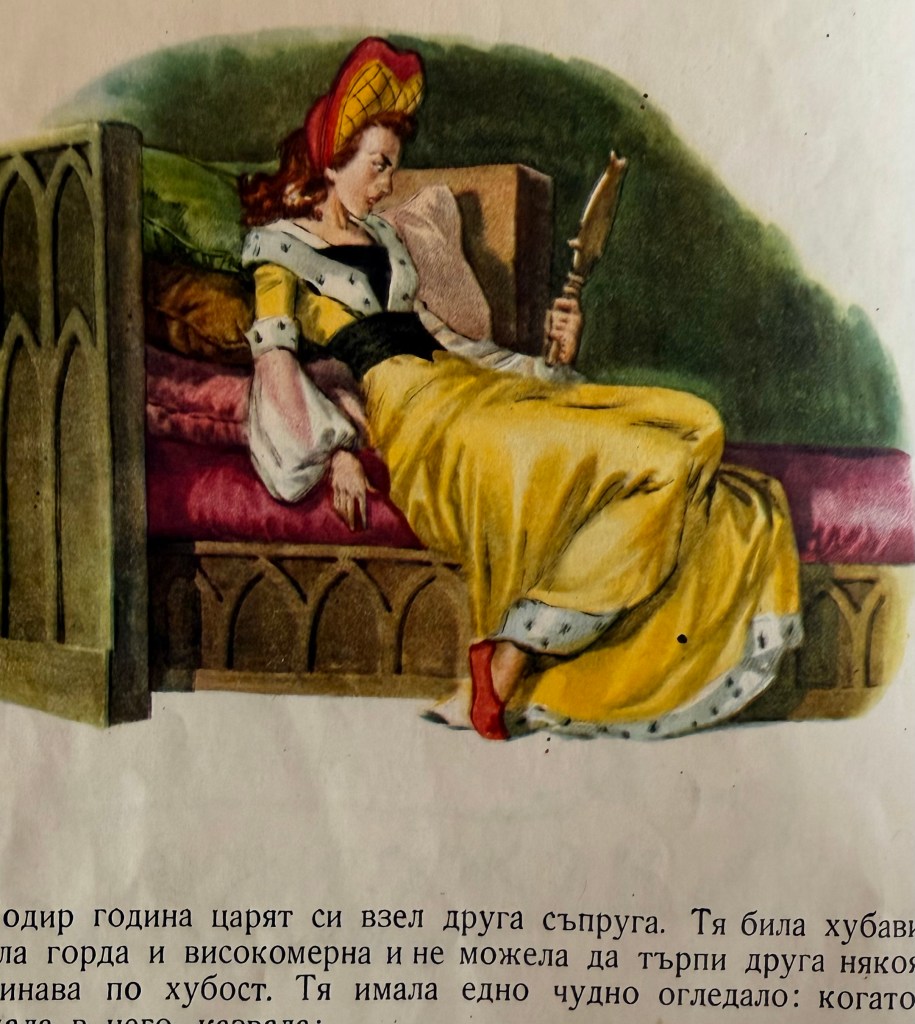
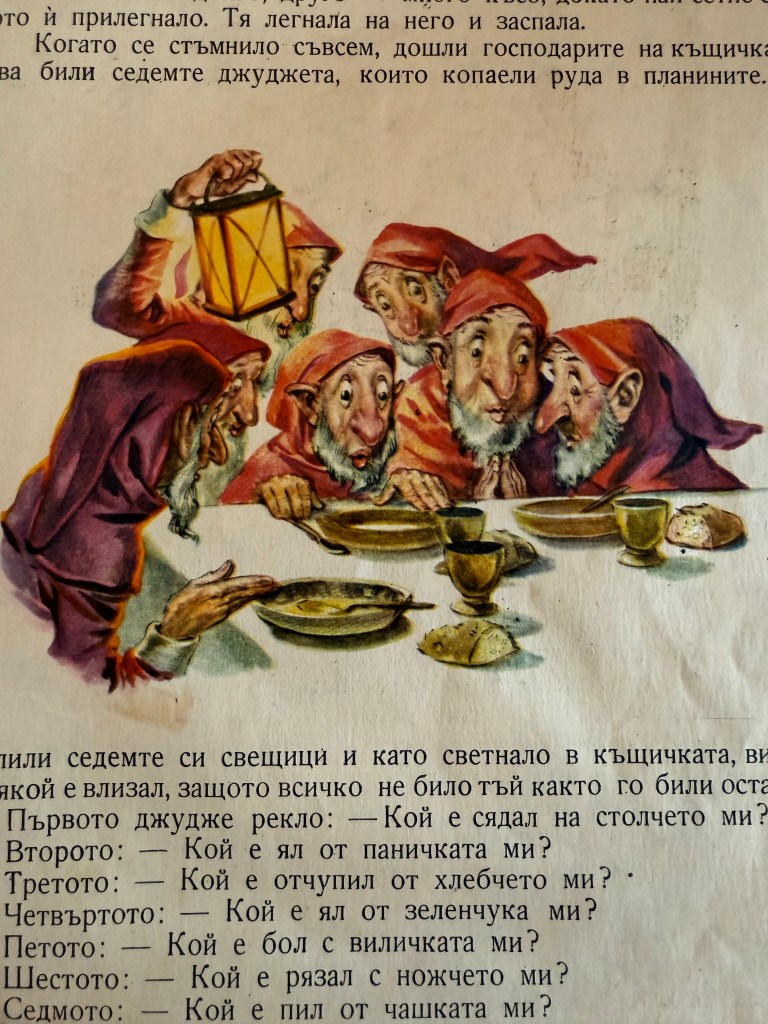
The illustrations of Snow White below are by Sandro Nardini.

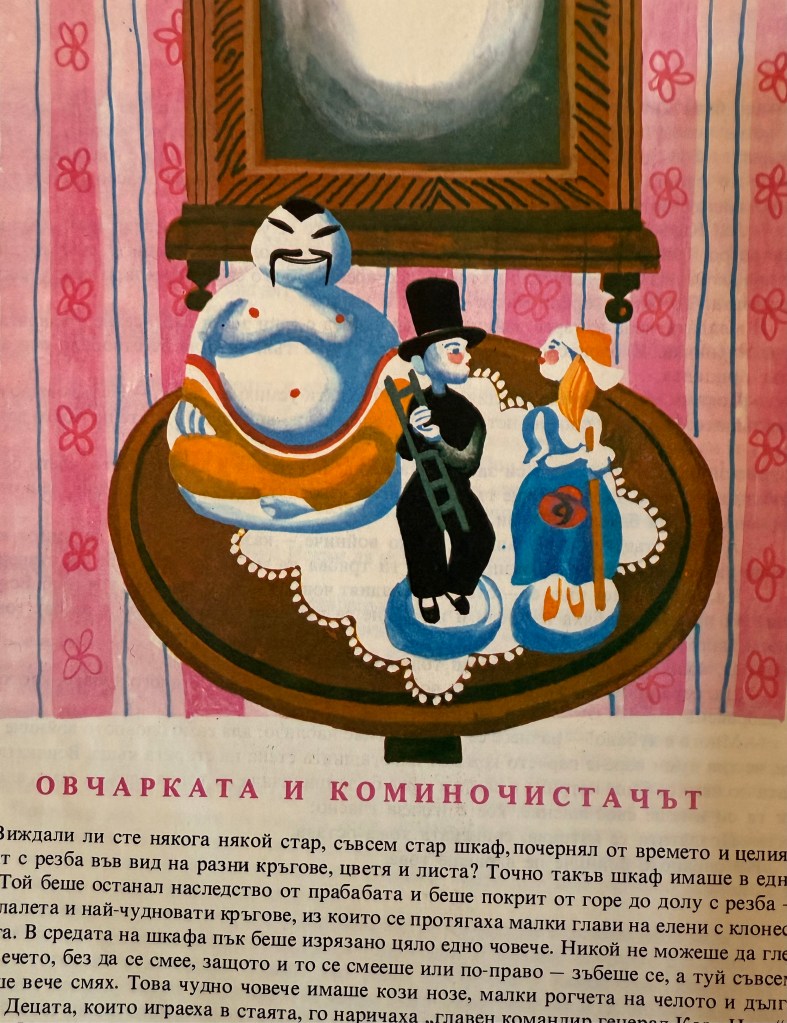
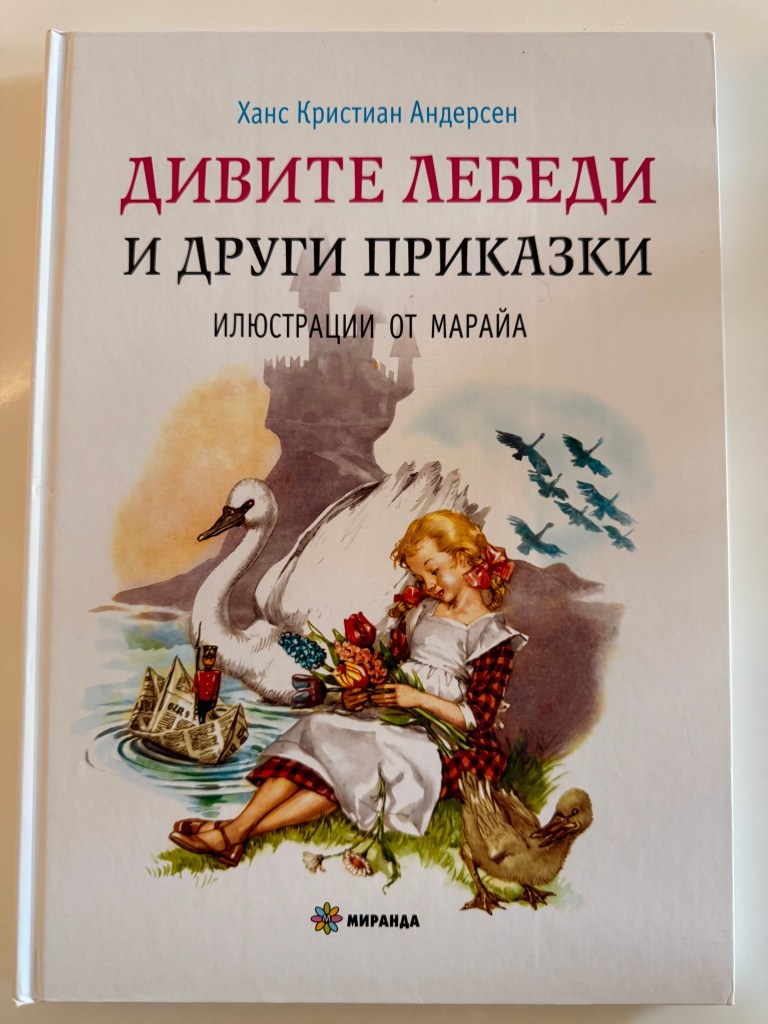
And these are my two books of Andersen’s fairy tales. One is quite tattered, and the illustrations aren’t as beautiful as in the other, but I still enjoyed the stories. P.L. Travers loved Andersen’s fairy tales as a child, but as an adult, she had a different view. She believed Andersen undermined the vitality of his stories through his constant appeal for pity. It’s an interesting perspective, but one I don’t share. 

The illustrations above are by Lyuben Zidarov. And the illustrations below are by Libico Maraja.

Here is now Peter Rabbit by Beatrix Potter. I must have been around three years old when my mother read Beatrix Potter’s stories to me, and I remember the illustrations captivated me with such magnetic force. I wish I had P.L. Travers’s lyrical talent to describe the experience. It’s hard to put emotional states and impressions into words, but it truly felt as if I was part of the picture. It’s a strange feeling to remember the state yet not be able to recreate the experience. I still enjoy the illustrations, but our perceptions do grow duller as we age. 

P.L. Travers adored Beatrix Potter and wrote a review of The Tale of Beatrix Potter by Margaret Lane. I wrote a blog post about it some time ago, you can read it here

This is all for now. I’ll share more of my childhood book collection in a future post. In the meantime, take care, and I hope you’ll return to read more about Mary Poppins, P.L. Travers, and my adventures as I continue to explore their world.