An Attempt at Time Travel: The Author of Mary Poppins, Gurdjieff, and a Paris Apartment

Dear Reader,

Have you ever wished you could time travel? I have, many times, since I first began my journey into the world of P. L. Travers and her Mary Poppins. At first, I dreamed of having tea with P. L. Travers in her townhouse in Chelsea, London, and talking about all things Mary Poppins. But as time went on and I delved deeper into her universe, I began to dream of a particular kind of time travel; time travel under a cloak of invisibility.

I would love to witness the events of her life firsthand instead of relying on the filtered perceptions of those who knew (or thought they knew) her. Just think how enlightening it would be, for example, to observe her interactions with her spiritual teacher, G. I. Gurdjieff, who, by the way, was a fascinating figure in his own right. Imagine what it would be like if I could see his apartment in Paris, hear the voices, see who sat where, notice what nobody back then thought important enough to record, and then come back to tell the tale.

Since I have no supernatural powers, all I could do to come somewhat closer to realising my impossible wish was to travel, in real time, to Paris and visit number 6, rue des Colonels-Renard, where Gurdjieff dispensed his wisdom while entertaining his pupils with exotic dishes he cooked himself, Armagnac toasts, readings from his manuscripts, and music played on his harmonium.
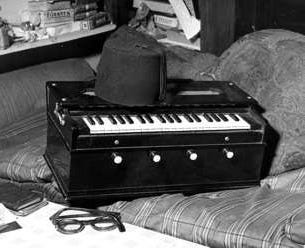
(Gurdjieff’s harmonium. Image reproduced from Jessmin and Dushka Howarth, It’s Up to Ourselves: A Mother, a Daughter, and Gurdjieff, via The Gurdjieff International Review.)

Rue des Colonels-Renard is a quiet street in Paris’s 17th arrondissement, close to the Arc de Triomphe and just a short walk from the bustle of the Champs-Élysées. Number 6 is an elegant five-story limestone building with an ornamented stone facade, tall windows, and wrought-iron balconies adorned with flower boxes.
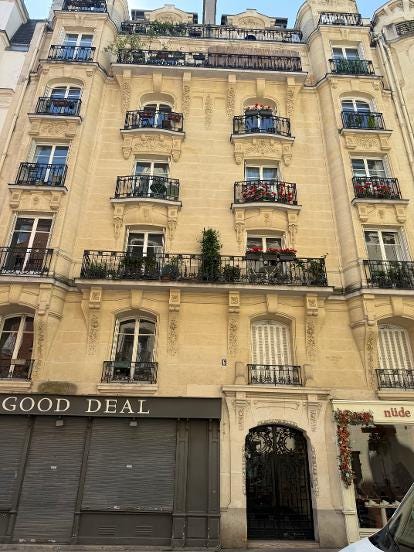
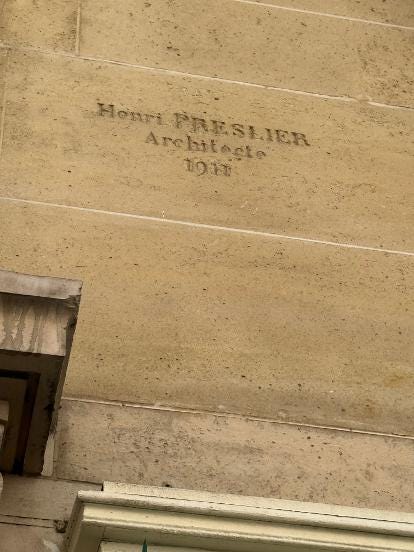
The building was constructed in 1911, and the name of its architect, Henri Preslier, is immortalised on its facade.
My daughter and I arrived there a little after lunch on a hot and sunny day in early June. The absence of other pedestrians on the street made it easy for me to pretend that we were stepping back in time. All I had to do was ignore the cars parked along the sidewalk and focus on the building.

I knew that I would not be able to see the actual apartment, but I was hoping to get inside the building, feel the atmosphere of the vestibule, and climb the staircase. Alas, to my great disappointment, it was not meant to be. The wrought-iron entrance gate was locked.
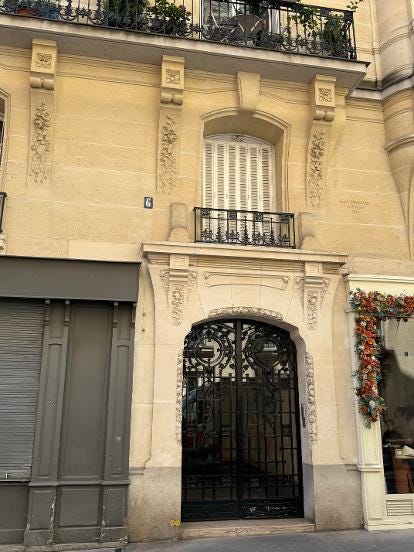
There was, however, a small consolation. The entrance gate was not a conventional solid door, but a combination of glass and elaborate black wrought iron, which allowed me to catch a glimpse of the vestibule beyond. After first pressing my nose between the ornamental ironwork and peering through the glass portion of the door, I pulled out my cell phone and pressed the camera lens against the glass.
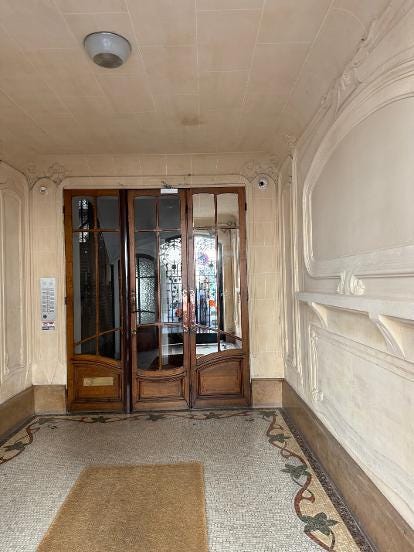
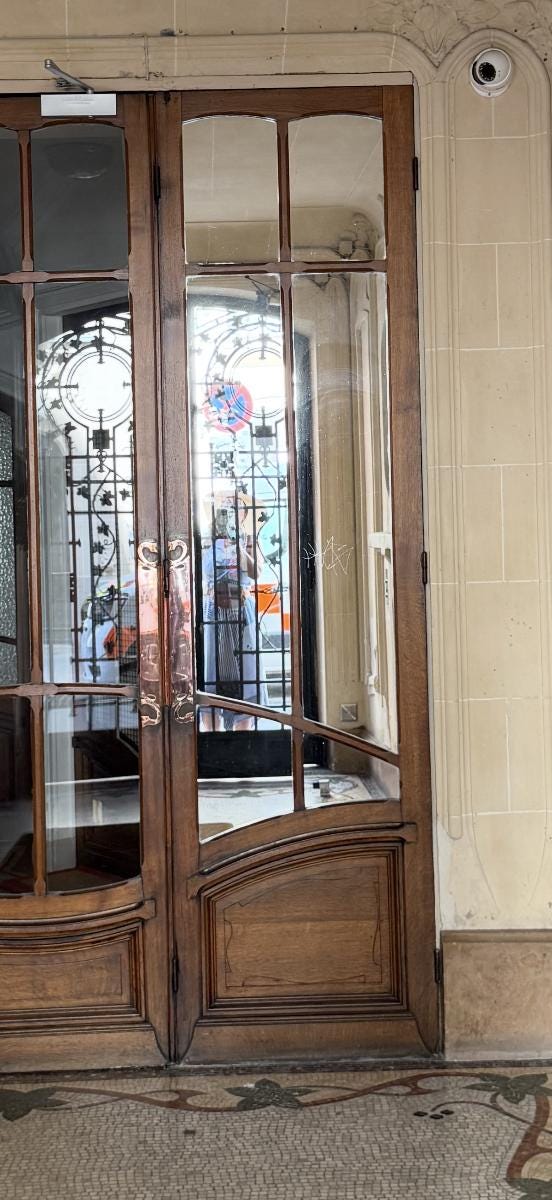
I don’t know whether the entrance gate is the original one from 1911. The building must have undergone some changes over the years, but the vestibule, with its patterned mosaic floor and tall, glazed wooden inner door, certainly retains the appearance of an early-twentieth-century Parisian apartment building. It is possible, then, that the space looks much as it did when Gurdjieff lived here, and P. L. Travers came to visit.

Still hoping to somehow get inside the building, we sat on the sidewalk across the street and waited to see if someone would come in or out. No one did. As we sat there, I wondered whether the entrance gate had been locked back then too, or whether that was a consequence of modern-day security concerns. Somehow, I had a feeling that things had been a little different in Gurdjieff’s time.

I imagined P. L. Travers walking along the sidewalk with her adopted son Camillus, who was around ten years old when he first met Gurdjieff. They came to visit him in September 1949, just a few weeks before his death the following month. I wondered, did P. L. Travers scold Camillus in the manner of Mary Poppins and instruct him to be on his best behaviour? And did Camillus display the same sense of excitement and anticipation as Jane and Michael Banks when Mary Poppins took them to visit her relatives?

My reverie was suddenly interrupted by the chiming of a church bell. You can hear it in the video below.

The solemnity of the moment did not last long. My daughter, who, quite understandably, was beginning to lose patience with my facade-gazing decided to ask me a perfectly ordinary question and catapulted me back right into ordinary reality. You can hear her talking in the background and me insistently shushing her.

Then, as if to confirm my sense of reverence, a pigeon flew overhead and circled the balconies on the top floor of the building before continuing its way. Somehow, the sight of it, combined with the chiming of the bell, made me feel at peace with the fact that I could not get inside the building.

And as I am writing this and looking again at the picture of the vestibule, I notice something that I had not noticed before. If you look closely, you can see my reflection in one of the glass panes of the inner wooden door. In a way, I was inside the building, albeit not in the manner I had expected. Maybe, even though I could not physically cross that threshold, I was allowed to see enough.
Descriptions of the interior of Gurdjieff’s apartment can be found in the written accounts of his pupils. I have not read them all, of course, but last year I discovered Margaret Anderson’s The Unknowable Gurdjieff and was thrilled to find brief descriptions of what his home looked and felt like.

Margaret Anderson was an American writer and editor of the influential avant-garde literary magazine The Little Review and one of Gurdjieff’s pupils. She later became a member of the Rope, a small group of lesbian women whom Gurdjieff brought together for special work. Her account in The Unknowable Gurdjieff includes recollections from the period after the Second World War, when Gurdjieff’s American pupils began returning to Paris, along with others, like P. L. Travers, who had spent the war years in the United States.

It was in May 1948 that Anderson returned to Gurdjieff’s apartment in Paris.

It was May in Paris, but for us there was no spring. There was no time to notice the horse-chestnut trees blossoming in the Bois, or the illuminated fountains sparkling in the Place de la Concorde in the soft sweet light. There was time only to drive as fast as possible by the shortest route to Gurdjieff’s flat in the rue Colonel Renard – a street with as little French distinction as a page in a dictionary; a flat without sunlight or a single flower, where the motionless air reeked of Asiatic cooking and the heat was almost unbearable.”

Gurdjieff’s small dingy familiar apartement in the rue Colonels Renard had not changed – details of destruction only emphasized its changelessness: the colours had faded, the furniture was shabbier, the dining-room carpet had worn through and now had big patches on it. (…) The pictures on the walls were new, but they had the same quality as the old ones – ‘everything but art’ as Jane had said long ago.

Jane was Jane Heap, Anderson’s co-editor of The Little Review and her partner for many years. Heap became particularly devoted to Gurdjieff’s teaching and eventually taught his work herself, leading Gurdjieff groups in London. P. L. Travers belonged to one of these groups.

I found this observation about the pictures on his walls particularly interesting because Gurdjieff had strong opinions about art. He taught that true art must be objective, transmit spiritual truths, and cosmological laws. He disliked what he called subjective art which arose largely from the artist’s personality, emotions, associations, and unconscious impulses. And, yet he covered his walls with art that his pupils, many of whom were artistically sophisticated, considered dreadful.

The kitchen was a central room in Gurdjieff’s apartment, as food played an important role in his teaching. He used different teaching methods at different periods of his life, but during his final years, meals became an essential ritual for the transmission of his ideas.

Gurdjieff concocted exotic dishes and turned his table into a dramatic stage where he acted as a master tamer of egos, administering the external shocks he believed were necessary to awaken his pupils from their identification with their thoughts and emotions. His provocative remarks, the famous ritual of the Armagnac Toasts to the Idiots, readings from his manuscripts, and the music he played on his harmonium after meals all served to open his pupils to new “impressions.”

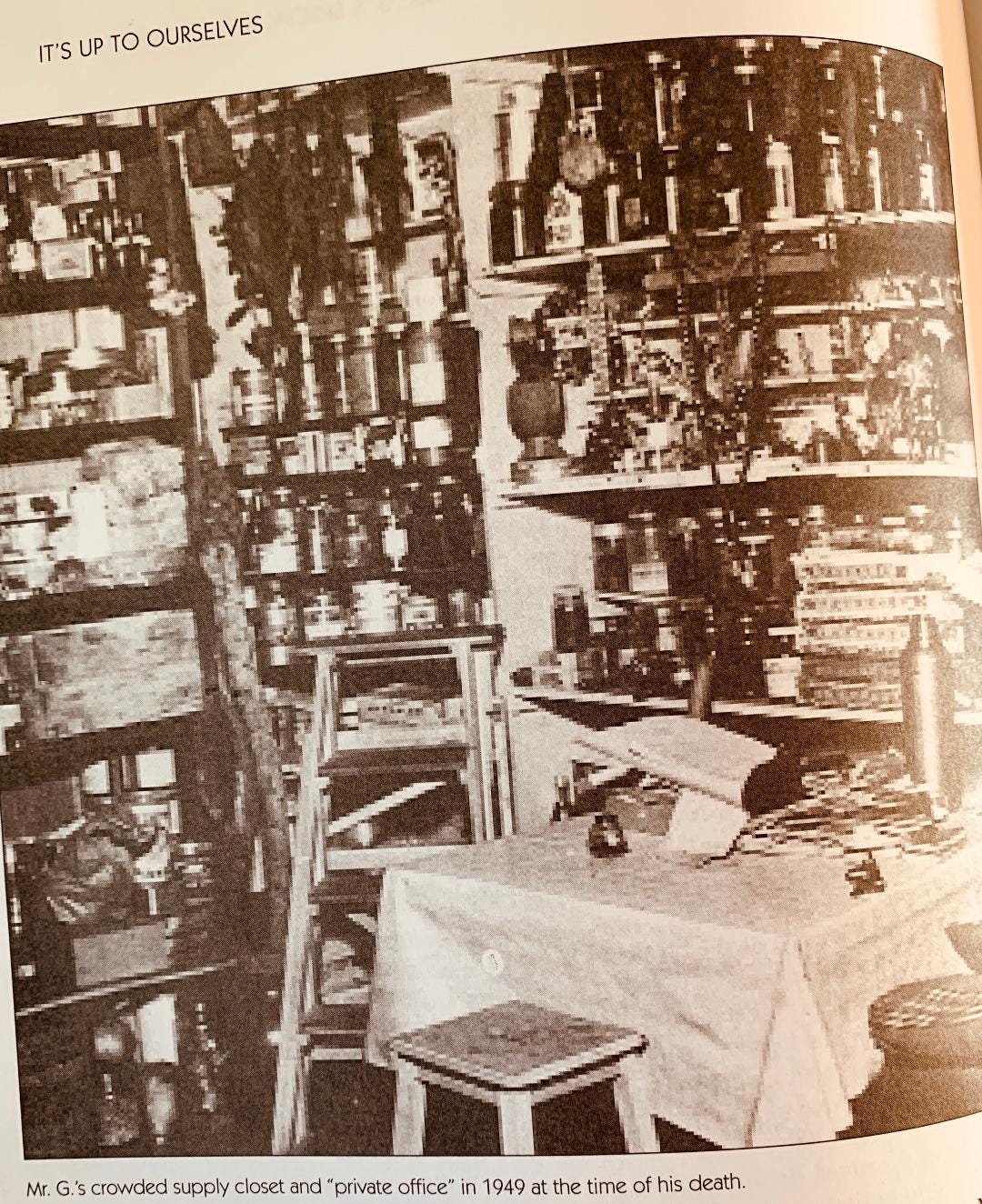
Beyond the kitchen, there was also a storeroom in the apartment where Gurdjieff kept his victuals and the spices he used in his cooking. On occasion, he also took pupils there for private conversations. Here is a description from Margaret Anderson’s book:

There, in the midst of fruits and sweets and wines, with slender sausages of camel’s meat, bunches of scarlet peppers and sprays of rosemary and mint suspended like canopy above, as I watched him pouring coffee out of the old battered old thermos (…)

I found this photograph of his storeroom in It’s Up to Ourselves: A Mother, a Daughter, and Gurdjieff, by Jessmin and Dushka Howarth. The photograph, however, is black and white, and the resolution is poor, so I find it a little difficult to mentally project myself into the room.
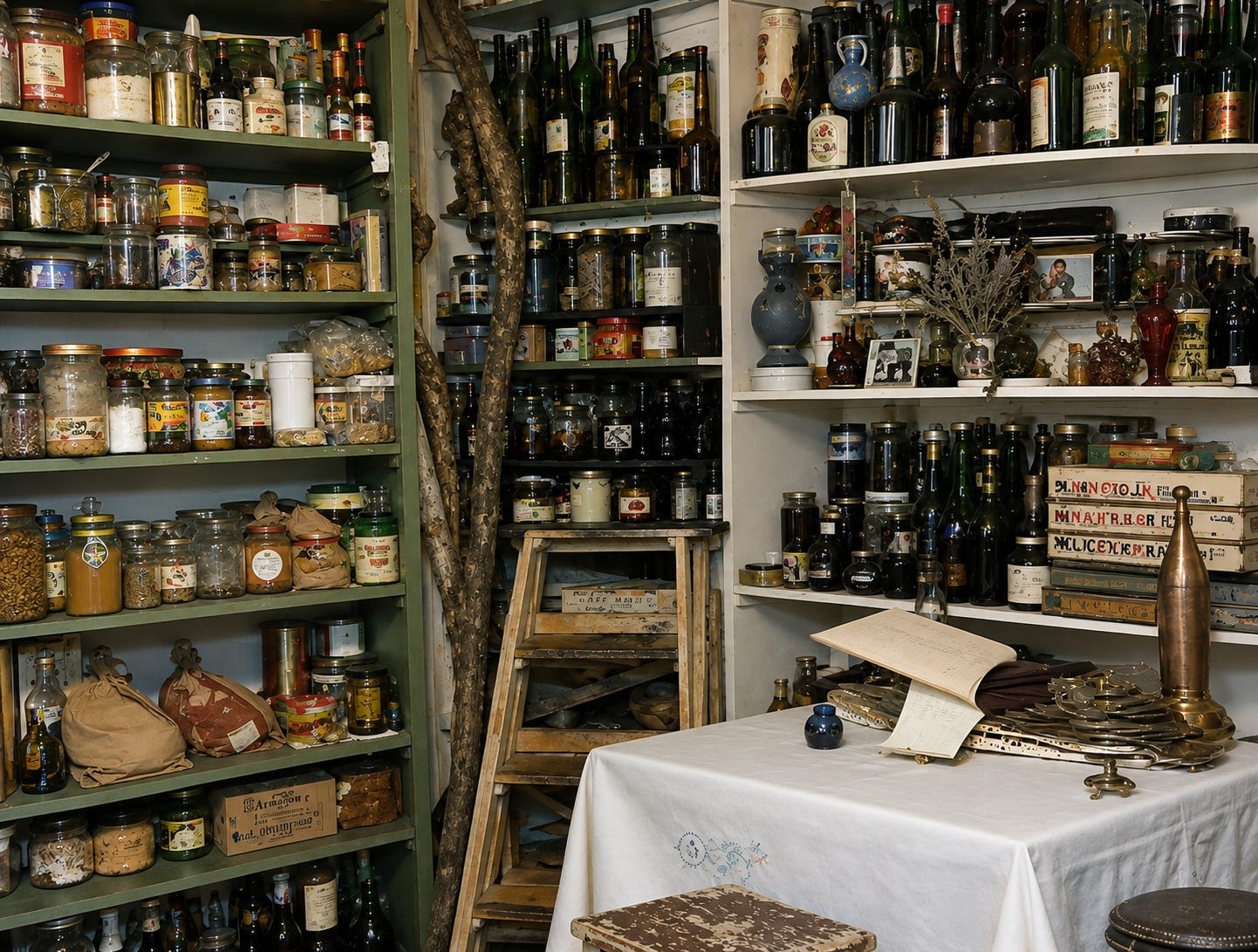
I used AI to reconstruct the photograph. The result is not entirely accurate. There are labels, objects, decorative items, and other details that cannot be established from the original photograph, while the sausages and herbs suspended from above are missing. Overall, however, the picture remains reasonably close to the original and, for me at least, the colours add liveliness and make it easier to get a sense of the place.
And with that, my attempt to step inside Gurdjieff’s apartment comes to an end.

This is all for now. Next time, I will take you to Alexander Nevsky Cathedral in Paris, where we will attempt to go back in time to 1949 and witness the day of Gurdjieff’s funeral, at which, of course, P. L. Travers was present.

Until then, be well.

Lina

Discover Mary Poppins’ London: A Literary Travel Guide for Fans of P.L. Travers – Part II 

Dear Reader, 

This post continues the story about my first Mary Poppins–themed trip to London with my daughter in the summer of 2023. In last month’s post, I shared our visit to P. L. Travers’s former homes at 50 Smith Street and 29 Shawfield Street in Chelsea. If you haven’t read it yet, you can find it here

In this blog post, we will visit St Paul’s Cathedral, stroll through Poppin’s Court near Fleet Street, shop for parrot-headed umbrellas at James Smith & Sons and admire the Mary Poppins statue in Leicester Square Gardens.  

St Paul Cathedral, London 

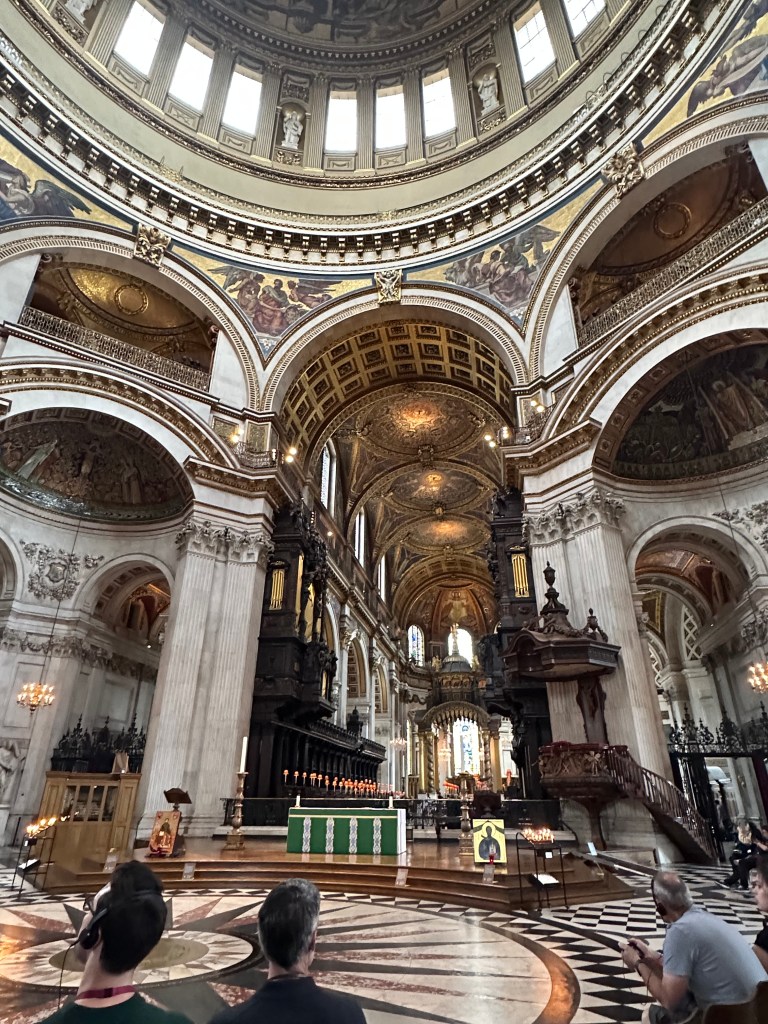
If you find yourself in London, a visit to St Paul’s Cathedral is, in my humble opinion, an absolute must. Its grandeur is astonishing—from the soaring colonnades to the magnificent domed ceiling—and the vast interior, adorned with intricate mosaics, takes your breath away the moment you step inside.

This iconic landmark was especially dear to P.L. Travers, who featured it not only in The Bird Woman chapter of her first Mary Poppins book, but also in her later 1975 Christmas tale The Fox at the Manger. I’ve explored this story in detail on the blog—you can read more in: A Christmas Story by Pamela L. Travers, The Nativity Reimagined by the Author of Mary Poppins, The Fox at the Manger (Part I) and (Part II). 

In The Bird Woman, Mary Poppins takes the Banks children to visit their father who works at the bank, where he, as described in the very first Mary Poppins story, East Wind, “sat on a large chair in front of a large desk and made money. All day long he worked, cutting out pennies and shillings and half-crowns and threepenny-bits.”   

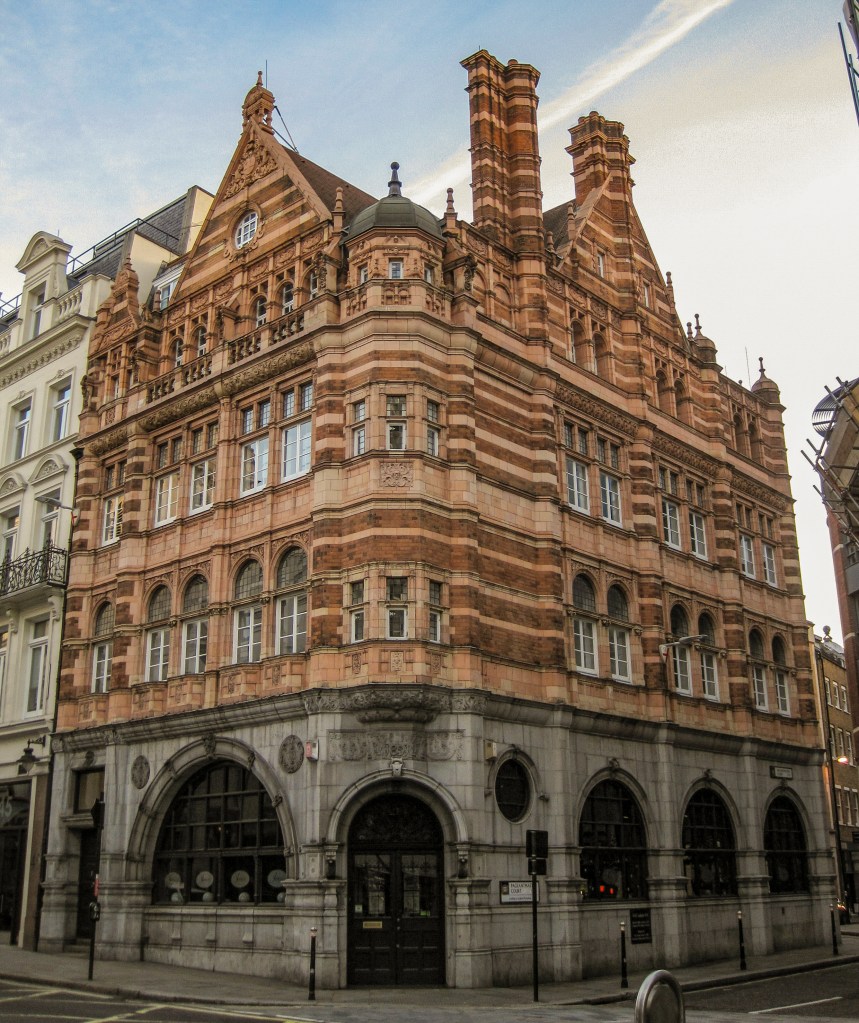
I wish the idea of looking up banks around St Paul’s Cathedral had occurred to me while I was there, but it didn’t—so this will have to go on my list for my next trip to London. I’m talking about the bank where I believe P. L. Travers imagined Mr. Banks working: the Ludgate Hill branch of the City Bank at 45–47 Ludgate Hill, which, according to Memoirs of a Metro Girl, is now a wine bar.

The picture above was taken by Metro Girl and is shared here with her permission 🙂

How do I know this was the bank P. L. Travers had in mind when she wrote “The Bird Woman”? Because she writes: ‘They were walking up Ludgate Hill on the way to pay a visit to Mr. Banks in the City.’  

In The Bird Woman we learn that Mr. Banks is entirely absorbed in material pursuits and has no time for small pleasures. But we can hardly blame him—he is the sole provider for his ever-growing family (by the second book in the series, the Banks family counts five children). Hoping to offer him a rare moment of joy and respite, Mary Poppins and the children plan an outing for tea and Shortbread Fingers. Yet Jane and Michael are far more excited by the possibility of meeting the Bird Woman and her pigeons outside St Paul’s Cathedral than by the promised tea and shortbread.    

Because of the sharp contrast between the Bird Woman’s quiet act of feeding the birds and Mr. Banks’s worldly occupation, The Bird Woman takes on a distinctly spiritual undertone for the adult reader. The doves, traditionally associated with the Holy Spirit in Christianity, serve here as a visual metaphor for the nourishment of the soul. Clearly, P.L. Travers is concerned with our human struggle to balance material responsibilities with the quest for spiritual fulfilment.  

Yet for carefree Jane and Michael, the Bird Woman and her doves are simply companions to delight in and play with. For them, the magic of the day is found in this gentle, enchanting encounter—an experience that carries them beyond the ordinary and into a realm of wonder. 

I love how P. L. Travers conveys Jane and Michael’s understanding of the doves, while at the same time revealing her own gift for remembering how to see the world through the eyes of the child she once was. 

There were fussy and chatty grey doves like Grand-mothers; and brown, rough-voiced pigeons like Uncles; and grey, cackling, no-I’ve-no-money-today  pigeons like Fathers. And the silly, anxious, soft blue doves were like Mothers. That’s what Jane and Michael thought, anyway.” 

Jane and Michael (and probably P.L. Travers) relate to the animal world far more naturally—and kindlier—than most adults. To them, the birds are not pests but companions, each a living being with its own character. We, on the other hand, tend to brush past pigeons and doves as if they were mere annoyances, hardly pausing to see them at all—too busy rushing for the train or speeding down the highway, intent on our own version of cutting pennies and shillings. 

I experienced my own version of feeding the birds—not at St. Paul’s Cathedral, but in St. James’s Park. While we were there, a little girl, slightly older than Jane and Michael Banks, had a bag full of seeds. She was not only feeding the birds but also offering seeds to passersby who, like me, wanted to join in the experience. It was deeply touching, and here is a short clip of me feeding the birds.

Feeding the birds in St. Jame’s Park

Many of the characters in the Mary Poppins stories—if not all—have their roots in the real-life experiences and encounters of P.L. Travers. She rarely revealed these inspirations openly, though hints occasionally surfaced in interviews she gave throughout her long writing career.  

I have never come across an interview in which P. L. Travers spoke about the origin of the Bird Woman. However, I did find an old picture of a man standing outside St Paul’s, his arms and shoulders alive with pigeons as he feeds them. In the late 1920s and early 1930s, while working as a freelance journalist near Fleet Street, P. L. Travers often passed by St Paul’s Cathedral, and I can’t help but wonder whether this man might have been the true inspiration behind the Bird Woman. 

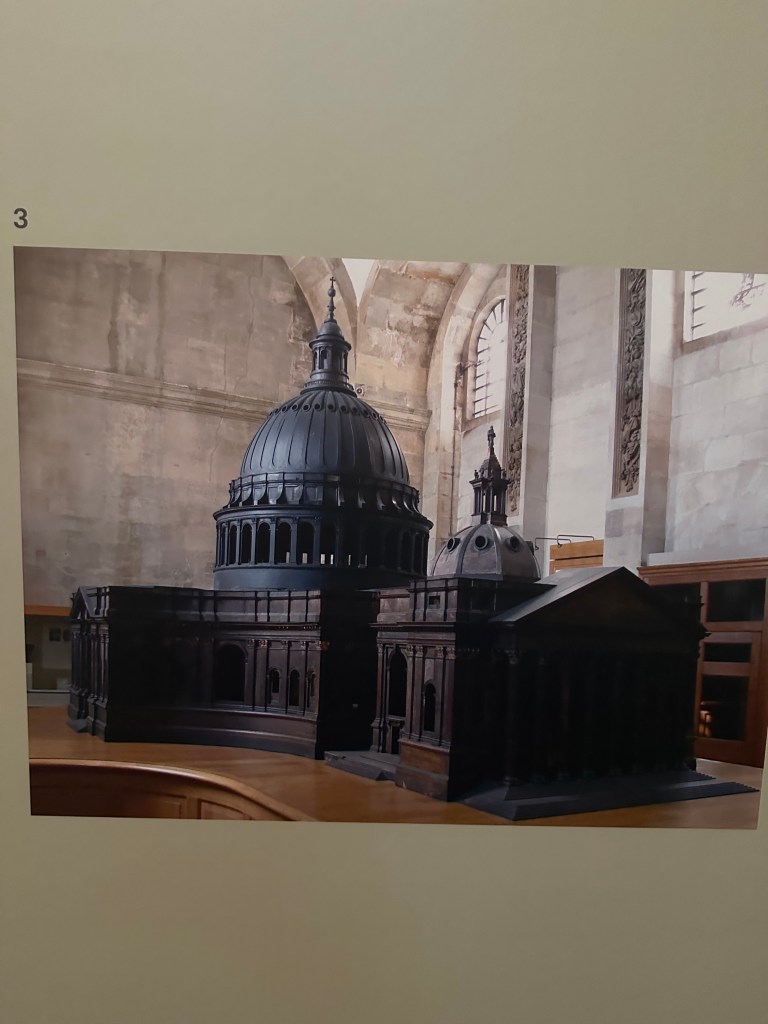
St Paul’s Cathedral, as P.L. Travers writes in The Bird Woman, was built long ago by “A man with a bird’s name. Wren it was, but he was no relation to Jenny.” That man, of course, was Sir Christopher Wren, England’s most celebrated architect of his day. When my daughter and I visited St Paul’s Cathedral in the summer of 2023, we saw a lovely exhibit inside about Sir Christopher Wren and the reconstruction of the building after the Great Fire of London in 1666. 

Wren designed the Great Model of the cathedral in 1672–73. The version you see in the picture below was executed by William Cleere and a team of thirteen joiners. This design differed from the original in style, evolving from the “Greek Cross” plan by extending the nave and adding a domed bell tower. 

King Charles II, who awarded the reconstruction contract to Wren, requested a slight modification: the domed bell tower had to be replaced with a traditional spire. But Wren was not a man easily discouraged. Once the plans were approved and the contract signed, and construction was well under way, he discovered a loophole in the fine print: it permitted ornamental rather than essential changes. So, he made his alterations accordingly. 

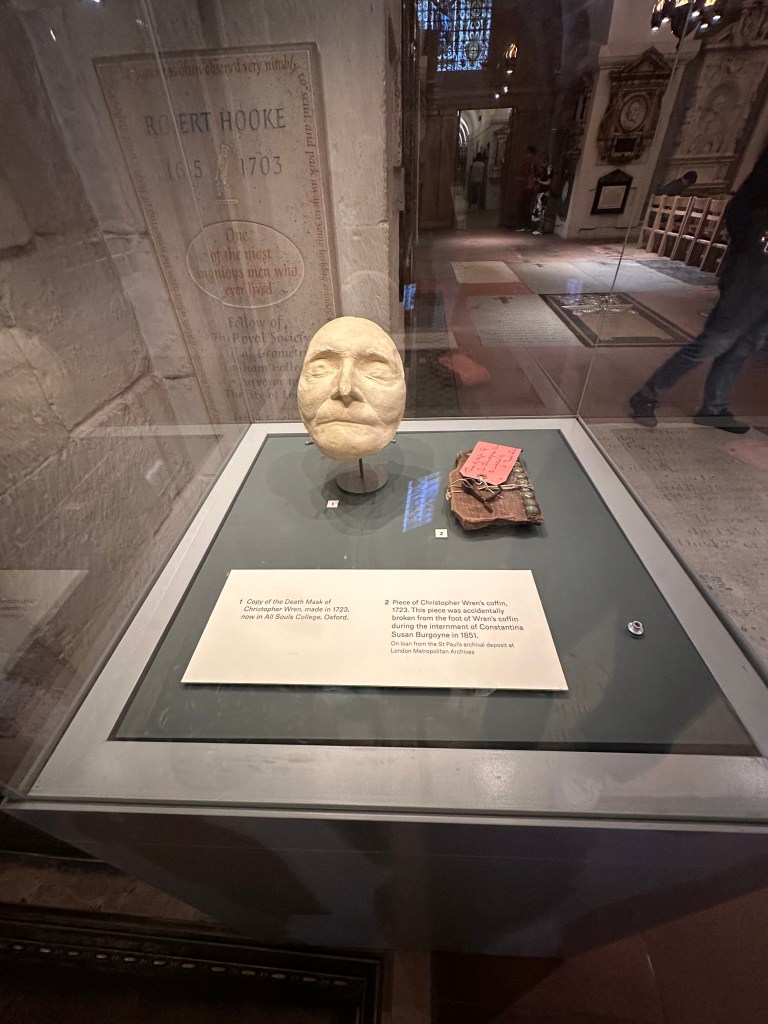
St Paul’s Cathedral is also Wren’s final resting place. Below is a photo of a copy of Wren’s death mask—the original is preserved at All Souls College in Oxford. A little morbid, perhaps, yet also a fascinating human attempt at transcending death.  

Now who is Jenny Wren? What did P.L. Travers meant by saying that Wren was not related to Jenny? The reference is a pun woven by P.L. Travers—one I had completely missed, since English folklore and nursery rhymes were not part of my upbringing. For those who may also be unfamiliar: the wren, a tiny brown bird, was affectionately called “Jenny Wren” in English tradition. She appears in old songs and nursery rhymes, often paired with Robin Redbreast as husband and wife. 

Children in P.L. Travers’s time would have instantly recognized “Jenny Wren” as shorthand for the little wren, and the playful wordplay would have delighted them. It signals to young readers that the world is whimsical, alive with hidden connections. The pun weaves together architecture (Wren), folklore (Jenny Wren), and the story’s imagery of birds and the mystical Bird Woman—perfect for a chapter set at St. Paul’s amid flocks of pigeons. 

And for adult readers, there’s yet another layer: an echo of Dickens. Jenny Wren is also a character in Our Mutual Friend. That reference escaped me as well, but this Dickens novel has now joined my ever-expanding TBR list. 

Poppin’s Court 

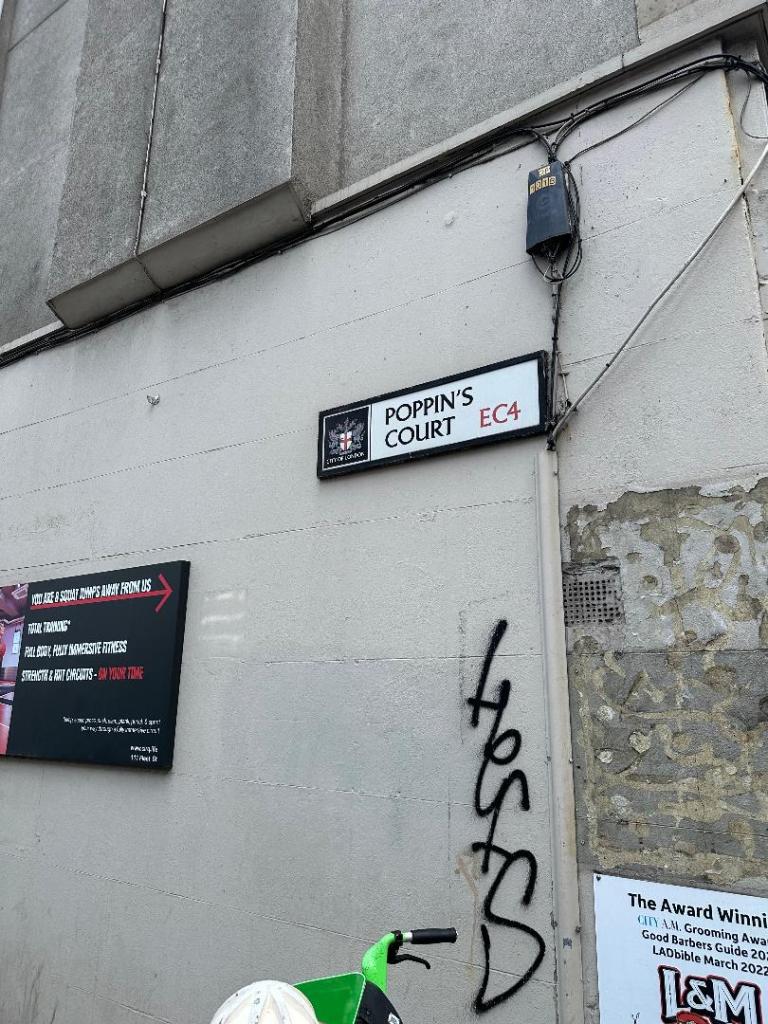
Not far from St Paul’s Cathedral, just off Fleet Street, you will come across a narrow lane called Poppin’s Court. When P.L. Travers first came to London she worked as a free-lance journalist on a street near Fleet Street and she must have passed by Poppin’s Court on her way to St Paul’s Cathedral, and it is, as her friend Brian Sibley wrote, possible that this is how she came up with the idea for the name of her famous nanny.  

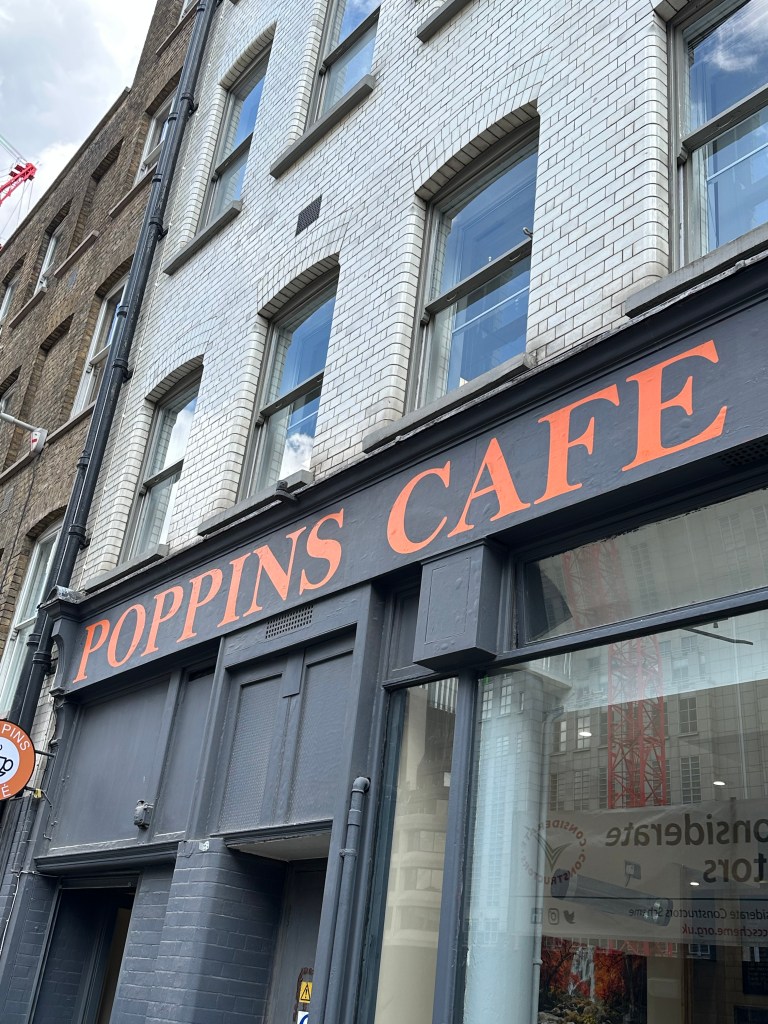
Back in 2023, when my daughter and I visited Poppin’s Court, there was a Poppins Café, which may still be there. Sadly (for me), it had nothing to do with Mary Poppins. I would have loved to visit a Mary Poppins–inspired tea room based on the books.

Leicester Square Gardens 

If you have time, be sure to stop by Leicester Square, where you’ll find several statues capturing iconic movie moments from different decades since the 1920s — and of course, one of them is Mary Poppins. Although the Mary Poppins statue in Leicester Square celebrates the film character rather than the one from the books, I couldn’t resist trying to ‘fly away’ on her umbrella. 

Since this Mary Poppins statue was created many years after P.L. Travers’s death, we can only guess what she might have thought of it. What we do know is that she once wished for a statue of her character in London—though her dream location was Kensington Gardens. I will tell you more about that in a future post on this blog.  

James Smith & Sons Umbrellas  

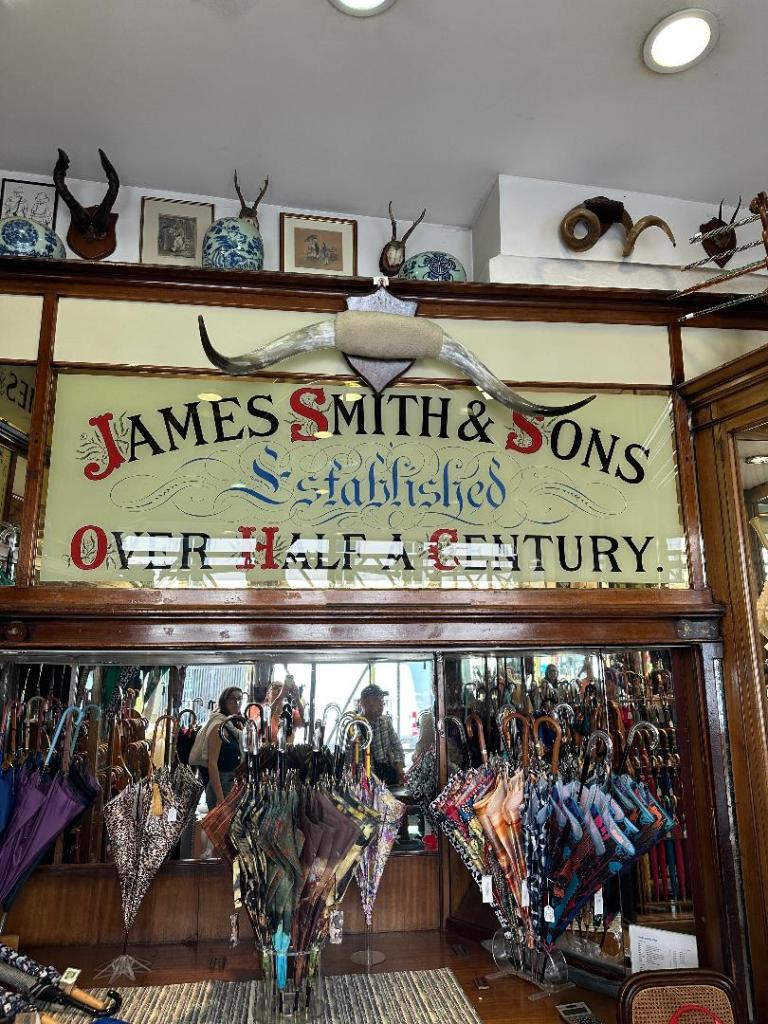
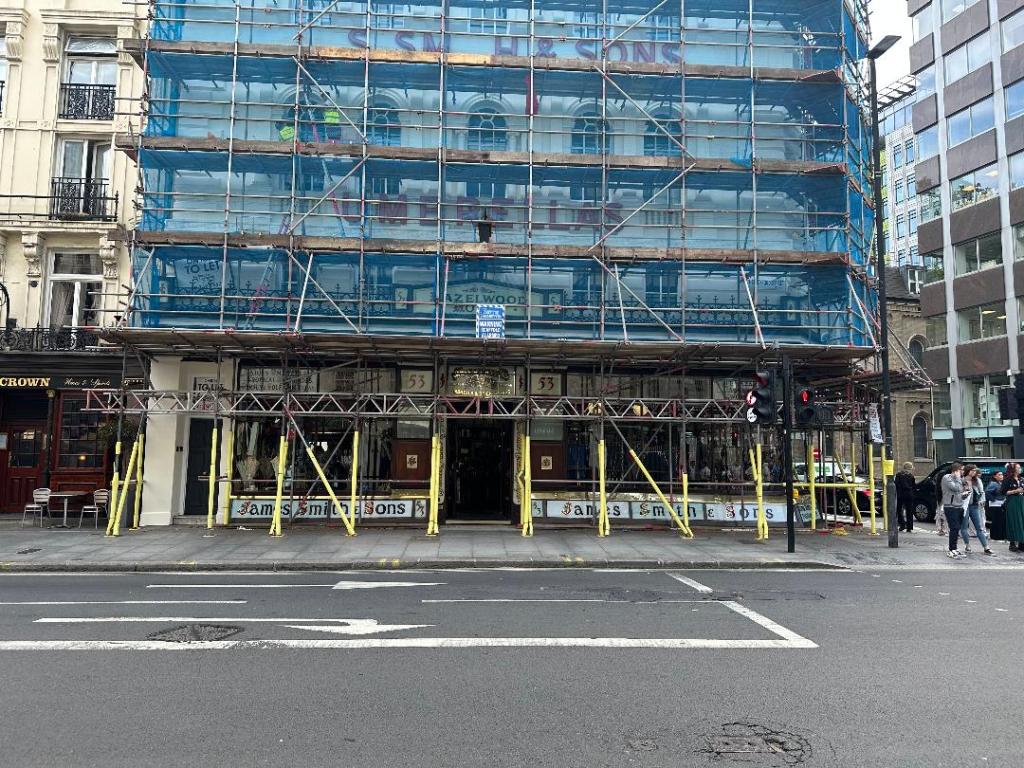
If you want to get a parrot-headed umbrella like Mary Poppins’, you should definitely visit James Smith & Sons Umbrellas, a tiny shop founded back in 1830. I have no idea whether P.L. Travers knew about this shop or if she ever visited it. According to her own account, the inspiration for the parrot-headed umbrella came from a childhood memory of a servant’s umbrella in the Travers household in Australia (and maybe by something else, which I also plan to tell you about in a future post). But whether or not P. L. Travers ever visited this shop, I thoroughly enjoyed our own visit — dampened only by the scaffolding on the facade, which was under renovation.  

Here is a picture of a parrot-headed umbrella standing proudly beside another famous fictional character. I was tempted to purchase both, but the price tag quickly discouraged me. But two years later I am still thinking about this parrot headed umbrella … 

That’s it for now—thank you for reading! If this post brought you a little joy, just click the subscribe button in the bottom-right corner of your screen and join me for the next stop in my Mary Poppins adventures through London and beyond. You can also follow along on Facebook and Instagram for more glimpses into the magical world of Mary Poppins and P.L. Travers. 

Until next time, take care and be well.