Mary Poppins in Paris: Where P. L. Travers Met G. I. Gurdjieff

Dear Reader,

When I first began reading and studying the life and writings of P. L. Travers, the author of Mary Poppins, I didn’t expect the journey to last as long as it has, or to carry me beyond the page. And yet it has led me all the way from Canada across London and Paris, where traces of her life still linger, and the list of places connected to her and Mary Poppins that I dream of visiting continues to grow.

In the first biography of P. L. Travers, Mary Poppins, She Wrote, Valerie Lawson reveals that Travers was one of G. I. Gurdjieff’s pupils and a lifelong follower of his spiritual teachings. At the time, I had never heard of Gurdjieff. In fact, I have no spiritual or religious background.

I spent my early childhood in Bulgaria in the 1980s, and the communist regime rejected any religious practice. The doors of the church next to my grandparents’ apartment were always locked, and I remember being told by my parents to stay away from it, lest someone see me and something bad happens. What exactly that would have been, nobody told me.

I had read Mary Poppins as a child in Bulgaria (the first two books in the series), and when I read in P. L. Travers’s biography that these stories contained elements and references to Gurdjieff’s teachings, the fires of curiosity were lit and I became compelled to find them. I can confidently say that I did find some of these references, along with other interesting connections. I am now writing a book about them, because posts cannot do justice to the subject. A deep dive is what is needed to truly appreciate the creative genius of P. L. Travers and the depth of her writing, and I sincerely hope that one day my book will be out in the world and that it will revive readers’ interest in the original Mary Poppins stories, and in the larger body of work of P. L. Travers.

Today’s post is the first in a series of three articles in which I want to share with you my experience of Paris in the footsteps of P. L. Travers. It was in Paris that she first met Gurdjieff in the late 1930s, and it was also there that she returned to visit him after the end of World War II.

Paris today is, of course, not the Paris of the 1930s and 1940s. Yet the buildings where their meetings took place still stand, quietly bearing witness to those encounters. The first meeting happened at Café de la Paix, and this is what P. L. Travers later wrote about it:

It was a day I shall always remember for not merely did I learn things that only later I came to understand, but it pointed me in the direction my life was to take. On leaving my vital and benevolent host, he declined to say goodbye, “You will be back,” he said, and I agreed, not knowing that it would be several years before the prediction came true. War intervened, also the Atlantic Ocean, and it was not until peace broke out and I returned to London that the Golden Arrow, and I in it, could speed from its bow to Paris. ”
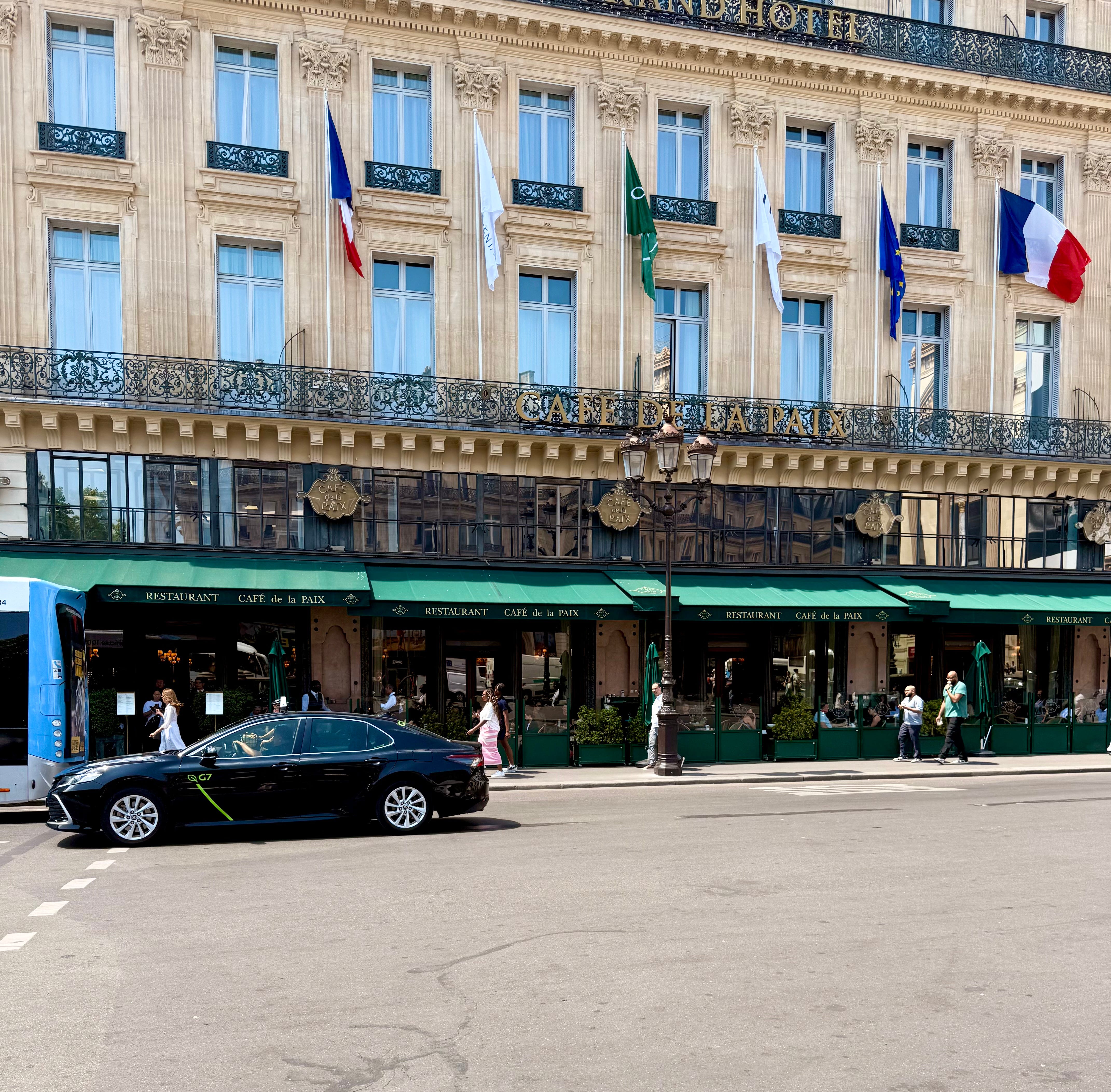
Café de la Paix, first inaugurated in 1862, is located near the Palais Garnier (the Paris Opera House) and is still open and bustling with life.
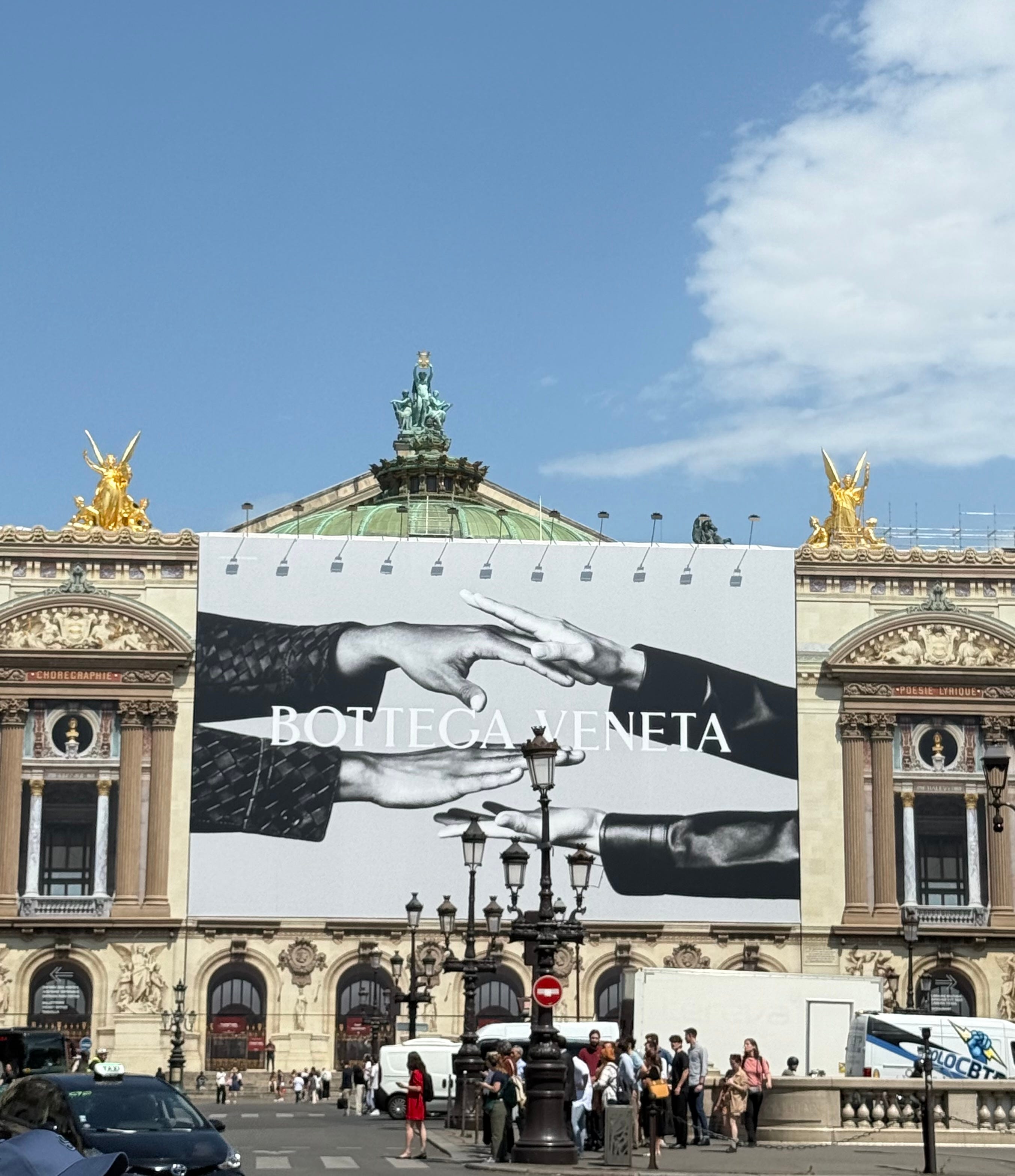
(I wish that big advertisement hadn’t been there when I took the picture…)

Walking in, I tried to imagine what it must have felt like for Travers to step through those same doors for the first time, and the trepidation of meeting someone who had acquired a mythical stature in her imagination, someone she had only heard about, yet whose teachings she had already begun to study.
Gurdjieff had a halo of mystery; he seemed almost like a character from a fairy tale. He spoke with a heavy accent and in parables, and his teachings can be described as a strange mixture of esoteric Christianity and Gnosticism, with echoes of Theosophy. He spoke of the inner friction of opposites, and of the need to suffer consciously, if one wanted to transcend them and awaken. His ideas were original and unique, and yet they also echoed ideas P. L. Travers had been introduced to by her literary mentor and Theosophist, George W. Russell (AE).

On the website of Café de la Paix, you can read that past regulars included Guy de Maupassant, Victor Hugo, Ernest Hemingway, and Émile Zola. I am tempted to suggest they add Gurdjieff to the list, even if he was, and still remains, a controversial figure.

Café de la Paix was one of Gurdjieff’s favorite cafes, where he liked to spend time drinking coffee, writing his books, and meeting with his pupils. Louise Goepfert, a devoted pupil and translator of the German edition of Gurdjieff’s Beelzebub’s Tales to His Grandson, remembers him telling her that he always worked in cafes and dance halls because they were places where he could see people as they are, and where he could see those who were most drunk and most abnormal (Note to the reader: he was not politically correct in his formulations, but you must put this in the context of the times). Seeing them, he said, could produce an impulse of love in him, and from that, he said, he wrote his books.
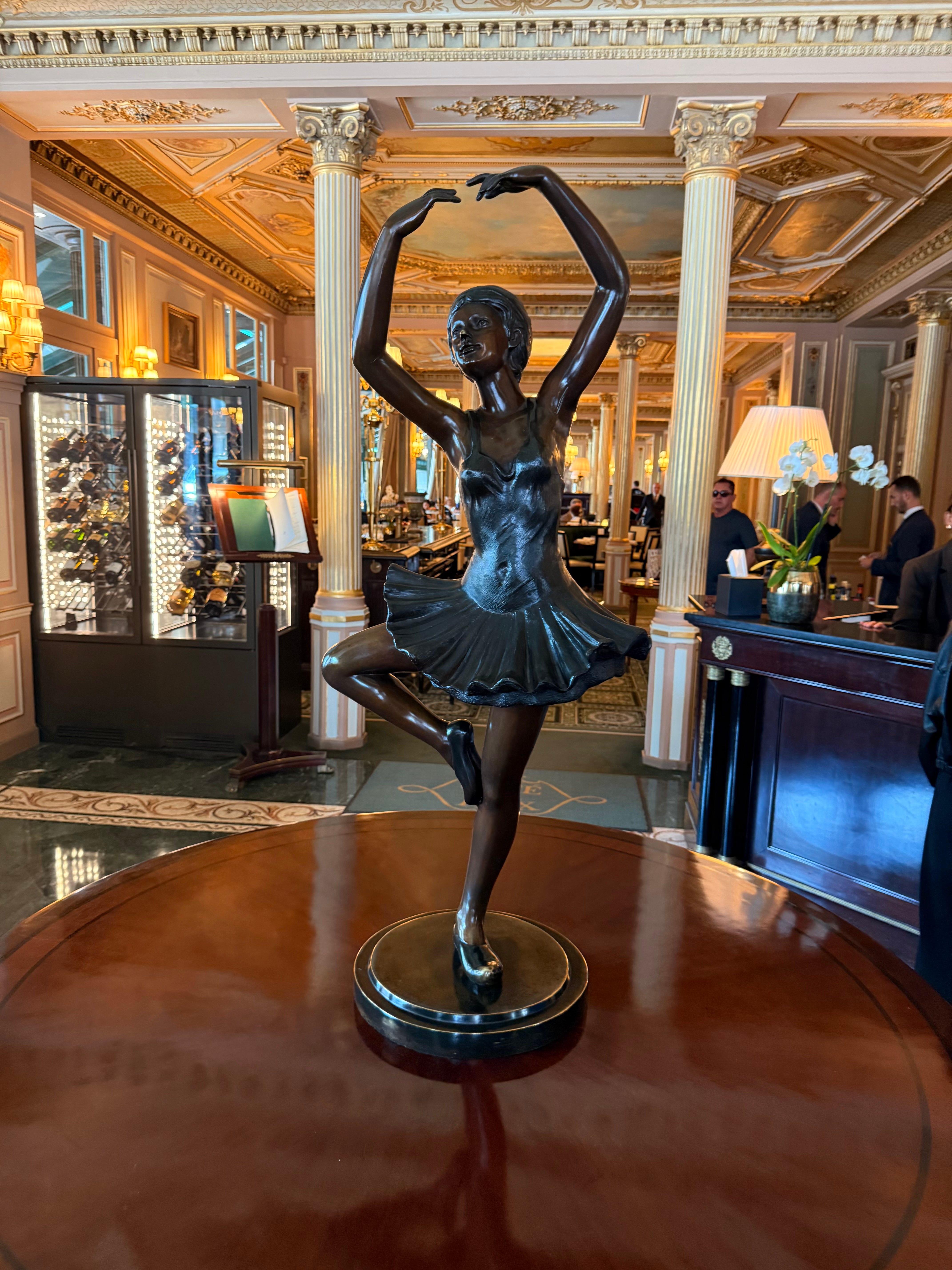
I was eager to see Café de la Paix, but at the same time I felt a little sad, because I knew the visit would not satisfy my desire to meet P. L. Travers. The only connection is through books, through accounts, and through the experience of places she once visited. That is all I can use to travel back in time. Imperfect as this connection may be, my visit to Café de la Paix will remain a favourite memory of my first trip to Paris.

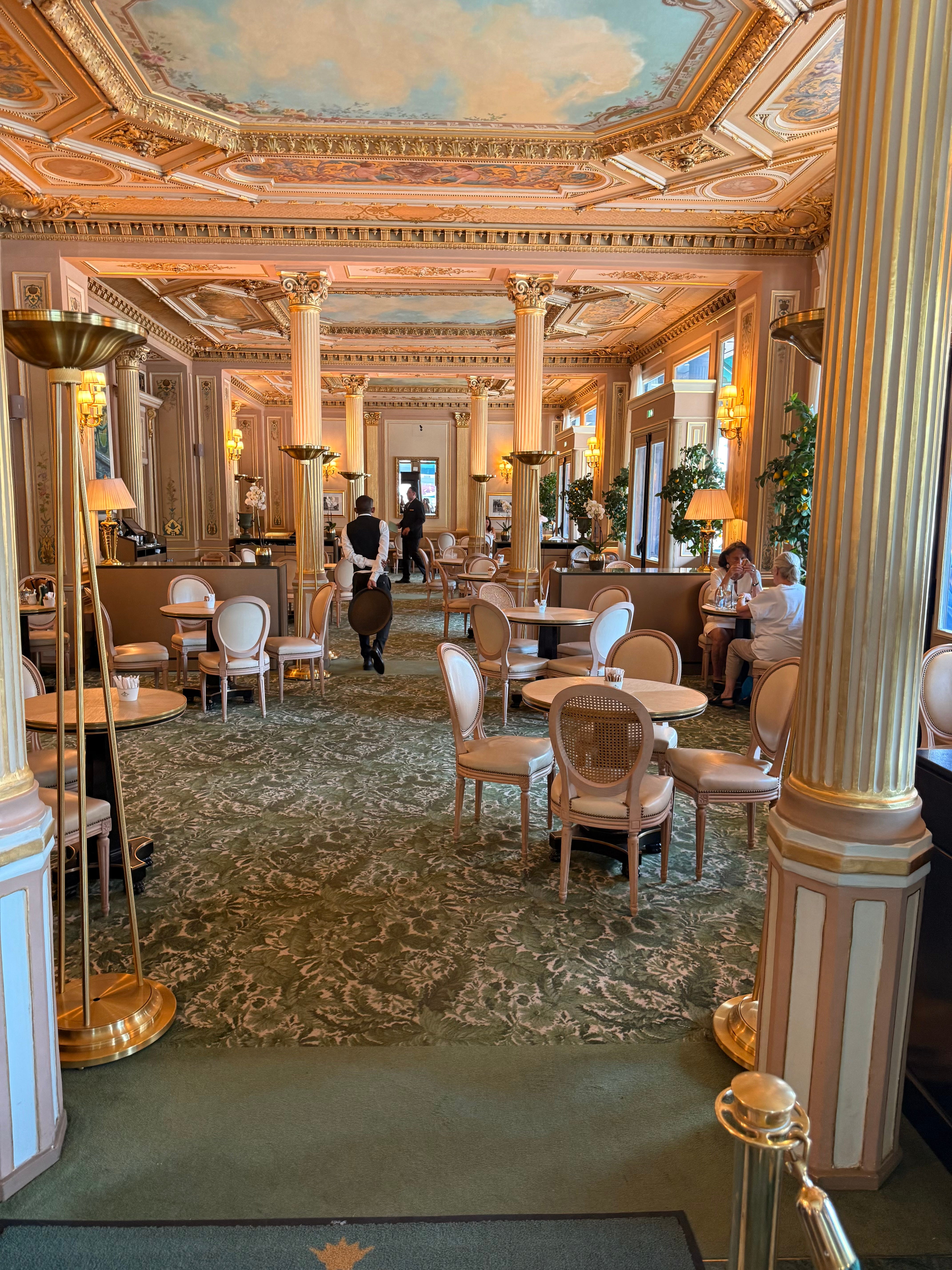
The interior of the Café de la Paix has a hushed richness. Carpets, drapery, and upholstered seating absorb the sounds and create a sense of luxurious intimacy. Gilded moldings catch the light from crystal chandeliers, and mirrors stretching along the walls give the space an impression of expansiveness and movement. Above, a blue sky with white clouds is painted on the ornamented ceilings, adding an airy elegance and an overall feeling of sophistication. But above all, what stands out is the atmosphere of a place that has absorbed decades of conversations. If only its walls could talk.
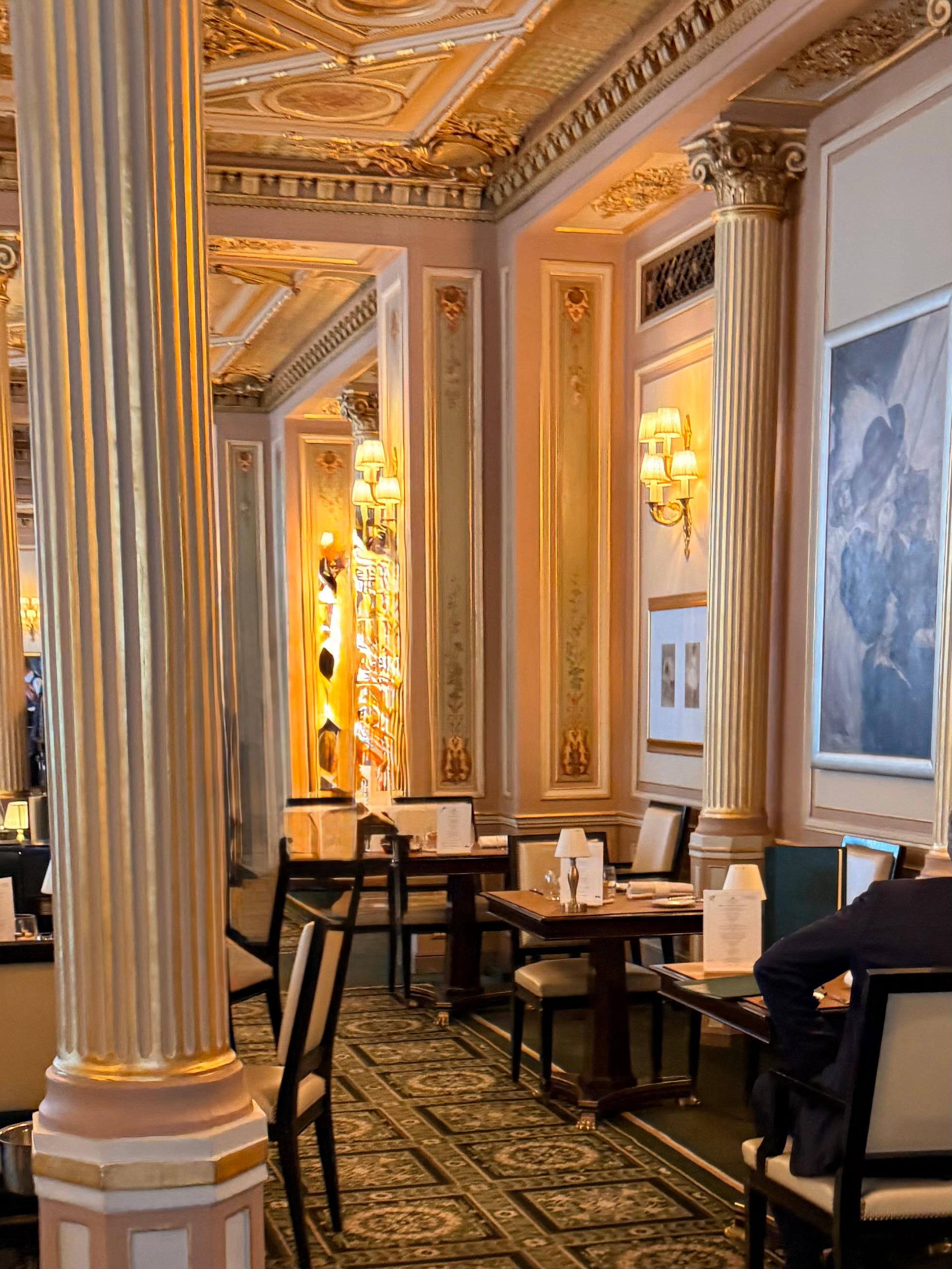
As I took my seat, I tried to imagine P. L. Travers seated at a table in conversation with Gurdjieff, and then an amusing thought crossed my mind. What if I were sitting in that exact same place? What would such a temporal overlay look like? Our faces and gestures would pass through one another without resistance, our conversations mingling without interruption. A density of lived moments, layered one upon the other like an overexposed film, would leave a faint, ghost-like trace, as if the past had never fully withdrawn.

Then the waiter came to our table and I was pulled back into the present. And yet something of that brief reverie stayed with me. Whatever has changed in Paris, the rooms remain, and they still invite us to listen for the faintest echo of a life passing through.

Thank you for reading. If you enjoyed this article, I invite you to subscribe to The Mary Poppins Effect, where I explore the work of P.L. Travers, the world of Mary Poppins, its connections to other literary worlds, and the symbolic imagination at the heart of classic children’s literature.

Until next time, be well.

Lina

Discover Mary Poppins’ London: A Literary Travel Guide for Fans of P.L. Travers – Part I 

Introduction 

If you’re a devoted fan of Mary Poppins and P.L. Travers—like I am—or if you have a passion for literary travel, this blog post is for you. Through sharing my travel experiences, I hope to offer you some inspiration for visiting locations in London and its surroundings that are deeply connected to the enchanting world of Mary Poppins and her creator. 

My Mary Poppins-Themed Trips to London and its Surroundings 

In the summer of 2023, I finally fulfilled my long-held dream of visiting London—and the cherry on top was that my daughter decided to join me on the adventure. The trip was inspired by my love for P.L. Travers and Mary Poppins, and my daughter’s enthusiasm for Harry Potter. We also carved out time for some book shopping, exploring iconic historical landmarks, and visiting the Charles Dickens Museum. However, in this blog post, I’ll be focusing specifically on the Mary Poppins side of our journey. 

So, let’s begin with a truly special address for any Mary Poppins fan. 

50 Smith Street, Chelsea, London  

P.L. Travers lived at 50 Smith Street, Chelsea, London with her adopted son, Camillus, from 1946 to 1962. It was here that she wrote Mary Poppins in the Park, the fourth book in the series. Today, the building proudly bears an English Heritage blue plaque in honour of her literary legacy. I used to come across photos of fans on its doorstep shared on social media, and I must admit, I always looked at them with a hint of envy. But now, it was my turn to see the place where she once lived and to experience history in a truly sensory way. 

I remember fighting the urge to break into a run as we emerged from the Tube station and began walking down King’s Road. I glanced at the shop windows lining the sidewalks and the red double-decker buses on the street, their colours unusually vivid in the bright daylight, like freshly painted canvases. Even my daughter could sense my heightened emotional state and the spring in my step, and she teased me, ‘You do realise you’re not actually going to meet her in person?’ And I knew she was right—but this was the closest I could ever get to meeting her in the physical world. 

In fact, I could hardly believe I was finally just steps away from something I had dreamed about for years—and had often doubted would ever come true. For one reason or another, it was never the right time; something always held me back from booking the trip. This may sound strange to experienced travellers, but I’m not much of a traveller myself—and Canada is a long way from London. So, this first trip to London was a big deal for me on many levels and as it turned out, the experience was truly transformative.

Now you can imagine my disappointment when we reached the corner of Smith Street and I saw a huge construction box blocking the entrance to 50 Smith Street.

The only positive thing, as suggested by a friend who saw the picture afterwards, was that there was a blown-up reproduction of the blue commemorative plaque on display, but that was probably just a friend’s way of trying to lift my spirits.  

In a moment of madness (and ignoring my daughter’s rational arguments), I dialed the number displayed on the notice in the window of the construction box. It said that all visitors or anyone seeking access could call the number on the notice. Well, I was definitely a visitor wanting access. The person on the other end of the line clearly didn’t agree—they actually dared to hang up on me. Needless to say, I was offended, but as I gradually came to my senses, I realised not only was I acting a bit unhinged, but I also had a second chance just a few minutes’ walk down King’s Road: Number 29 Shawfield Street, the last residence of P.L. Travers.  There really was no need to get so agitated. 

29 Shawfield Street, Chelsea, London 

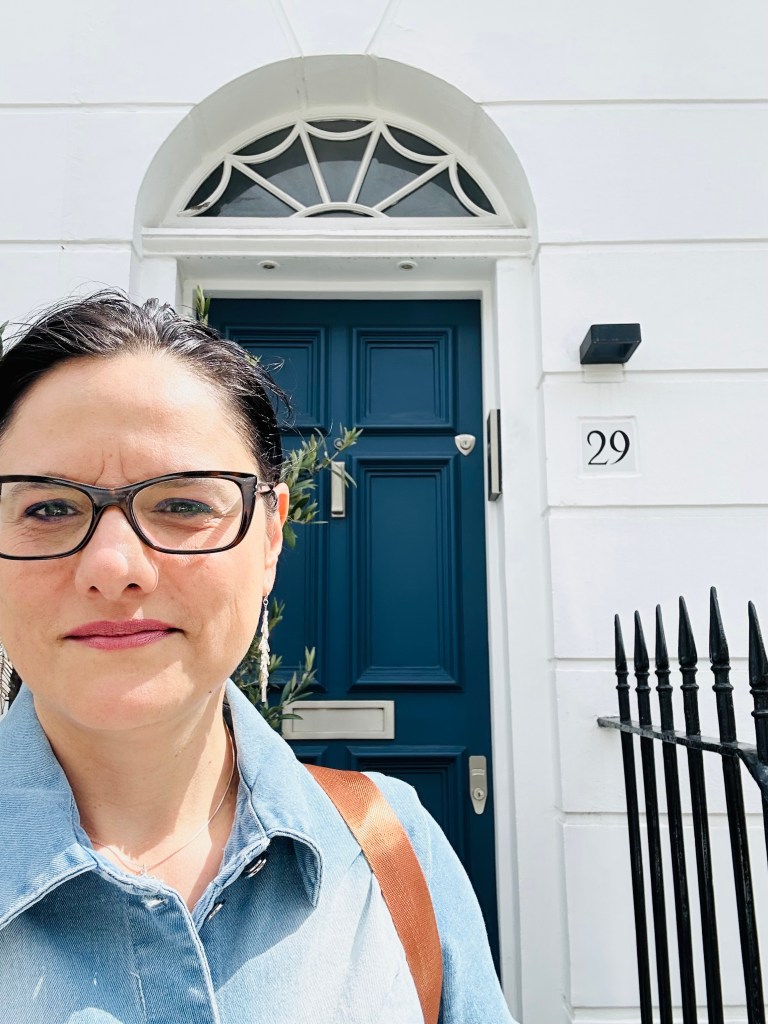
P.L. Travers lived at number 29 Shawfield Street for the last thirty years of her life and it is in her the study on the second floor that she wrote Mary Poppins in Cherry Tree Lane and Mary Poppins and the House Next Door, the last two books in the series.

As we turned the corner onto King’s Road and began walking toward Number 29 Shawfield Street, I felt a tinge of sadness that only deepened when I saw the front door, no longer pink as it had been when P.L. Travers lived there. We walked back and forth along the sidewalk, trying—but not quite succeeding—to be circumspect. After all, how circumspect can you really be when snapping selfies in front of someone’s front door? 

It was a weekday, and I had convinced myself that the residents of Number 29 were probably at work. But then, a postman happened to walk by and rang the doorbell—and suddenly, the door opened. Feeling a bit embarrassed, we crossed to the other side of the street and sat on the edge of the sidewalk, while I continued to stare intently at the front door. 

How I envied all those who had visited her here and, even if only briefly, had been granted a glimpse into her personal world. Below are two personal accounts from people who visited her home and the lasting impression it made on them.

She lives in a small Georgian house in Chelsea. Her sitting room, where she received me, is light, airy and sparsely furnished. She sits on the corner of a long sofa the rest of which is covered with stacks of books, letters, various publications. On the creamy wall hang a Paul Klee, portraits of great grandmothers and aunts, a drawing of P.L. Travers by AE (George Russell), a Tree of Life by one of her students … The mantle piece is covered with photographs of family and friends, including many children.”    

Looking Back, by Shusha Guppy 

P.L. Travers lives in a quiet, small period house in the Chelsea section of London, and everything in her home contributes to a visitor sensing the emptiness of plenitude and the plentitude of emptiness – exemplified in, her upstairs study, by several beautiful Japanese scroll and screen paintings, mostly by Sengai: a willow almost breaking in the wind; six persimmons; a cock crowing to the morning and a little hen bird nearby; the depiction of the syllable mu (literally meaning “not” or  “without” and referring to a famous Zen koan and the extraordinary  “Ten Oxherding Pictures” (attributed to the twelfth- century Chinese Zen master Kaku-an Shi-en).  

Pipers at the Gates of Dawn, by Jonathan Cott 

I tried to picture her stepping out of the front door, then slowly descending the three steps. I imagine her gaze fixed on the pavement as she walks down the street, her mind clearly elsewhere. Then she stops. Something has caught her eye. It must be the small star embedded in the sidewalk. She smiles. She loved pointing it out to friends who came to visit, inviting them to find it too—as if it were a secret only she could truly see. 

How many people before me had walked that same stretch of pavement, searching for the star? And how many had actually found it? Not being able to see it myself was somewhat of a letdown. Could it be that she made it up? Or had time and countless footsteps worn it away?

Then I remembered reading a blog post by her friend, writer Brian Sibley in which he recounts his first encounter with her and, at the very end of his recollections, mentions the star on the pavement. 

Light was failing, but I found it, at last: just as Pamela had said – a star-shape, faintly but clearly marked in the surface of a paving stone. Doubtless it was some rouge imprint on the surface from the manufacturing of the cement paving-stone, but I was remembering the words of the old snake, the Hamadryad, on that night of the full moon when Mary Poppins took Jane and Michael to the zoo: ‘We are all made of the same stuff… The tree overhead, the stone beneath us, the bird, the beast, the star – we are all one, all moving to the same end…’ ” 

Chelsea Physic Garden, London 

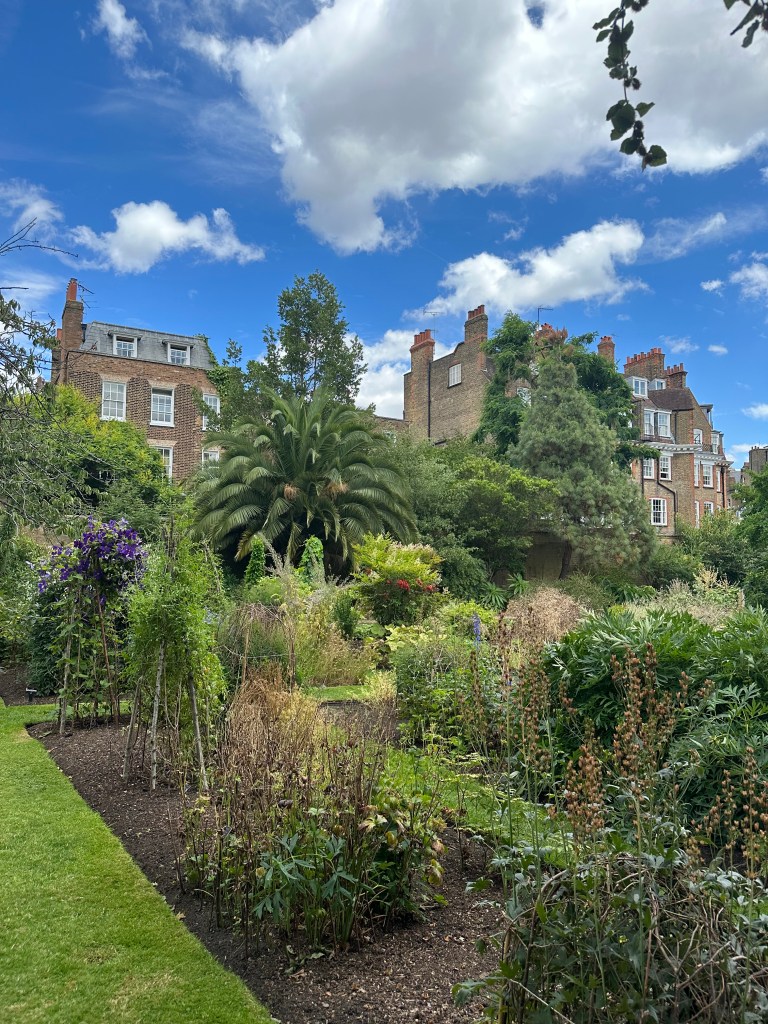
London’s oldest botanical garden, the Chelsea Physic Garden, is just around the corner from 29 Shawfield Street. It was founded in 1673 by the Worshipful Society of Apothecaries with the mission to grow medicinal plants for study and healing. Located in London, the garden played a key role in botanical research, plant exchange, and the advancement of medical science. Chelsea Physic Garden was open to the public in 1987 with the aim to increase public awareness and support for its historical and scientific significance.   

I don’t know for sure if P.L. Travers ever visited the garden, she was 88 years old at the time, but it is possible. What I do know is that in her eighties she was very interested in the medicinal and magical properties of plants, probably motivated by a desire to find a cure, or at least some relief from her digestive problems. Her granddaughter Kitty, recalling childhood memories in an interview for the BBC, said her grandmother was always drinking strange teas and concoctions. These were probably the infusions she made from the herbs she cultivated on her balcony at 29 Shawfield Street.  

In an interview she gave to South East at Six, a local BBC teatime news bulletin for viewers in London and the South East, promoting her book Mary Poppins in Cherry Tree Lane, we see P.L. Travers at the end of the video standing on her balcony, gathering herbs into a small wicker basket, a wooden birdhouse behind her. The balcony has a quiet, romantic storybook charm befitting of a writer steeped in fairy tales and mythology.

While the herbs aren’t central characters in the plot of Mary Poppins in Cherry Tree Lane, they do take on a magical, symbolic role during the Midsummer’s Eve adventure of the Banks children. The book also includes at its end a list of herbs with both common and Latin names that are mentioned in the story—a tangible nod to P.L. Travers’s knowledge of plants.

Occasionally, she also gave herbs as a gift to friends who came to visit her at her home.  

At the time I visited P.L. Travers in July 1979, I was feeling perplexed and confused about several things in my life, whose murkiness contrasted sharply with the clarity of the pictures in her study. (…) She also took me to her garden in the back, where she was growing more than twenty varieties of herbs, many of which appear in her recent Mary Poppins in Cherry Tree Lane. (“Taste all of them,” she suggested, “they will do you good.”) Then, as a friendly gesture, she cut off some rosemary sprigs and gave them to me (“This will last forever and bring you good luck. It means “To Remember”

Pipers at the Gates of Dawn, by Jonathan Cott 

This is all for now. I hope you enjoyed reading this post and that you’ll return to read more about Mary Poppins, P.L. Travers, and my adventures as I continue to explore their world. In the next blog post, I’ll be continuing the story of my Mary Poppins-themed trips to London and its surroundings, so stay tuned! And do let me know if you go on a Mary Poppins adventure of your own—or if you enjoy literary trips in general. 

Until next time, be well!