
Dear Reader,
When I first began reading and studying the life and writings of P. L. Travers, the author of Mary Poppins, I didn’t expect the journey to last as long as it has, or to carry me beyond the page. And yet it has led me all the way from Canada across London and Paris, where traces of her life still linger, and the list of places connected to her and Mary Poppins that I dream of visiting continues to grow.
In the first biography of P. L. Travers, Mary Poppins, She Wrote, Valerie Lawson reveals that Travers was one of G. I. Gurdjieff’s pupils and a lifelong follower of his spiritual teachings. At the time, I had never heard of Gurdjieff. In fact, I have no spiritual or religious background.
I spent my early childhood in Bulgaria in the 1980s, and the communist regime rejected any religious practice. The doors of the church next to my grandparents’ apartment were always locked, and I remember being told by my parents to stay away from it, lest someone see me and something bad happens. What exactly that would have been, nobody told me.
I had read Mary Poppins as a child in Bulgaria (the first two books in the series), and when I read in P. L. Travers’s biography that these stories contained elements and references to Gurdjieff’s teachings, the fires of curiosity were lit and I became compelled to find them. I can confidently say that I did find some of these references, along with other interesting connections. I am now writing a book about them, because posts cannot do justice to the subject. A deep dive is what is needed to truly appreciate the creative genius of P. L. Travers and the depth of her writing, and I sincerely hope that one day my book will be out in the world and that it will revive readers’ interest in the original Mary Poppins stories, and in the larger body of work of P. L. Travers.
Today’s post is the first in a series of three articles in which I want to share with you my experience of Paris in the footsteps of P. L. Travers. It was in Paris that she first met Gurdjieff in the late 1930s, and it was also there that she returned to visit him after the end of World War II.
Paris today is, of course, not the Paris of the 1930s and 1940s. Yet the buildings where their meetings took place still stand, quietly bearing witness to those encounters. The first meeting happened at Café de la Paix, and this is what P. L. Travers later wrote about it:
“It was a day I shall always remember for not merely did I learn things that only later I came to understand, but it pointed me in the direction my life was to take. On leaving my vital and benevolent host, he declined to say goodbye, “You will be back,” he said, and I agreed, not knowing that it would be several years before the prediction came true. War intervened, also the Atlantic Ocean, and it was not until peace broke out and I returned to London that the Golden Arrow, and I in it, could speed from its bow to Paris. ”
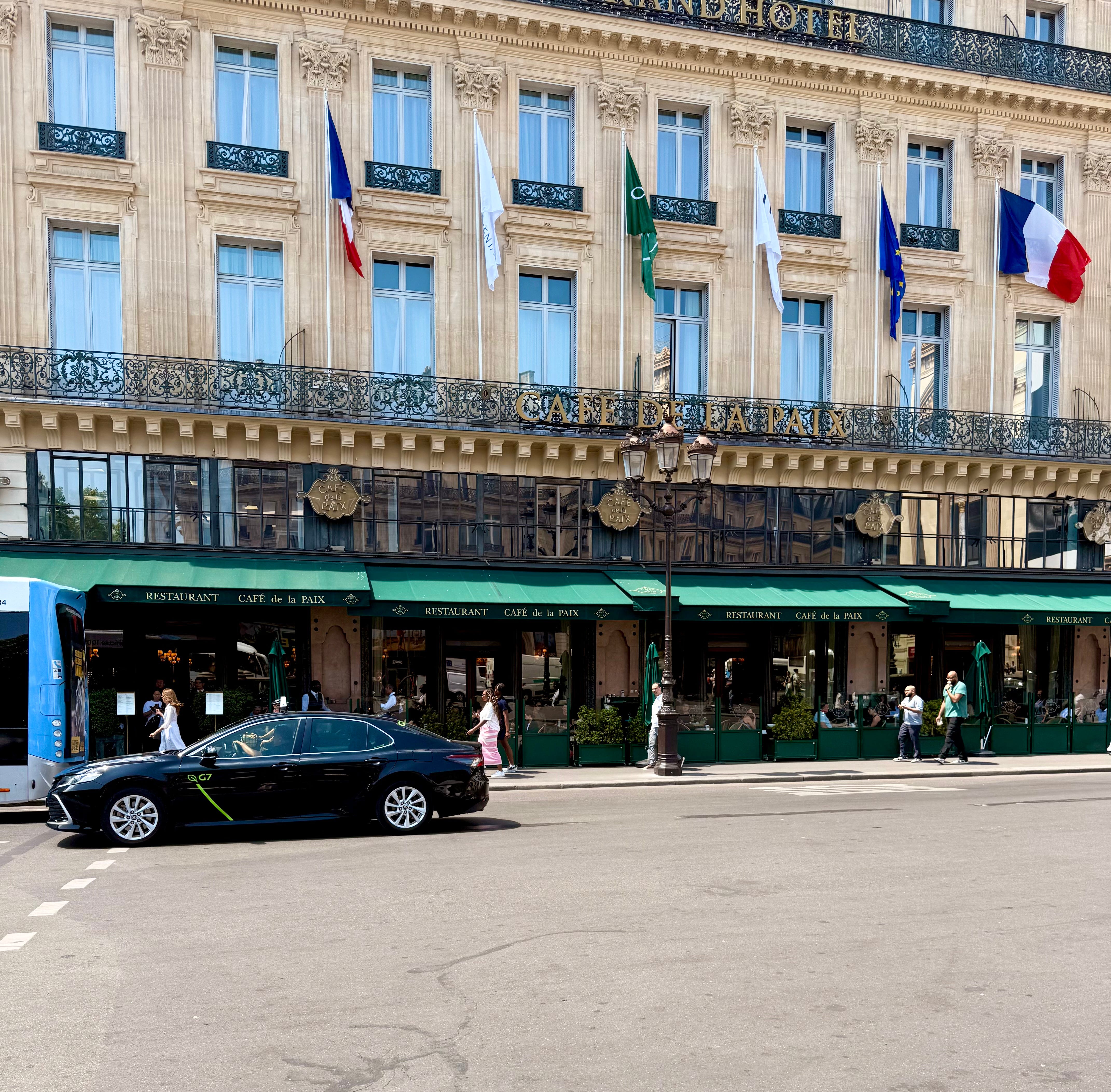
Café de la Paix, first inaugurated in 1862, is located near the Palais Garnier (the Paris Opera House) and is still open and bustling with life.
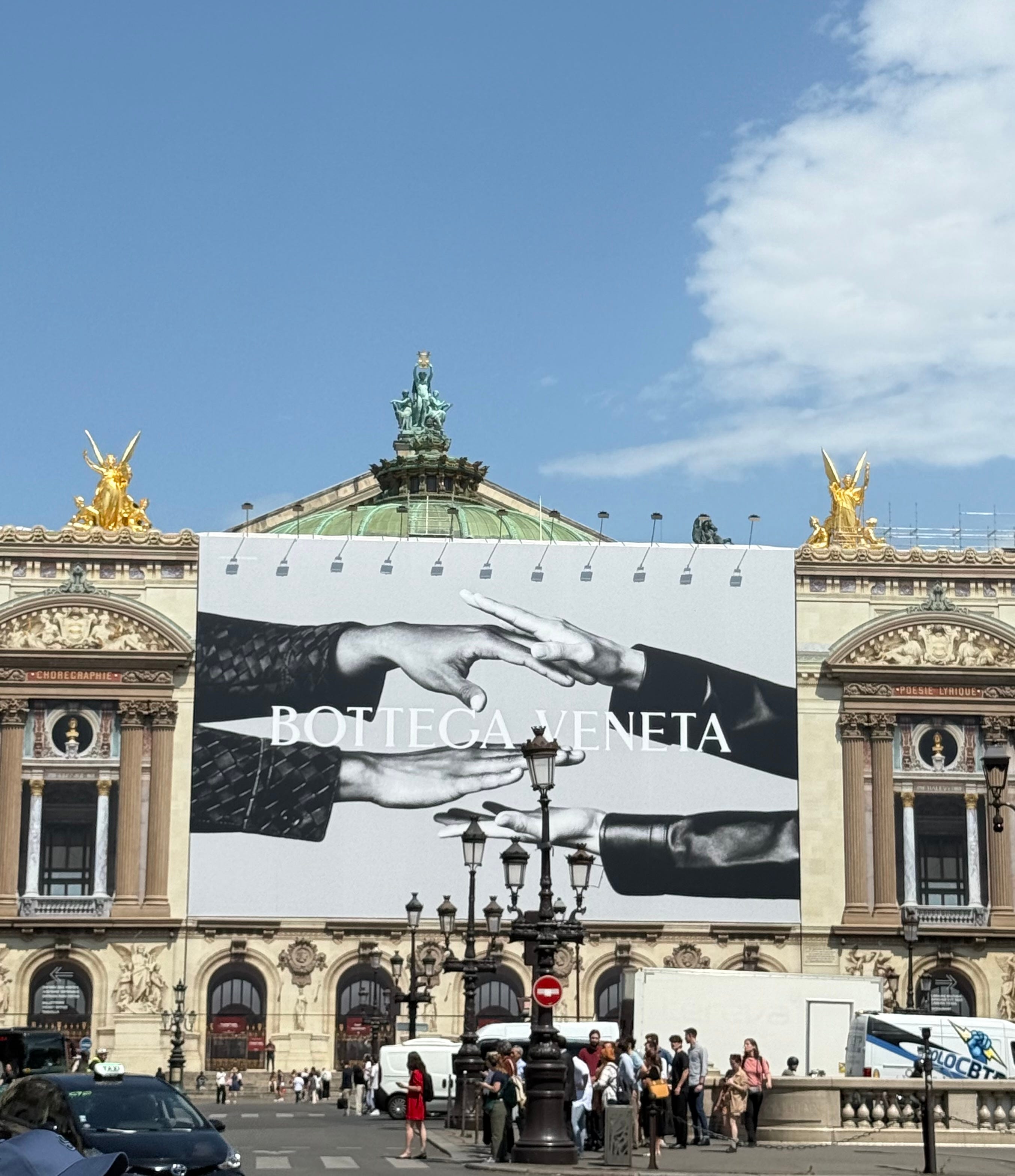
(I wish that big advertisement hadn’t been there when I took the picture…)
Walking in, I tried to imagine what it must have felt like for Travers to step through those same doors for the first time, and the trepidation of meeting someone who had acquired a mythical stature in her imagination, someone she had only heard about, yet whose teachings she had already begun to study.
Gurdjieff had a halo of mystery; he seemed almost like a character from a fairy tale. He spoke with a heavy accent and in parables, and his teachings can be described as a strange mixture of esoteric Christianity and Gnosticism, with echoes of Theosophy. He spoke of the inner friction of opposites, and of the need to suffer consciously, if one wanted to transcend them and awaken. His ideas were original and unique, and yet they also echoed ideas P. L. Travers had been introduced to by her literary mentor and Theosophist, George W. Russell (AE).
On the website of Café de la Paix, you can read that past regulars included Guy de Maupassant, Victor Hugo, Ernest Hemingway, and Émile Zola. I am tempted to suggest they add Gurdjieff to the list, even if he was, and still remains, a controversial figure.
Café de la Paix was one of Gurdjieff’s favorite cafes, where he liked to spend time drinking coffee, writing his books, and meeting with his pupils. Louise Goepfert, a devoted pupil and translator of the German edition of Gurdjieff’s Beelzebub’s Tales to His Grandson, remembers him telling her that he always worked in cafes and dance halls because they were places where he could see people as they are, and where he could see those who were most drunk and most abnormal (Note to the reader: he was not politically correct in his formulations, but you must put this in the context of the times). Seeing them, he said, could produce an impulse of love in him, and from that, he said, he wrote his books.
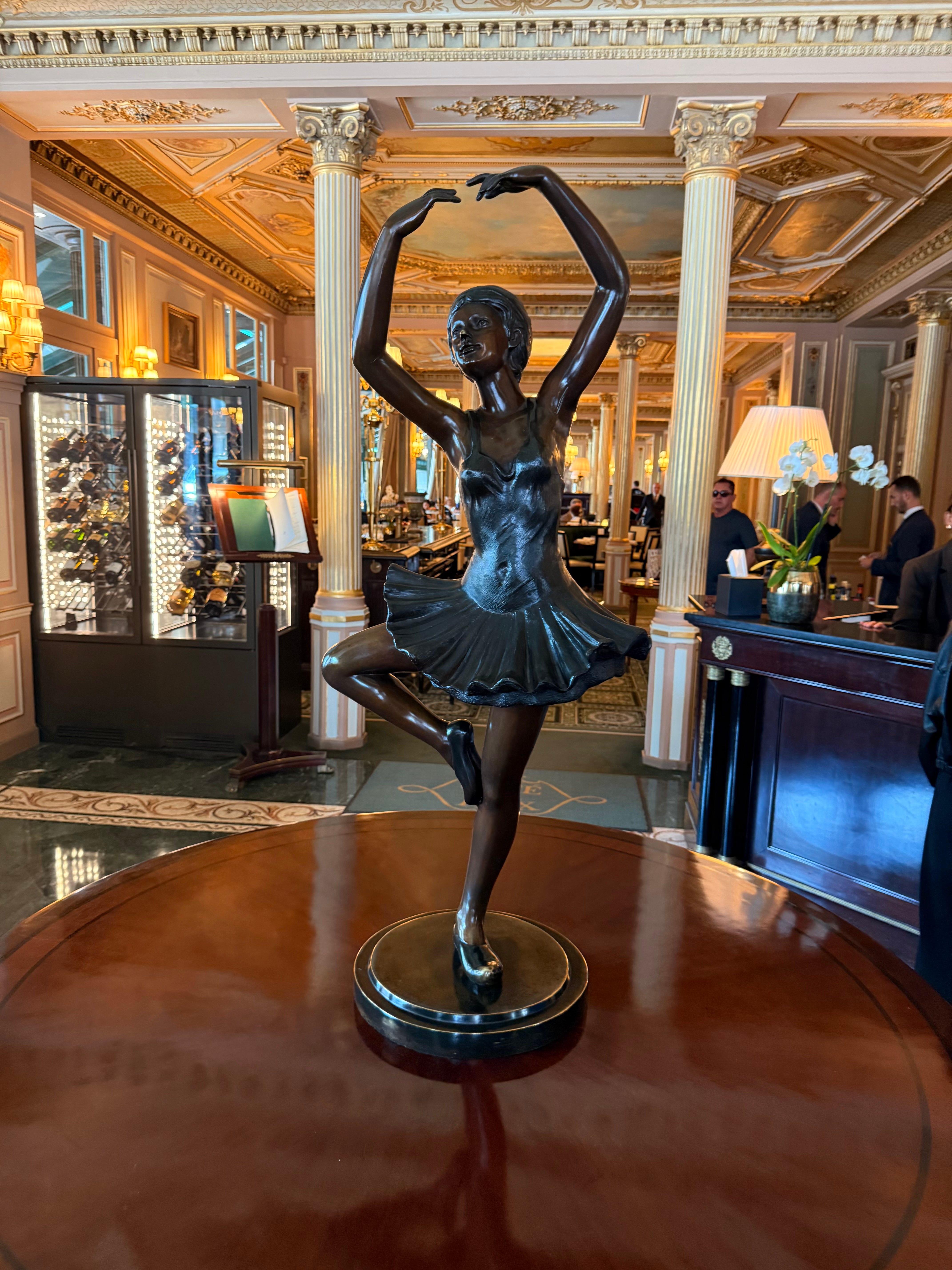
I was eager to see Café de la Paix, but at the same time I felt a little sad, because I knew the visit would not satisfy my desire to meet P. L. Travers. The only connection is through books, through accounts, and through the experience of places she once visited. That is all I can use to travel back in time. Imperfect as this connection may be, my visit to Café de la Paix will remain a favourite memory of my first trip to Paris.
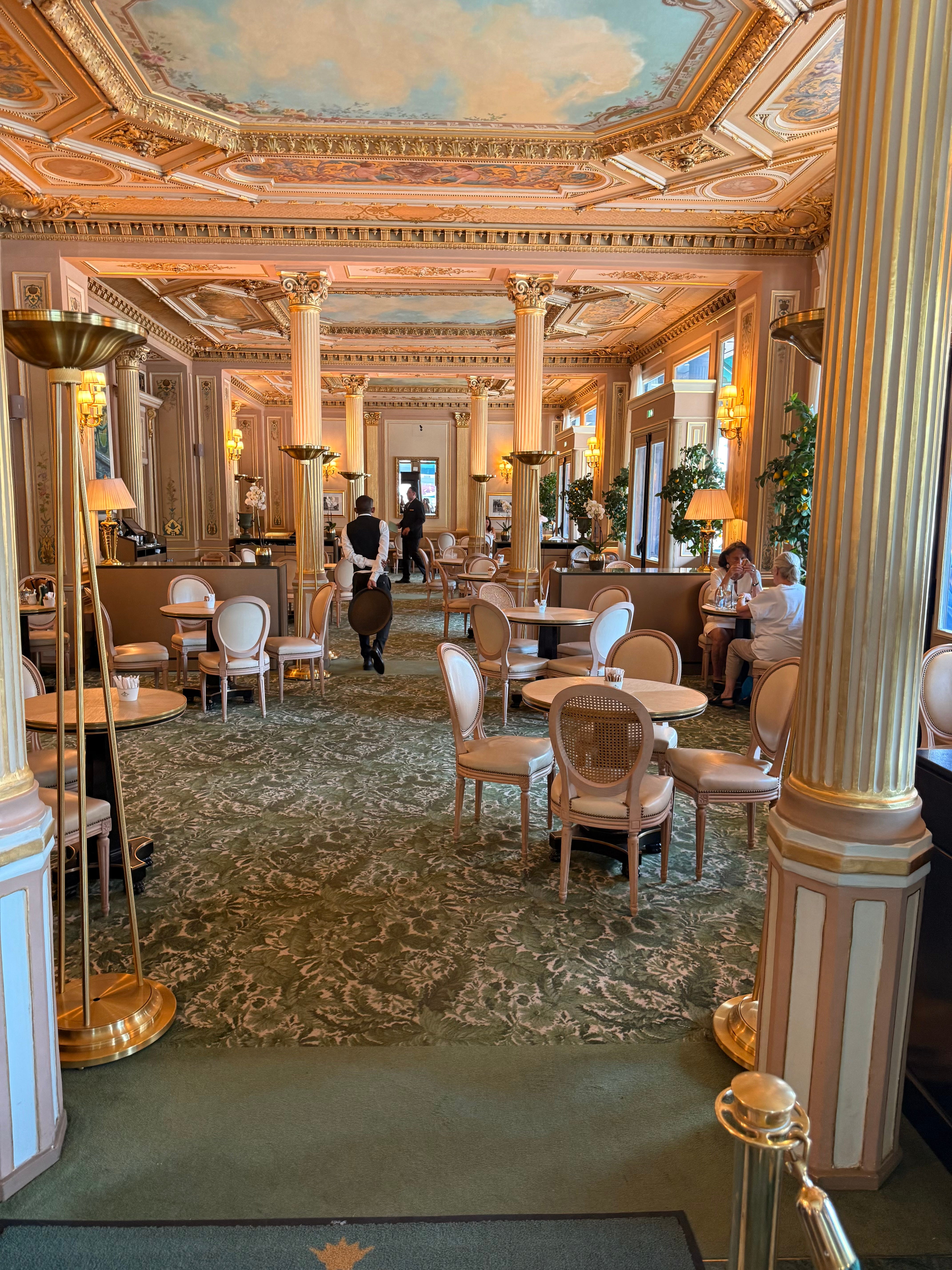
The interior of the Café de la Paix has a hushed richness. Carpets, drapery, and upholstered seating absorb the sounds and create a sense of luxurious intimacy. Gilded moldings catch the light from crystal chandeliers, and mirrors stretching along the walls give the space an impression of expansiveness and movement. Above, a blue sky with white clouds is painted on the ornamented ceilings, adding an airy elegance and an overall feeling of sophistication. But above all, what stands out is the atmosphere of a place that has absorbed decades of conversations. If only its walls could talk.
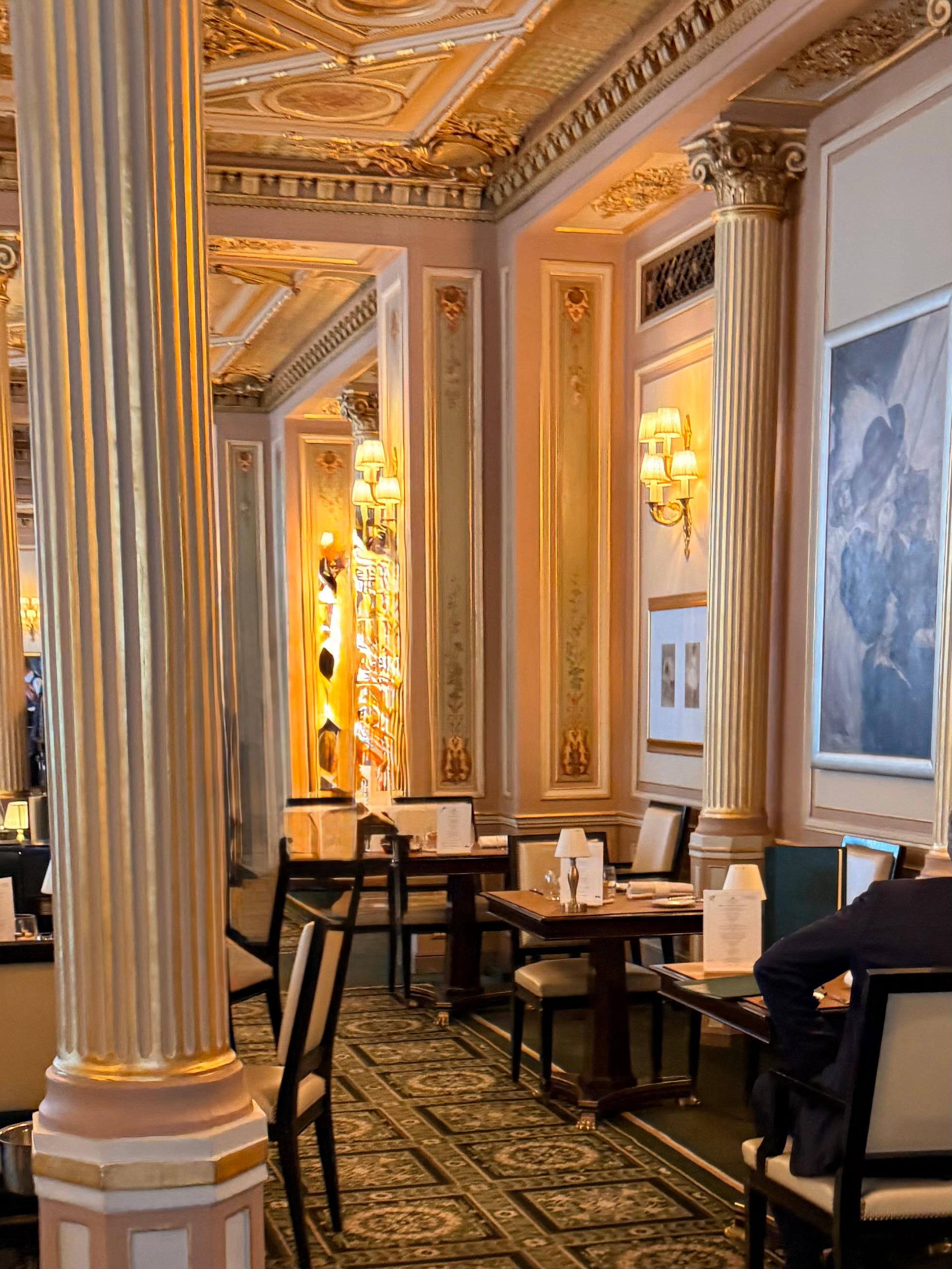
As I took my seat, I tried to imagine P. L. Travers seated at a table in conversation with Gurdjieff, and then an amusing thought crossed my mind. What if I were sitting in that exact same place? What would such a temporal overlay look like? Our faces and gestures would pass through one another without resistance, our conversations mingling without interruption. A density of lived moments, layered one upon the other like an overexposed film, would leave a faint, ghost-like trace, as if the past had never fully withdrawn.
Then the waiter came to our table and I was pulled back into the present. And yet something of that brief reverie stayed with me. Whatever has changed in Paris, the rooms remain, and they still invite us to listen for the faintest echo of a life passing through.
Thank you for reading. If you enjoyed this article, I invite you to subscribe to The Mary Poppins Effect, where I explore the work of P.L. Travers, the world of Mary Poppins, its connections to other literary worlds, and the symbolic imagination at the heart of classic children’s literature.
Until next time, be well.
Lina
Discover more from LINA SLAVOVA
Subscribe to get the latest posts sent to your email.


Thank you so much for this! I remember in my youth that already in college I felt something utterly esoteric about her work but in the articles we studied back them, nothing whatsoever had been mentioned about this, as most of the times neither about the involvement in the esoteric universe by other great names of literature like Yeats, etc.
Prior to your amazing article, I had only learned that she had interest in Buddhism but this has felt like a literary delicacy to me, being passionate for the occult, Theosophy and related subjects. Most appreciated!
LikeLike