A Mary Poppins Story for Coloring 

Dear Reader,  

When I first read Mary Poppins and Mary Poppins Comes Back (which were printed in one volume) as a child, I was not able to enjoy the original illustrations by Mary Shepard, as they were not included in the Bulgarian translation published in 1980. Instead, they were replaced by illustrations by Lyuben Dimanov

I don’t think I liked Dimanov’s illustrations as a child because I have no memory of them, and I do remember a lot of the illustrations from my childhood books. All I remember is that the book was very thick, and it felt like proof that I was really good at reading.   It was only a couple of years ago when I retrieved an old copy of my childhood edition of Mary Poppins that I realized the original illustrations were not in it. 

Now that I am acquainted with the original illustrations, I find it difficult to enjoy Dimanov’s interpretations of the characters. For one, I find the figures a bit too angular, and their proportions too exaggerated. Moreover, in my opinion, he took his artistic liberties to the extreme. In fact, one has to wonder if he even read the stories, or how he could portray Mary Poppins with long, curly, flowing hair like a lion’s mane. 

I’m certain P.L. Travers would have been upset if she had seen these illustrations—or maybe she did. I wish I could show them to her and ask her opinion. What we do know is that she was very particular about how Mary Poppins was depicted and insisted on her being represented exactly as she had imagined her. 

In fact, P.L. Travers was so particular about the character, and Mary Shepard was such an inexperienced artist at the start of the project, that the emergence of Mary Poppins in visual form was not without its growing pains.

P.L. Travers wanted Mary Poppins to be plain, yet graceful, and to help the young visual artist grasp her vision of the character, they took many walks in the park to observe nannies pushing prams. Yet despite Shepard’s heartfelt efforts, P.L. Travers was not satisfied with the sketches and it wasn’t until she found a wooden doll with bright black hair, bright blue eyes, and a turned-up nose, and showed it to Shepard, that Mary Poppins finally took shape. 

The working relationship between P.L. Travers and Mary Shepard spanned over 50 years, during which Shepard illustrated all the Mary Poppins books, including the Latin translation of Mary Poppins, a children’s cookbook, an alphabet book, and a coloring book published in 1969. I had been searching online for this coloring book for a long time, and then, one day, I was fortunate enough to find an unused copy on Facebook Marketplace of all places.  


Oh, the joy of finding it and coloring the illustrations! Of course, I kept the original coloring book pristine and worked on photocopied pages, in case anyone is curious. I want to keep it as a collectible, but I also love the idea of having the chance to color the illustrations again whenever the mood strikes. The time I spent coloring reminded me of how much I loved it as a child. It also reminded me of my struggles of not crossing over the lines—though, as it turns out, I still struggle with that! But perfection isn’t the point. The point is enjoyment and playfulness at any age! 

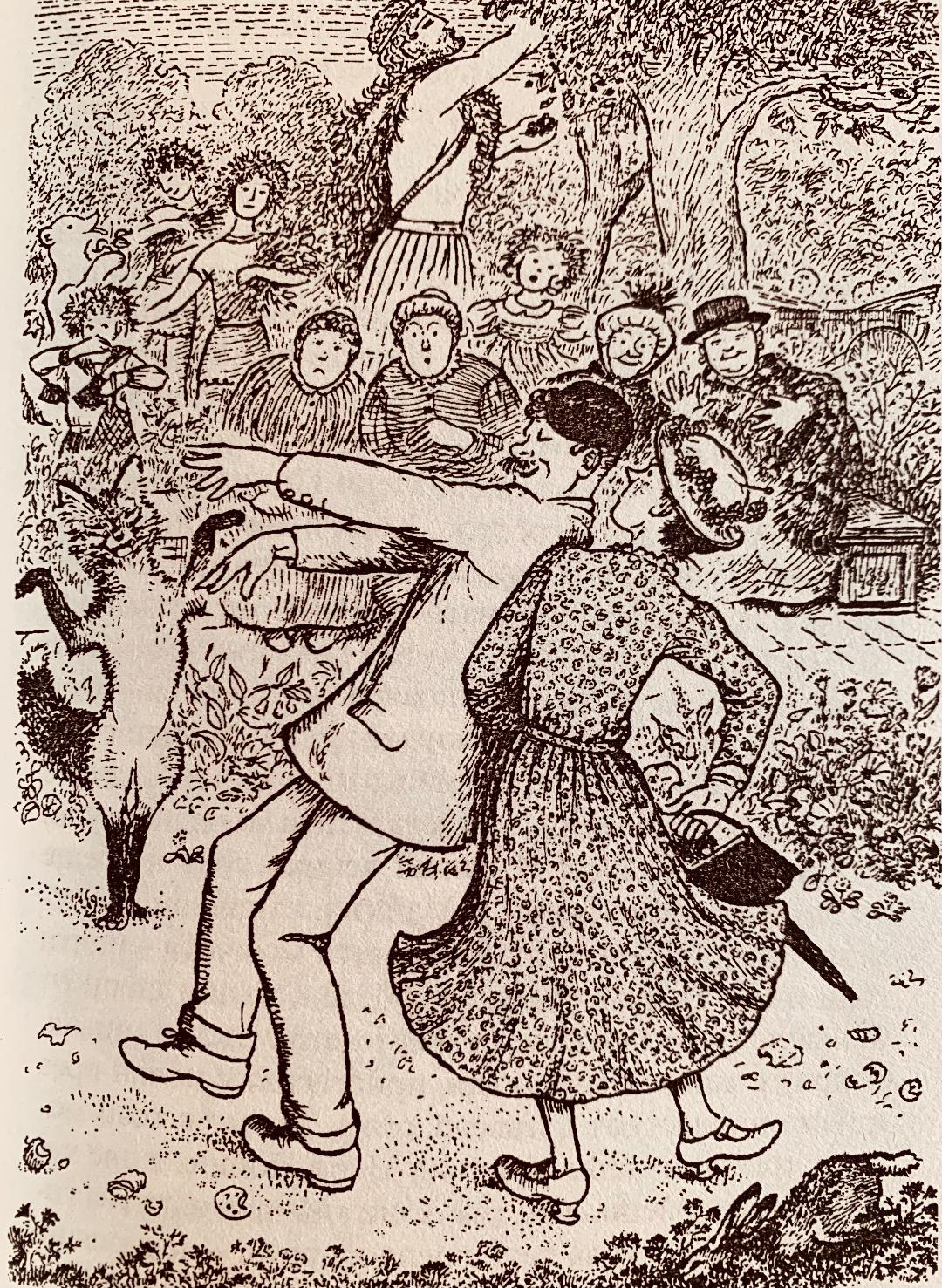
While coloring the pictures, I suddenly noticed something interesting in one of the illustrations that struck me as quite indicative of the nature of the relationship between Mary Shepard and P.L. Travers. Reportedly their relationship was a difficult one, P.L. Travers being portrayed as domineering and Mary Shepard as an underestimated, self-effacing artist. I believe that a glimpse of their relationship dynamic is reflected in one of the illustrations in the story “Balloons and Balloons”. This story first appears in the second book Mary Poppins Comes Back first published in 1935. Below is a picture of the illustration from the book. 

The picture shows several of the Mary Poppins characters holding balloons with their names on them, floating through the air, with Mary Poppins as the central figure holding the largest balloon. But if you look up closely you will notice the two intruders in this picture.  In the bottom left corner, you can see P.L. Travers and Mary Shepard joining the party. According to P.L. Travers, as she once told an interviewer, it was Mary Shepard’s idea to include them both in the illustration. (Personally, I think this was a genius idea.)  

Notice how, in this picture, the two women are facing each other. Mary Shepard’s figure is slightly smaller, and her body curves in a way that seems to mold to the shape of P.L. Travers’ figure.  Now, look at the picture below from the 1969 coloring book, keeping in mind that at the time, Shepard was bitter about not receiving any money from Disney for the movie adaptation of the character. 

The figures are notably different in size and body language. P.L. Travers is larger and holds a bigger balloon. Her body flows gracefully through the air, with the string of her balloon twirling as she holds it effortlessly, without any strain. On the other hand, Mary Shepard, much smaller, is holding onto a short, tight string and appears tense, as if hanging on for dear life. Not only that, but she has her back turned to P.L. Travers. 

I wonder if P.L. Travers noticed these changes in their positioning in the illustration, or if this detail completely escaped her, or if she would have even cared about it. I haven’t had the chance to delve deeper into their relationship, so I’m relying on what others have written about the subject and while I’m aware that I’m speculating on the comparative interpretation of these two illustrations, it was, nevertheless,  a fun insight to gain from my interaction with A Mary Poppins Story for Coloring.  

As for P.L. Travers’s view that ‘what counts most is the text, not the picture,’ I both agree and disagree with her. It all depends on the angle from which you look at the question. Of course, there would be no picture of Mary Poppins without the story, but for children, the illustrations are almost as important as the text. 

Perhaps it’s because P.L. Travers never intended the books to be read solely by children that she prioritized the text. Or, maybe it was because she was human and fallible, and possessive of Mary Poppins. After all, she once told an interviewer that a fictional character is like a child to an author. One thing is certain: despite their differences, both P.L. Travers and Mary Shepard must have both gained something positive from their collaboration. Otherwise, why continue for fifty years? 

I hope you enjoyed reading this blog post and that you’ll subscribe to my blog, so you don’t miss the next installment. While I can’t commit to a regular posting schedule, one thing I can promise is that I’ll continue writing about all things Mary Poppins and P.L. Travers.  


About a Forthcoming Biography of P.L. Travers 

Dear Reader, 

A new biography of P.L. Travers is scheduled for release in 2025 by Pen & Swords, a British publisher specializing in history and true crime. The author of this biography is Elisabeth Galvin, a British journalist and author who currently resides with her family in Brisbane, Australia.   

Last year after discovering this blog, Elisabeth reached out to me, sparking a correspondence that eventually, to my delight, culminated in my contribution of a chapter about P.L. Travers’s spiritual beliefs. 

Elisabeth Galvin has written two other biographies of famous children’s writers. The first one, “The Extraordinary Life of E. Nesbit”, which will be the subject of this blog post, was published in 2018.   The second, “The Real Kenneth Graham”, was published in 2021.  

P.L. Travers was in her own words “a tremendous Nesbit fan” and read her books again and again even as an adult.  

I think so highly of her, and I’m absolutely sure that such writers as C.S. Lewis, for instance, good though his books are, could never have existed without Nesbit.” 

Transcripts of A Talk About Sorrow, July 1965 

P.L. Travers and Janet Rance 

Elisabeth Galvin drew some interesting similarities between the two writers during a recent conversation we had, and I’ve decided to share some snippets of it here for the benefit of the readers of this blog. But just before, let me provide a brief note about the life of E. Nesbit for those of you who are not familiar with her work.  

E. (Edith) Nesbit was an English author and poet. She was born in 1858 and died in 1924, the year when P. Travers first came to London, so the two women never met.  Edith lost her father when she was only four years old and had to change homes and schools often as her mother traveled frequently to France and Spain seeking a cure to the ailments of Edith’s older sister Mary.  

Edith married Hubert Bland who later became an influential socialist journalist and with whom she co-founded the Fabian Society, a socialist organization in the late 19th and early 20th centuries.  

She wrote numerous short stories, poems and novels both for children and adults. Her most well-known works for children include “The Railway Children”, “Five Children and It”, “The Story of the Treasure Seekers”, “The Phoenix and the Carpet”, and “The Enchanted Castle”. 

Her ability to blend fantasy with everyday experiences resonated with readers and contributed to the evolution of children’s literature and as such had a significant influence on later writers, including C.S. Lewis, J.K. Rowling, and Jacqueline Wilson. 

Now to my conversation with Elisabeth Galvin.  

LS: Why did you choose to write a biography about E. Nesbit? 

EG: Well, I always wanted to be an author, and I became a magazine journalist, and I absolutely loved my job. Then, when the opportunity came to submit some ideas for biographies about children’s authors to a publisher, I knew I had to take that chance. I thought about all the stories that I loved when I was younger, and Railway Children was one of my favorite stories.  I still have the book that my parents gave me, a red leather-bound book with a gold spine – it’s such a lovely story, and E. Nesbit led such an interesting life as well, and I believe that is why I chose to write about her.   

LS: Yes, she did have a tumultuous life, and I really enjoyed reading your book because you recreate the atmosphere of that period so vividly. I imagine you had to visit some of the places you write about in your book.   Could you share some insights into your research process for the book?  

EG: Yes, of course. It was an exciting process because as a journalist, I love meeting and talking with people and exploring different places. A notable experience was visiting Well Hall, where E. Nesbit lived with her family for some twenty years. I had the privilege of exploring it in the company of a member of the E. Nesbit Society, which truly brought the whole experience to life. We walked around Well Hall; while the original house was demolished in 1930, parts of the original gardens still remain and I saw the wooden statues portraying characters from E. Nesbit’s books, so yes, her spirit was definitely there. 

(Picture taken from “The Extraordinary Life of E. Nesbit” by Elisabeth Galvin. Dame Jacqueline Wilson at Well Hall unveiling the wooden sculpture of the Psammead, commissioned by the E. Nesbit Society in 2013.)

I visited another one of E. Nesbit’s residences, Halstead Hall in Kent (click on the link to see the pictures). It was one of her childhood’s homes. It was lovely, it had the quintessential English garden and that is where she loved to spend time reading during her teenage years. I think she was 13 when she was there.  The vicar who lived in the village at that time lent her his books and that is when she first came across Shakespeare.  I could imagine this impressionable young girl lying in her garden looking at the apple trees and the roses and get a picture of her character, so it was very helpful going to those places. 

Surprisingly, after E. Nesbit’s death, her personal papers were sold to The University of Tulsa in Oklahoma. She never went to America but was published there too, so I had to go there. I spent five intense days reading letters and other materials from the late eighteen hundreds and early nineteen hundreds and then suddenly came outside to see a Taco Bell and fire engines. It was a funny experience.   

LS: Yes, I can imagine, it sounds like a real time travelling experience. Now, what proved to be the most difficult part in writing the book? 

EG: The most difficult was knowing that I would never meet her, or talk to her or hear her voice, or ask her questions. A lot of biographies really are speculation, even if it is unintentional, your natural biases do come out. As a journalist you always want to tell the truth and be as fair as you can, and there is a sense of responsibility when delving into someone else’s life. 

LS: Definitely, and this also applies to P.L. Travers, especially considering she did not want people to inquire about her private affairs. You mentioned previously that during your research on both women you noticed certain similarities between them. Could you tell us more? 

EG: Well, it is amazing, actually.  The more you think about it, the more similarities there are – both physically and in terms of their personalities. The way they approach life, the events that unfolded in their early childhood as well as their literary works exhibit striking similarities.  

Firstly, both were very tall women with short curly hair. They possessed a somewhat androgynous appearance, attracting men and women. They were both, in a sense, single parents.  E. Nesbit was married, but her husband was not particularly supportive. 

They both had a “get up and go” attitude toward life. They experienced significant hardships, losing their fathers at a young age, and both had a nomadic childhood—P.L. Travers throughout Australia, and E. Nesbit across Europe, attending school in France and Spain.  

Despite the disarray of their early years, they shared a deep love for reading, voraciously consuming any available books. Their affection for Shakespeare and a natural flair for writing emerged early in their lives. Both harbored aspirations to become poets, and perhaps even experienced a tinge of disappointment for not receiving the recognition they desired. 

And they both wrote about ordinary children and everyday magic. Their skill was to remember what it was to be a child and to transpose the essence of childhood into their writings. And I don’t know if it is because they had such unusual childhoods, losing a parent at a very young age, but they always had an idealized version of family life.  

LS: Do you think they would have gotten along if they had met? 

EG: I am sure they would have had a lot in common to talk about. E. Nesbit loved bohemian parties and thrived on that kind of energy. Similarly, P.L. Travers loved to meet new people and make new friends. They were not solo writers, they loved sharing their knowledge and taking part in artistic gatherings.  

And I believe they would have connected on the fairy tale aspect as well. P.L. Travers wrote about Sleeping Beauty in the 1970s, and E. Nesbit was also deeply interested in fairy tales, writing her own collection of fairy stories. 

LS: I agree, they would have had a lot to talk about. They even shared common acquaintances, George Bernard Shaw for example. Their lives and literary contributions provide an endless well of discussion and we can go on for hours.

I want to thank you for taking the time to share your thoughts with the readers of the Mary Poppins Effect blog, and I hope to share more about our collaboration and your forthcoming biography of P.L. Travers in the coming months. 

Midsummer’s Eve with Mary Poppins

Bulgarian Mary Poppins in Cherry Tree Lane

Cover illustration by Piers Stanford, 1994

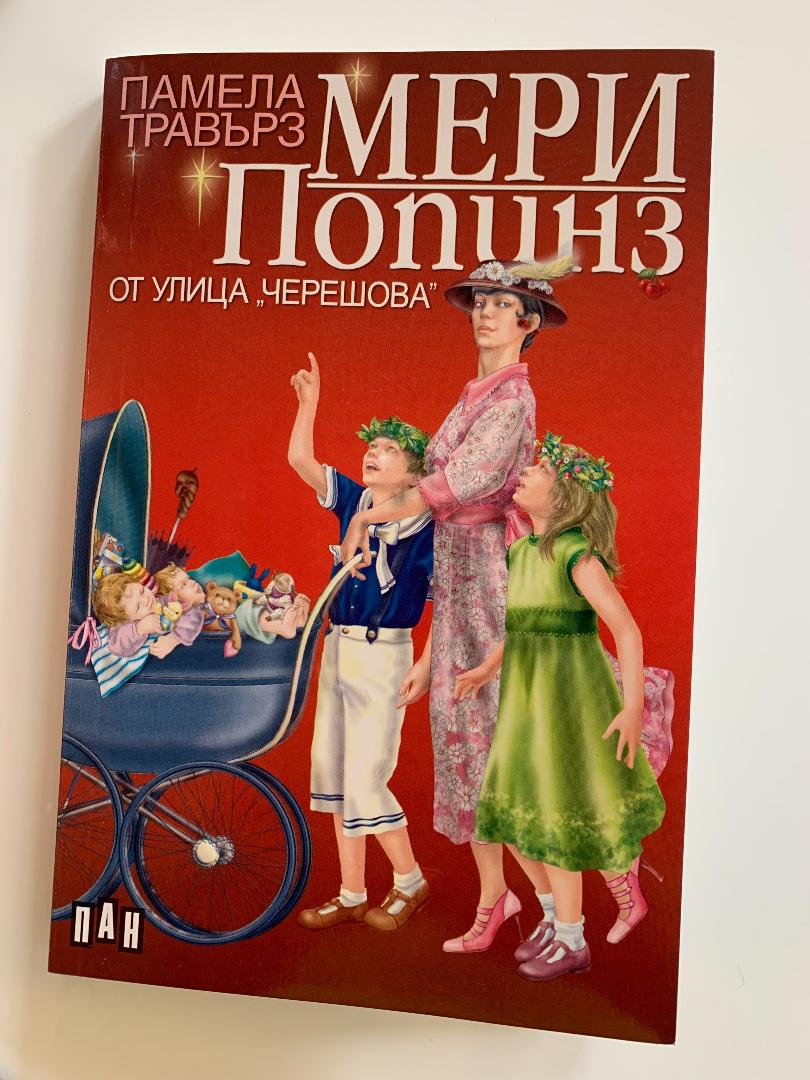
Yesterday, as a celebration of the summer solstice, I read the Bulgarian translation of the fifth Mary Poppins book, Mary Poppins in Cherry Tree Lane. The Bulgarian edition in my possession was published in 2004 and is translated by Anelia Ianeva.

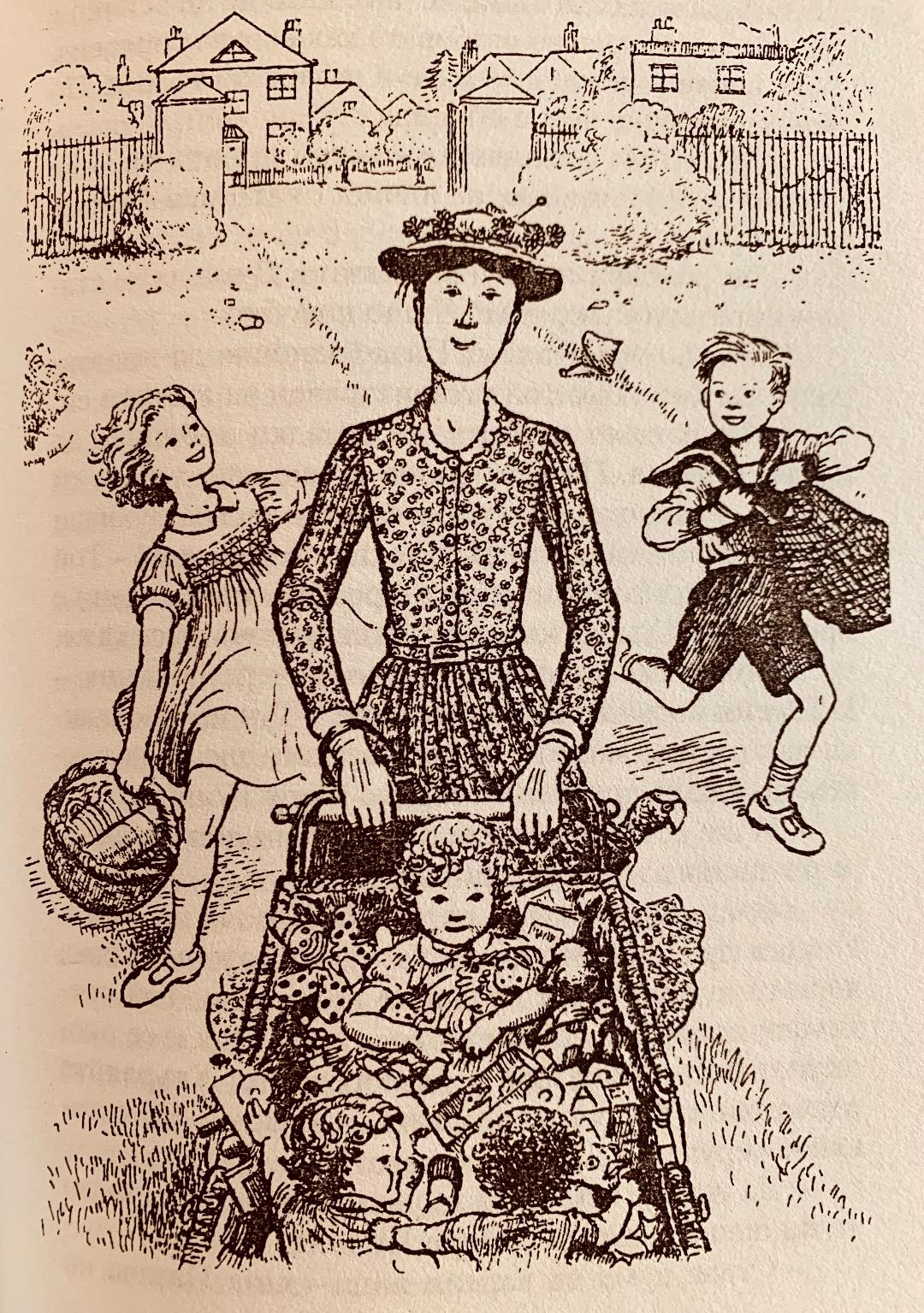
It is Midsummer’s Eve and Mary Poppins takes the Banks children for an evening picnic in the park.

Mary Poppins in Cherry Tree Lane

Illustration by Mary Shepard

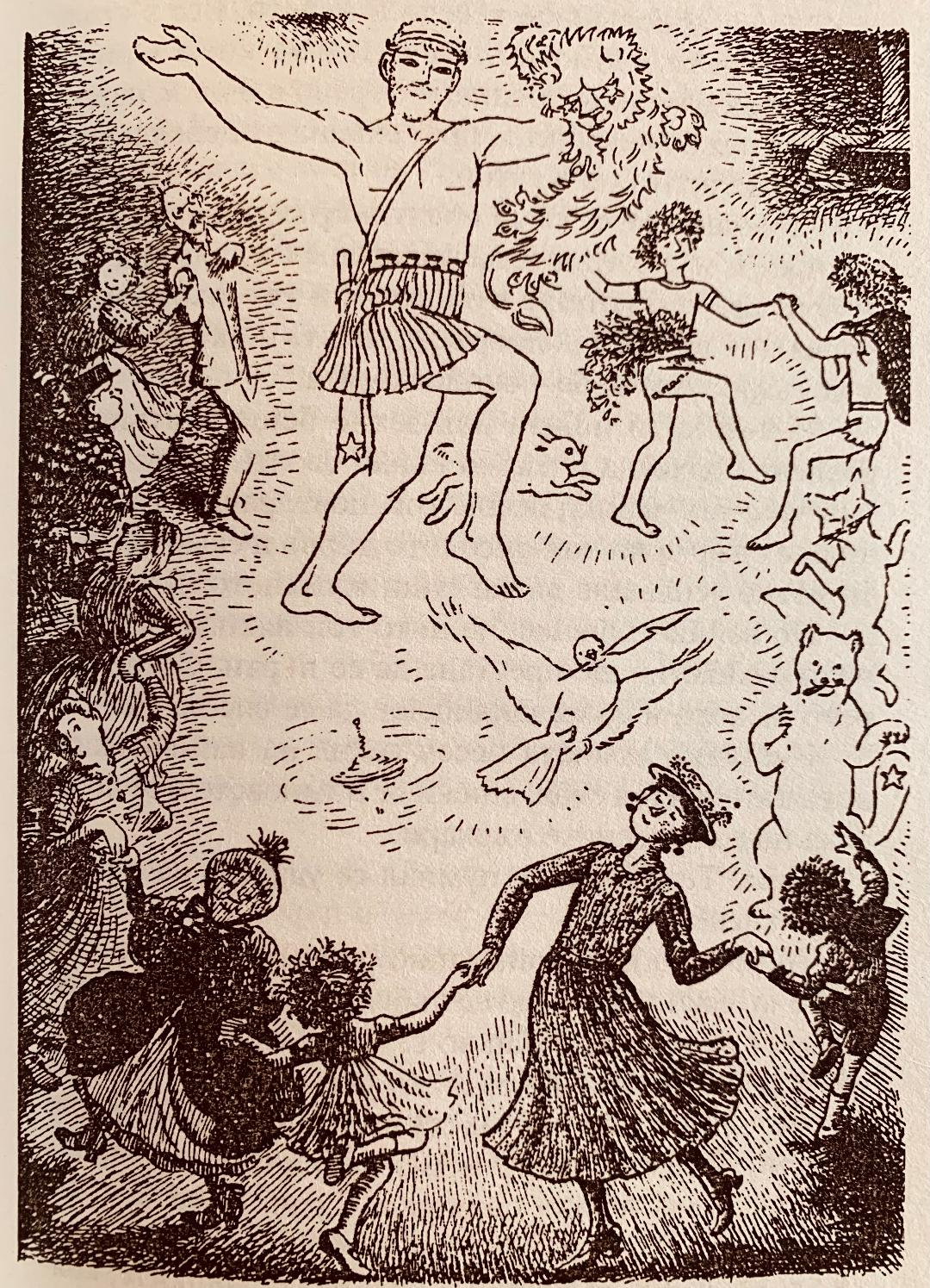
There, in the furthest corner of the park, in the herb garden, they feast and dance with celestial constellations who have taken the shape of their appellations:  Orion, Castor and Pollux, the Bear, the Fox (or Vulpecula in Latin) named in the late 17th century by the astronomer Johannes Hevelius, and the Rabbit (or Lepus in Latin), a constellation that was listed in the 2nd century by Ptolemy. PL Travers was interested in astrology and like a pastry chef fond of sugar, she sprinkled her Mary Poppins books with stars and constellations.

Mary Poppins celebration Midsummers Eve

Illustration by Mary Shepard

Down a lane in the park comes Ellen, the maid, strolling backwards with her eyes closed. She had put herbs under her pillow the night before and now is on her way to meet her true love.

Ellen the maid Mary Poppins

Illustration by Mary Shepard

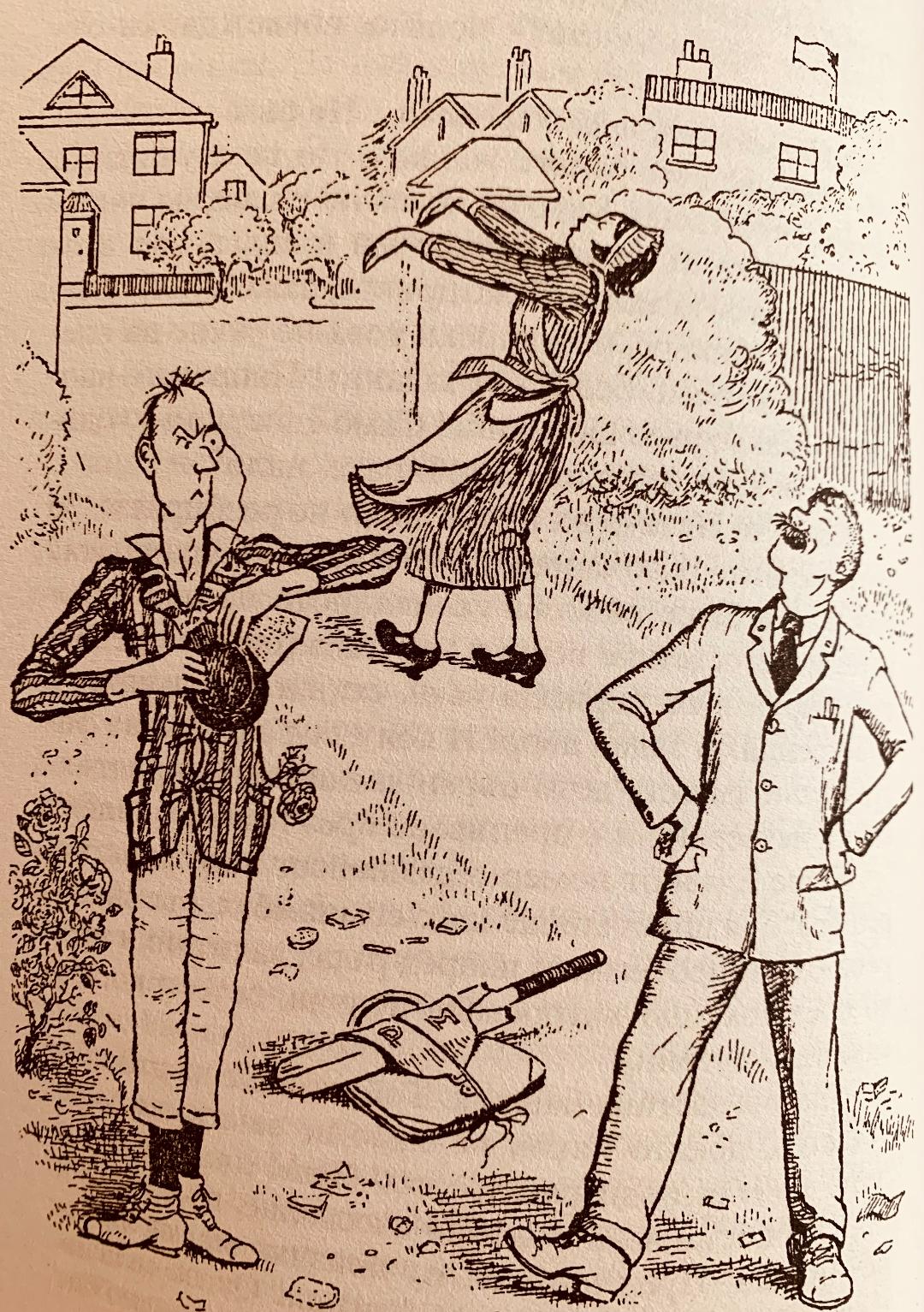
The lonely Park Keeper decides, rather uncharacteristically, to try his luck. He follows suit only to bump into Mary Poppins. Afterall, opposites attract. What better match for a rigid man overly concerned with rules.

Mary Poppins and the Park Keeper

Illustration by Mary Shepard

The Bulgarian translation of the story, just like the translation of Mary Poppins, is loyal to the original text, but there is one interesting modification. Midsummer’s Eve is translated for the corresponding Bulgarian folk holiday Eniovden.

On Eniovden, according to old Bulgarian beliefs the celestial lights “go crazy”. At midnight, the sky opens and miracles happen. The stars descend on Earth and bathe in the cold waves of the sea. People gather herbs because on this day the herbs’ healing powers are at their peak. Young women perform divination rituals and put herbs under their pillows in the hope that their dreams will reveal their husbands-to-be. On Eniovden there is also a custom of making offerings of fresh cherries to the deceased. 

Surprisingly, these old Bulgarian customs are reflected in Mary Poppins in Cherry Tree Lane, first published in 1982. Aren’t these similarities of beliefs between two different cultures fascinating? I am certain P.L. Travers would have been interested to hear about Eniovden. Then, maybe she did.

I have two editions of Mary Poppins in Cherry Tree Lane but none of them contain any illustrations. The Bulgarian one does! What a nice surprise for a Mary Poppins nerd like myself.

Happy Summer Solstice!

Bad Tuesdays with Mary Poppins

Mary Poppins Bad Tuesday compass.jpg

Original illustration by Mary Shepard

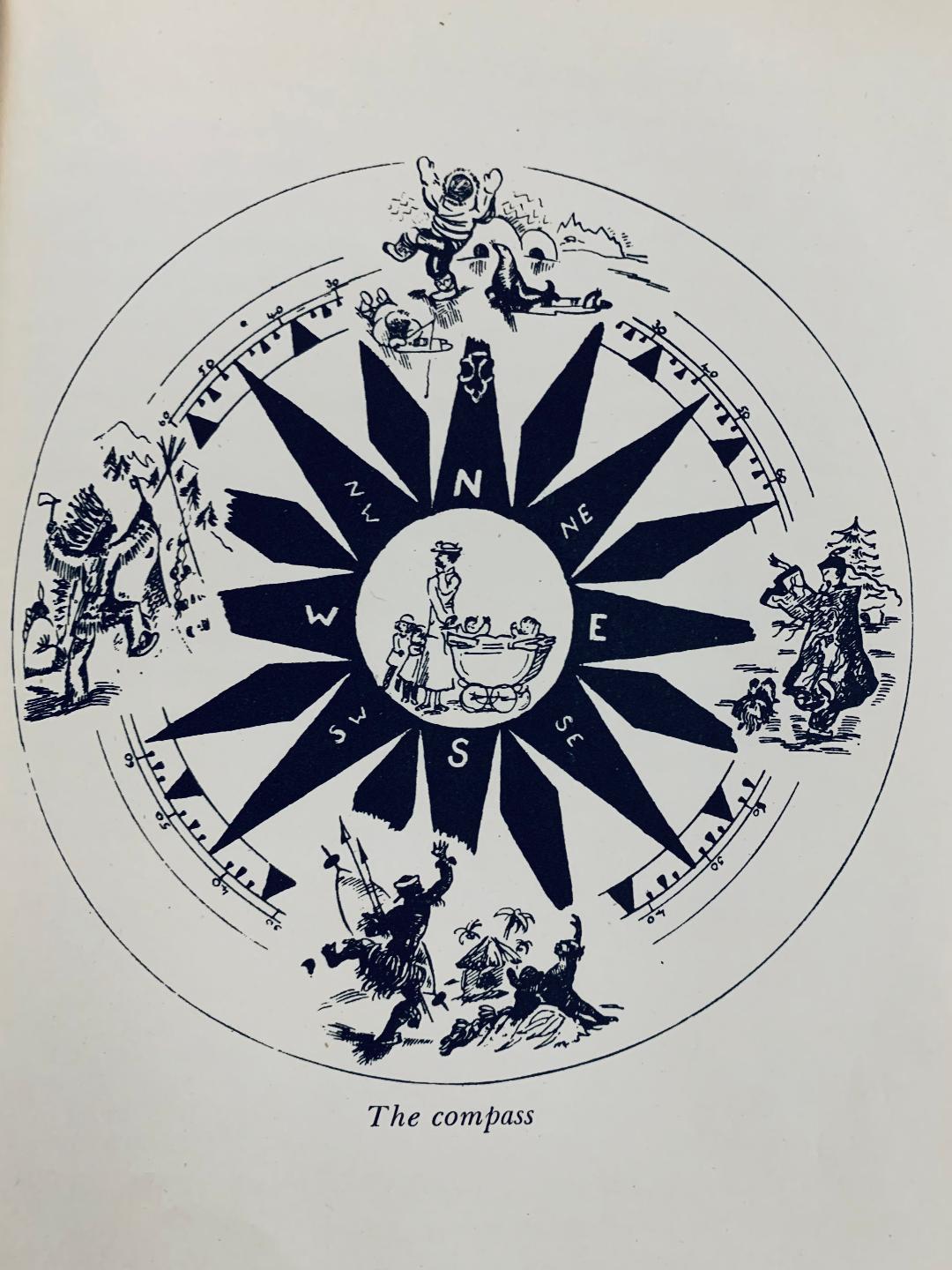
“Bad Tuesday” is a story in the first Mary Poppins book published in 1934 in which Mary Poppins, with the help of a compass, takes the Banks children on a trip around the world. In a flash, Jane and Michael experience the vastness and variety of our human world. With a shake of the compass, they are transported to the North Pole where they meet with an Eskimo family. Then, to the South where they encounter a family with a skin much darker than their own. In the East the children are greeted by a Chinese Mandarin, and by a tribe of Indians on their last destination in the West. All the characters in this adventure are friends of Mary Poppins. The different attires, manner of speech and greeting customs are not experienced by the children as something threatening, but on the contrary, as something extremely exciting and enjoyable.  

Yet, many years after its first publication the story underwent two alterations for socio-political reasons. The first revision, which left the plot of the story untouched, occurred in 1971. Then, in 1980 the San Francisco Public Library removed Mary Poppins from its shelves because of alleged racist references and derogatory treatment of minorities. Lawson, P.L. Travers’s biographer, reports that P.L. Travers was angry with her publisher at that time for not defending her loudly enough. In fact, P.L. Travers learned about the unfortunate event from her friends.  

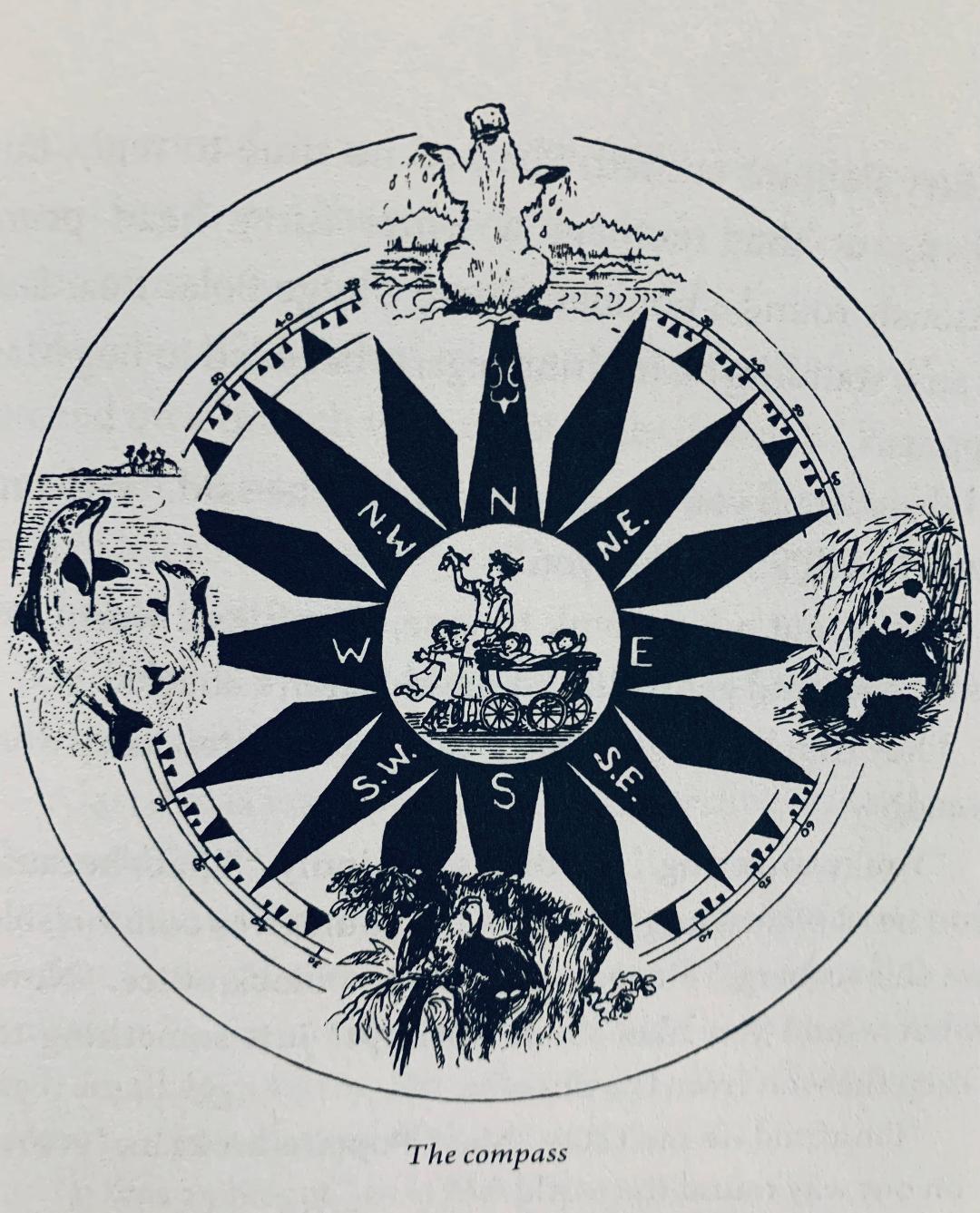
After pondering whether she should stick to her artistic expression or risk to see her book banished from more shelves, P.L. Travers  decided to rewrite the story. With a stroke of her pen, she changed the colorful trip around the world into a wildlife nature expedition. In this last version of the story, which is now in print, the Banks children meet a Polar Bear, a Hyacinth Macaw, a Panda and a Dolphin.  

Mary Poppins Bad Tuesday Revised.jpg

Original illustration by Mary Shepard

Now, was the original story racist? This is the question that will be explored in this blogpost.  

The major issue with “Bad Tuesday” was brought to P.L. Travers’s attention in 1971 by her friend Dr. Francelia Butler. She told P.L. Travers how embarrassed she felt when reading the story to the black students in her class. Her embarrassment being caused by the words “Negro lady” and “a picaninny baby” as well as the picaninny language used by the characters.    

Beneath the palm trees sat a man and a woman, both quite black all over and with a  very few clothes on. But to make up for this they wore a great many beads – some hung  round their heads just below great crowns of feathers (….). On the knee of the negro lady  sat a tiny black picaninny with nothing on at all. It smiled at the children as its Mother  spoke.  

“Bad Tuesday”, Mary Poppins, P.L. Travers 1934 

P.L. Travers decided to alter the descriptions and dialogues in this section of the story because “if even one Black child were troubled, or she (Dr. Francelia Butler) were troubled, I would have to alter it.” 

 So, the description was redrafted and read: 

Under the palm-trees sat a man and a woman as black and shiny and plum as a ripe  plum, and wearing very few clothes. But to make up for this they wore a great many  beads. (…) And on the knee of the dark lady sat a tiny plum-black baby with nothing on at all. It smiled at the children as its Mother  spoke.  

“Bad Tuesday”, Mary Poppins, P.L. Travers, redraft published in 1972 

This time around the characters expressed themselves in formal English. 

P.L Travers accepted to be interviewed about this first revision of “Bad Tuesday”. The interview was published in Interracial Books for Children in Vol.3, 1974. She said:  

I have no racism in me. I wasn’t born with it. And it’s never happened inside of me. And therefore, I feel perfectly at ease and at home no matter what color anybody’s skin is. I was brought up in a family and in a world where there was no hint of racism of any kind (…) I was brought up by large minded people who never had any sense of racism at all. 

P.L. Travers, Mary Poppins Revised: An Interview with P.L. Travers, Interracial Books for Children, Vol. 3, 1974 

P.L. Travers was just like her Mary Poppins, apolitical, a rebel and a freethinker.  She was completely engulphed in her imagination and her spiritual explorations which had to do with the much larger universal laws of creation. She was not interested in socio-cultural conventions. Hers was the world of myths and fairy tales, and the human experience of life on a larger scale. Not surprisingly, she said so herself. 

Literature and imagination are my world. I don’t like being pulled out from that world and being forced to live in a sociological world of which I am not a native habitant. Imagination is a pure thing. It is envisaging. Imagination does not depend upon the sociology of the time. More functional books do; imagination does not.(…) Mary Poppins is not a contemporary book. It is a timeless book, and probably it goes back a great deal to my own childhood.  

P.L. Travers, Mary Poppins Revised: An Interview with P.L. Travers, Interracial Books for Children, Vol. 3, 1974 

This is P.L. Travers in a nutshell. This was not a statement made for the occasion. I have spent years reading her writings and interviews and listening to testimonials from people who knew her. This was truly her stance in life. It does not matter if you agree or not with her assertion about imagination not depending on the sociology of the time. What matters here is her subjective truth. What matters is the fact that she had no intention of being disrespectful towards other ethnic groups.  Her willingness to alter the story not once, but twice, proves just that.  

It is important here to note that the accusations of racism were raised in the socio-cultural context of North America many years after the story was first written. People in North America assumed that the characters in the story were from Africa. However, it is possible that their assumption was wrong. It is possible that these characters were inspired by P.L. Travers’s memories of or ideas about the Australian aboriginal tribes. Maybe this is what she meant when she told the interviewer that the story goes back to her childhood. P.L. Travers was born and raised in the Southern Hemisphere of the Earth. So, when Mary Poppins tells the compass to take her and the children to the South, that probably meant Australia. What’s more, in the early 1900’s, the newspapers in Australia contained Picaninny Pages and “negro” was not considered to be a socially unacceptable word. It was all just part of the reality of her life back then and it was absorbed into her imagination without any negative connotation.  

“Bad Tuesday” reflected P.L. Travers’s childhood fascination with people and stories. Encounters with people who were not part of her family, mostly the help, stimulated her imagination. These outsiders made her realize that she was living in a world much vaster than her household. And, let’s not forget another important aspect of her childhood. She was an avid reader. She loved to read fairy tales, fantasy and adventure novels. Her childhood readings included Alice in Wonderland, Peter Pan and the adventures of Buffalo Bill. 

The descriptions of the characters in “Bad Tuesday” may not have been accurate, but factual preciseness is beside the point here. Obvisouly, P.L. Travers did not use researched information for the portrayal of her characters. She simply pulled them out of the mixture of her childhood memories, readings and musings. Facts were never of a great concern for P.L. Travers. She was interested in big ideas. And, the original “Bad Tuesday” was a big idea kind of story. It was a story about the variety of human life on this planet and the possibility for all human beings, despite their socio-cultural differences, to be friends. It was a lesson in openness and willingness to take part in other people’s customs.  

Isn’t it a sad paradox that a story about diversity and inclusion was relegated to oblivion by misguided reading and interpretation? The story was not promoting racist ideas or making children believe that other ethnic groups were somehow inferior. It was just a story, an imaginative story, and a humorous one at that.